How the Sliding Window Algorithm Transforms Problem-Solving in Tech
The sliding window algorithm isn’t just another coding trick—it’s a paradigm shift in how developers approach sequential data problems. When faced with arrays or strings where you need to find subsets meeting specific conditions (like maximum subarray sum or longest substring without repeating characters), brute-force solutions often collapse under their own inefficiency. The sliding window technique emerges as the antidote: a method that reduces time complexity from O(n²) to O(n) by dynamically expanding and contracting a "window" of elements to analyze.
Its elegance lies in its simplicity. Imagine scanning a DNA sequence for the longest palindrome or monitoring a stock price feed for the best buying window—both scenarios demand real-time analysis without reprocessing the entire dataset. The sliding window algorithm achieves this by maintaining two pointers (left and right) that traverse the input while preserving only the necessary information, eliminating redundant computations. This isn’t just theoretical; it’s a battle-tested approach used in high-frequency trading, genomics, and even image processing.
Yet for all its power, the sliding window technique remains underutilized outside competitive programming circles. Many engineers default to nested loops when a single pass with dynamic boundaries would suffice. The disconnect stems from a lack of exposure to its core principles—how to identify when to apply it, how to handle edge cases, and when to hybridize it with other algorithms. This gap is what we’re addressing: a deep dive into the mechanics, historical context, and future evolution of the sliding window algorithm.

The Complete Overview of the Sliding Window Algorithm
The sliding window algorithm is a family of techniques designed to solve problems involving contiguous subarrays or substrings efficiently. At its heart, it replaces exhaustive search with a greedy approach: instead of checking every possible combination, it dynamically adjusts the boundaries of a "window" (a subset of the data) to meet the problem’s constraints. This window can represent anything—a range of numbers, a sequence of characters, or even time intervals—and its size adapts based on conditions like sum thresholds, uniqueness requirements, or other metrics.
What makes the sliding window technique particularly valuable is its ability to transform problems that would otherwise require quadratic time into linear solutions. For example, finding the longest substring without repeating characters in a string like "abcabcbb" would take O(n²) with a naive approach, but the sliding window can solve it in O(n) by tracking character frequencies and adjusting the window’s left boundary whenever a duplicate is encountered. This isn’t just optimization; it’s a fundamental rethinking of how to interact with sequential data.
Historical Background and Evolution
The roots of the sliding window algorithm can be traced back to early computer science research on string matching and pattern recognition. In the 1970s, algorithms like the Knuth-Morris-Pratt (KMP) string-searching technique laid the groundwork for efficient substring analysis, though they focused on fixed patterns rather than dynamic windows. The modern sliding window technique gained prominence in the 1980s and 1990s as computational problems became more complex, particularly in bioinformatics and financial modeling, where large datasets required sublinear solutions.
Table of Contents
- The Complete Overview of the Sliding Window Algorithm
- Historical Background and Evolution
- Core Mechanisms: How It Works
- Key Benefits and Crucial Impact
- Major Advantages
- Comparative Analysis
- Future Trends and Innovations
- Conclusion
- Comprehensive FAQs
- Q: When should I use the sliding window algorithm instead of brute force?
- Q: How do I determine the left and right pointers’ initial positions?
- Q: Can the sliding window algorithm be applied to 2D arrays or matrices?
- Q: What are common pitfalls when implementing the sliding window algorithm?
- Q: How does the sliding window algorithm compare to Kadane’s algorithm for maximum subarray problems?
- Q: Are there any problems where the sliding window algorithm is less efficient than other methods?
Its formalization in competitive programming circles—thanks to platforms like LeetCode and Codeforces—solidified its reputation as a must-know tool. Problems like "Maximum Subarray" (Kadane’s algorithm, a sliding window variant) and "Longest Repeating Character Replacement" became benchmarks for understanding how to balance window expansion and contraction. Today, the technique is taught alongside divide-and-conquer and dynamic programming, recognizing its role in bridging brute-force limitations and optimal performance.
Core Mechanisms: How It Works
The sliding window algorithm operates on two primary principles: window expansion and window contraction. The right pointer (expanding boundary) iterates through the input, adding elements to the window until a condition is violated (e.g., a duplicate character appears or the sum exceeds a threshold). At this point, the left pointer (contracting boundary) moves forward to exclude elements until the condition is satisfied again. This back-and-forth creates a "sliding" effect, hence the name.
Key to its efficiency is the use of auxiliary data structures—like hash maps, hash sets, or frequency counters—to track window properties without reprocessing the entire dataset. For instance, in the "Minimum Size Subarray Sum" problem, a hash map stores cumulative sums, allowing the left pointer to jump directly to the smallest valid window. The absence of nested loops means each element is processed at most twice (once by each pointer), achieving O(n) time complexity. The trade-off is increased space complexity for these auxiliary structures, but the performance gain is almost always worth it.
Key Benefits and Crucial Impact
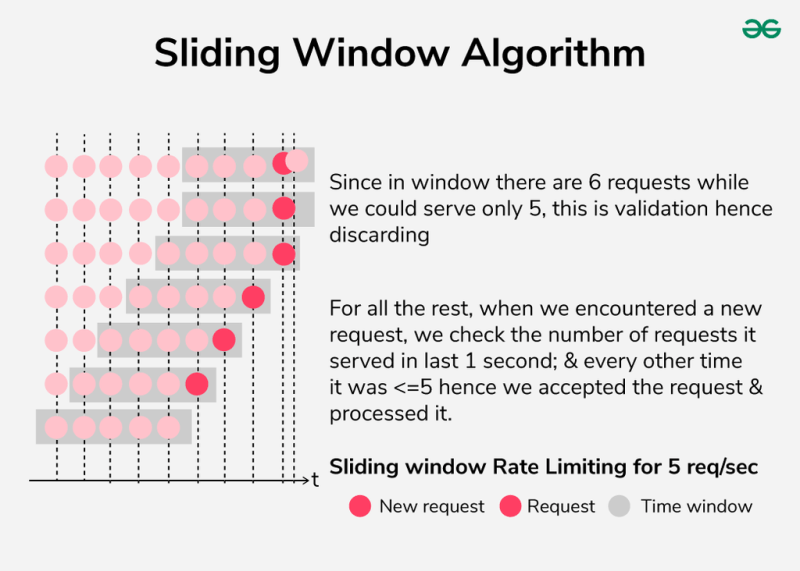
The sliding window algorithm’s impact extends beyond theoretical efficiency. In practice, it enables solutions that would otherwise be computationally infeasible for large-scale datasets. Consider a scenario where a cybersecurity firm needs to detect anomalies in network traffic by analyzing sliding 10-second windows of packet data. A brute-force approach would require O(n²) comparisons, but the sliding window technique processes each window in constant time, making real-time monitoring viable. This isn’t just about speed; it’s about enabling entirely new classes of applications.
Its versatility is another strength. The same core mechanism can solve problems across domains: from calculating moving averages in time-series data to optimizing resource allocation in cloud computing. The algorithm’s adaptability stems from its ability to encapsulate constraints—whether they’re mathematical (sum thresholds), logical (uniqueness), or probabilistic (sliding probability windows in machine learning)—into a unified framework. This makes it a cornerstone of algorithmic thinking, not just a tool for specific problems.
"The sliding window algorithm is the difference between a solution that works and one that scales. It’s not about writing more code; it’s about writing smarter code that respects the constraints of the problem."
— Martin C. Martin, Algorithm Design Specialist
Major Advantages
- Linear Time Complexity: Reduces problems from O(n²) to O(n) by eliminating redundant checks, making it ideal for large datasets.
- Memory Efficiency: Uses auxiliary structures (like hash maps) to store only necessary information, avoiding full dataset reprocessing.
- Adaptability: Can be applied to a wide range of problems, from substring analysis to numerical ranges, with minor modifications.
- Real-Time Processing: Enables dynamic analysis of streaming data (e.g., stock prices, IoT sensor feeds) without batch delays.
- Simplified Logic: Replaces nested loops with a single pass, reducing cognitive complexity and improving code maintainability.

Comparative Analysis
The sliding window algorithm’s efficiency comes at the cost of increased space usage, which can be a drawback in memory-constrained environments. Below is a comparison with alternative approaches:
| Aspect | Sliding Window Algorithm | Brute-Force | Divide-and-Conquer | Dynamic Programming |
|---|---|---|---|---|
| Time Complexity | O(n) (linear) | O(n²) or worse | O(n log n) | O(n²) or O(n) with memoization |
| Space Complexity | O(k) (where k is window size) | O(1) | O(log n) for recursion stack | O(n) for DP table |
| Best Use Case | Contiguous subarray/substring problems | Small or static datasets | Divisible problems (e.g., merge sort) | Overlapping subproblems (e.g., Fibonacci) |
| Implementation Complexity | Moderate (requires pointer management) | Low (but inefficient) | High (recursive logic) | High (state tracking) |
Future Trends and Innovations
The sliding window algorithm’s future lies in its intersection with emerging fields like machine learning and distributed systems. In deep learning, sliding windows are being used to process sequential data (e.g., time-series forecasting) with reduced latency. Similarly, in distributed computing, windowed techniques are enabling real-time analytics on massive datasets by partitioning data into manageable chunks. The rise of edge computing—where devices process data locally—will further amplify its relevance, as sliding windows allow for lightweight, on-device analysis without cloud dependencies.
Another frontier is the hybridization of sliding windows with probabilistic methods. For example, "sliding window Monte Carlo" techniques are being explored to estimate integrals or solve optimization problems where exact solutions are computationally expensive. As data grows more complex and real-time demands intensify, the sliding window algorithm’s ability to balance accuracy and efficiency will ensure its continued dominance in algorithmic design.
Conclusion
The sliding window algorithm is more than a coding optimization—it’s a philosophical approach to problem-solving. By focusing on dynamic boundaries rather than exhaustive search, it redefines what’s possible in terms of scalability and performance. Its applications span from low-level systems programming to high-level data science, proving that sometimes the most elegant solutions are the simplest ones. For developers, mastering this technique isn’t just about passing coding interviews; it’s about gaining a tool that can transform how you approach problems across your entire career.
Yet its power isn’t static. As data grows in volume and velocity, the sliding window algorithm will evolve alongside it, integrating with new paradigms like quantum computing or neuromorphic hardware. The key takeaway? The next time you encounter a problem involving contiguous data, ask yourself: Could a sliding window make this trivial? The answer might surprise you.
Comprehensive FAQs
Q: When should I use the sliding window algorithm instead of brute force?
A: Use the sliding window technique when you need to analyze contiguous subarrays or substrings and brute-force methods result in O(n²) time complexity. It’s ideal for problems where you can define a "window" (e.g., sum, uniqueness, or length constraints) and dynamically adjust its boundaries. If the problem involves non-contiguous elements or lacks a clear windowing condition, other approaches (like dynamic programming) may be more suitable.
Q: How do I determine the left and right pointers’ initial positions?
A: The right pointer typically starts at the beginning of the input (index 0) and expands outward. The left pointer begins at the same position but remains stationary until the window violates a condition. For example, in the "Longest Substring Without Repeating Characters" problem, both pointers start at 0, and the left pointer advances only when a duplicate character is found. The exact initialization depends on the problem’s constraints.
Q: Can the sliding window algorithm be applied to 2D arrays or matrices?
A: Yes, but with modifications. For 2D problems (e.g., finding the maximum sum submatrix), you can use a "sliding window in a window" approach: fix two rows as the top and bottom boundaries, then apply a 1D sliding window to the columns between them. This extends the technique to higher dimensions while maintaining efficiency. Libraries like NumPy also provide optimized tools for such operations.
Q: What are common pitfalls when implementing the sliding window algorithm?
A: Three common mistakes are:
1. Incorrect Window Adjustment: Forgetting to update the left pointer when the window condition is violated, leading to infinite loops or incorrect results.
2. Off-by-One Errors: Miscounting window sizes or pointer positions, especially when dealing with edge cases (e.g., empty windows or single-element inputs).
3. Overlooking Negative Numbers: In problems involving sums (e.g., maximum subarray), negative values can disrupt the window’s natural expansion, requiring special handling (e.g., resetting the window when the sum becomes negative).
Q: How does the sliding window algorithm compare to Kadane’s algorithm for maximum subarray problems?
A: Kadane’s algorithm is a specialized form of the sliding window technique optimized for maximum subarray sum problems. While the general sliding window algorithm uses two pointers to define a window, Kadane’s simplifies this by tracking the current sum and resetting the window whenever the sum becomes negative. Both achieve O(n) time complexity, but Kadane’s is more efficient for its specific use case due to reduced overhead.
Q: Are there any problems where the sliding window algorithm is less efficient than other methods?
A: Yes. For problems with non-contiguous constraints (e.g., finding the longest palindromic subsequence), the sliding window’s linear scan becomes inefficient. Similarly, problems requiring global optimality (e.g., the traveling salesman problem) are better suited to dynamic programming or heuristic methods. The sliding window shines when the problem’s constraints align with contiguous, local optimizations.
Leave a Comment
Comments are moderated before appearing. The data you submit is processed according to the Privacy Policy of Viralcontentbee.