How Python Set Intersection Transforms Data Processing
Python’s built-in set operations, particularly set intersection, represent a cornerstone of efficient data manipulation. Unlike lists or dictionaries, sets inherently enforce uniqueness, making them ideal for identifying common elements across collections. This property isn’t just theoretical—it underpins everything from database deduplication to machine learning feature selection. The operation’s elegance lies in its simplicity: a single method call (`&` or `.intersection()`) can reveal overlaps between datasets, yet its implications stretch far beyond basic filtering. Developers leveraging Python set intersection often discover unintended efficiencies, such as reduced memory overhead or accelerated query performance, when replacing brute-force loops with set-based logic.
The power of Python set intersection becomes evident when contrasting it with alternative approaches. For instance, a naive nested loop to find common items between two lists would scale quadratically (O(n²)), while the set intersection operation maintains linear time complexity (O(n + m)). This isn’t just about speed—it’s about scalability. As datasets grow, the difference between O(n²) and O(n) isn’t incremental; it’s exponential. Even in small-scale applications, the operation’s clarity and performance make it a default choice for tasks ranging from log analysis to graph theory.
Yet, the true value of Python set intersection lies in its versatility. It’s not merely a tool for finding shared elements; it’s a building block for more complex workflows. Whether you’re merging datasets, validating input constraints, or implementing bloom filters, understanding how set intersections function at the bitwise level can unlock optimizations you hadn’t considered. The operation’s dual representation—both as a method and an operator—also reflects Python’s design philosophy, blending readability with computational efficiency.
The Complete Overview of Python Set Intersection
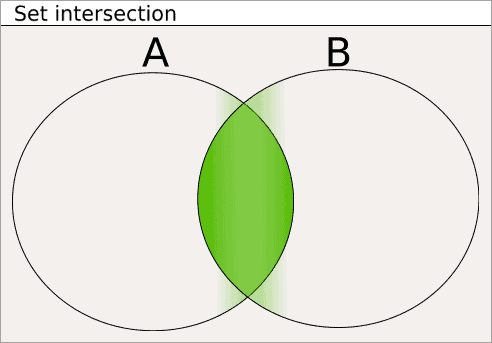
At its core, Python set intersection is a mathematical operation that yields elements present in all input sets. The operation is symmetric: `set1 & set2` produces the same result as `set2 & set1`, and it extends seamlessly to any number of sets. This symmetry isn’t accidental—it mirrors the commutative property of intersection in set theory, where the order of operands doesn’t affect the outcome. Python’s implementation leverages hash tables internally, ensuring average-case O(n) time complexity for each element, regardless of set size. This efficiency makes it suitable for both small-scale scripts and large-scale data pipelines.What distinguishes Python set intersection from other set operations (like union or difference) is its focus on exclusivity. While union combines all unique elements, and difference isolates unique elements, intersection zeroes in on the overlap. This precision is critical in scenarios where only shared values matter—for example, when cross-referencing user activity logs to identify common actions across regions. The operation’s deterministic nature also eliminates ambiguity: given identical inputs, the result will always be the same, a property that’s invaluable in reproducible research or automated testing.
Historical Background and Evolution
The concept of set intersection traces back to Georg Cantor’s foundational work in the late 19th century, where he formalized set theory as a branch of mathematics. However, its computational implementation evolved alongside programming languages. Early languages like Lisp included set-like operations, but Python’s adoption of sets as a native data type in version 2.3 (2003) marked a turning point. Before this, developers relied on workarounds like lists or third-party libraries, which were both slower and less intuitive. Python’s decision to integrate sets directly into the standard library reflected a broader trend toward optimizing common data operations at the language level.The introduction of the `set` type in Python wasn’t just about convenience—it was about performance. Guido van Rossum and the core team recognized that many real-world problems (e.g., deduplication, membership testing) could be solved more efficiently with hash-based structures. The `&` operator for intersection was added in Python 2.4 (2004), providing a concise syntax that mirrored mathematical notation. Over time, additional methods like `.intersection()` were introduced to improve readability, especially in method-chaining scenarios. Today, Python set intersection is a testament to how language design can align with theoretical efficiency, offering both speed and clarity.
Core Mechanisms: How It Works
Under the hood, Python set intersection relies on hash tables to achieve its O(n) average-case complexity. When you call `set1 & set2`, Python iterates through the smaller set (optimization) and checks for membership in the larger set using hash lookups. Each lookup is O(1) on average, making the overall operation linear. For multiple sets (e.g., `set1 & set2 & set3`), Python processes them sequentially, though some implementations may short-circuit if an intermediate intersection becomes empty. This approach ensures that even with large datasets, the operation remains predictable and performant.Table of Contents
- The Complete Overview of Python Set Intersection
- Historical Background and Evolution
- Core Mechanisms: How It Works
- Key Benefits and Crucial Impact
- Major Advantages
- Comparative Analysis
- Future Trends and Innovations
- Conclusion
- Comprehensive FAQs
- Q: Can I perform set intersection on more than two sets?
- Q: How does Python handle set intersection with non-hashable elements?
- Q: Is there a performance difference between `&` and `.intersection()`?
- Q: Can I use set intersection with NumPy arrays?
- Q: What happens if I intersect a set with an empty set?
- Q: How can I optimize memory usage when intersecting very large sets?
- Q: Does Python’s set intersection preserve order?
The implementation also handles edge cases gracefully. For instance, intersecting an empty set with any other set yields an empty result, which aligns with mathematical expectations. Similarly, intersecting a set with itself returns the original set, a property that simplifies many algorithms. Python’s `frozenset` variant further extends this functionality, allowing immutable sets to be used as dictionary keys or in other hashable contexts. The language’s consistency in treating sets as first-class citizens—with built-in support for operations like intersection—reduces the need for manual optimizations, letting developers focus on higher-level logic.
Key Benefits and Crucial Impact
The adoption of Python set intersection in production systems often leads to measurable improvements in code maintainability and execution speed. Teams migrating from list-based solutions frequently report reductions in runtime by orders of magnitude, particularly when dealing with repetitive membership checks. This isn’t just about raw performance; it’s about reducing cognitive load. When developers can express complex logic in a single line (e.g., `common_users = users_active_this_month & users_active_last_month`), they spend less time debugging nested loops and more time designing robust solutions.Beyond performance, Python set intersection enables cleaner, more expressive code. The operation’s mathematical clarity translates directly into Pythonic idioms, such as filtering data with list comprehensions or combining results with generator expressions. For example, finding all products in common between two catalogs becomes trivial with `catalog1 & catalog2`, whereas a list-based approach would require manual iteration and conditional checks. This expressiveness is particularly valuable in data science, where readability often correlates with collaboration efficiency.
"The beauty of set operations isn’t just in their speed—it’s in how they force you to think about data relationships at a higher level. Once you start using intersections, you’ll find yourself solving problems you didn’t even realize were problems." — David Beazley, Python Core Developer and Educator
Major Advantages
- Linear Time Complexity: Unlike nested loops (O(n²)), Python set intersection operates in O(n + m) time, making it scalable for large datasets.
- Memory Efficiency: Sets automatically handle uniqueness, eliminating redundant storage of duplicate values.
- Readability: Operations like `set1 & set2` are self-documenting, reducing the need for verbose comments.
- Integration with Other Operations: Combines seamlessly with union (`|`), difference (`-`), and symmetric difference (`^`) for complex workflows.
- Immutable Alternatives: `frozenset` enables hashable intersections, useful in functional programming or as dictionary keys.

Comparative Analysis
| Feature | Python Set Intersection | List-Based Approach |
|---|---|---|
| Time Complexity | O(n + m) average-case | O(n²) worst-case |
| Memory Usage | Optimized (no duplicates) | Potentially high (duplicates possible) |
| Syntax Clarity | Concise (`set1 & set2`) | Verbose (manual loops/conditionals) |
| Scalability | Handles millions of elements efficiently | Degrades with large datasets |
Future Trends and Innovations
As Python continues to evolve, set intersection operations may see further optimizations, particularly in parallel processing. Projects like NumPy’s `intersect1d` or Dask’s distributed collections already demonstrate how set-like operations can scale across clusters. Future Python versions might introduce native support for parallel set intersections, leveraging multi-core architectures without requiring explicit threading. Additionally, advancements in probabilistic data structures (e.g., bloom filters) could integrate more closely with set operations, enabling approximate intersections for big data scenarios where exact results aren’t critical.Another frontier is the intersection of set theory with machine learning. Libraries like scikit-learn already use set operations for feature selection, but future frameworks may bake in more sophisticated intersection-based workflows—such as dynamic feature pruning during model training. As data grows more heterogeneous (e.g., combining tabular, graph, and text data), the ability to perform intersections across disparate structures will become increasingly valuable. Python’s role in this landscape is likely to expand, with set intersection serving as a bridge between theoretical mathematics and applied data science.

Conclusion
Python’s set intersection is more than a syntactic convenience—it’s a reflection of how language design can align with mathematical elegance and computational efficiency. By abstracting away the complexity of manual iteration, it allows developers to focus on the logic of their problems rather than the mechanics of implementation. Whether you’re cleaning datasets, optimizing algorithms, or designing distributed systems, mastering this operation can lead to solutions that are not only faster but also more intuitive.The operation’s enduring relevance stems from its simplicity and power. As data volumes swell and computational demands grow, the principles behind Python set intersection—uniqueness, efficiency, and clarity—remain universally applicable. The key takeaway isn’t just to use the operation; it’s to recognize when its patterns can be applied to other challenges, from graph algorithms to probabilistic modeling. In an era where data is the new currency, understanding how to extract value from intersections is a skill that transcends programming languages.
Comprehensive FAQs
Q: Can I perform set intersection on more than two sets?
A: Yes. Python supports chaining intersections (e.g., `set1 & set2 & set3`) or using the `.intersection()` method with multiple arguments (e.g., `set1.intersection(set2, set3)`). Both approaches yield the same result: elements common to all input sets.
Q: How does Python handle set intersection with non-hashable elements?
A: Python sets can only contain hashable (immutable) elements. If you attempt to intersect sets with unhashable types (e.g., lists or dictionaries), you’ll encounter a `TypeError`. To work around this, convert elements to tuples or use alternative data structures like `frozenset`.
Q: Is there a performance difference between `&` and `.intersection()`?
A: No. Both operators/methods compile to the same bytecode in Python, so their performance is identical. The choice between them is purely stylistic—use `&` for brevity or `.intersection()` for method-chaining clarity.
Q: Can I use set intersection with NumPy arrays?
A: NumPy provides its own intersection function (`numpy.intersect1d()`), which is optimized for array operations. While you can convert NumPy arrays to sets and use Python’s intersection, `numpy.intersect1d()` is generally faster for large numerical datasets.
Q: What happens if I intersect a set with an empty set?
A: The result is always an empty set (`set()`), as there are no elements common to any set and the empty set. This behavior is consistent with mathematical set theory.
Q: How can I optimize memory usage when intersecting very large sets?
A: For memory-intensive operations, consider:
- Using generators to yield elements on-demand.
- Processing intersections in chunks (e.g., with `itertools`).
- Leveraging disk-backed sets (e.g., `blist` library) if RAM is constrained.
Q: Does Python’s set intersection preserve order?
A: No. Sets in Python are unordered collections, so the order of elements in the intersection result is arbitrary. If order matters, convert the result to a list or use an `OrderedDict` (Python 3.7+) as a workaround.
Leave a Comment
Comments are moderated before appearing. The data you submit is processed according to the Privacy Policy of Viralcontentbee.