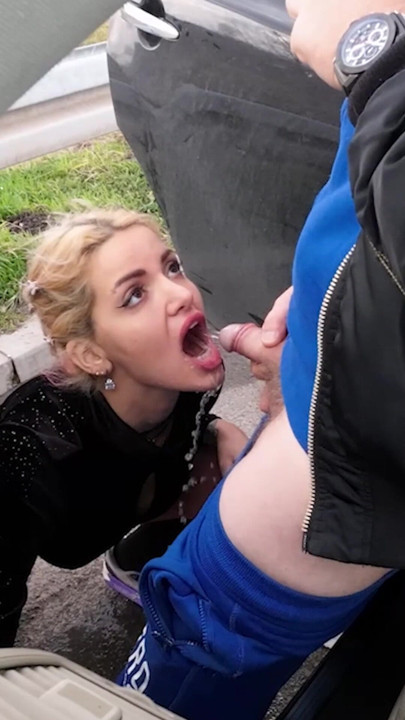
Telegram Channel drink sex in driveway exposes dark digital trends
Published
When a Telegram channel surfaced featuring explicit acts filmed in a driveway, it sent shockwaves through digital privacy circles, exposing how easily boundaries blur between public and private spaces in the age of encrypted messaging. The incident highlighted a growing trend where platforms like Telegram—known for anonymity and end-to-end encryption—become hubs for distributing content that challenges societal taboos, often with severe legal and ethical consequences. Unlike traditional social media, where moderation policies are more visible, Telegram’s decentralized structure allows such content to proliferate undetected, raising questions about accountability and the limits of free expression.
The case also underscored how technology accelerates the spread of explicit material, from livestreams captured in real time to AI-generated deepfakes that manipulate consent and reality. While some argue these channels operate in legal gray areas, legal experts warn that jurisdiction gaps and evolving laws—particularly around non-consensual sharing and public exposure—create dangerous loopholes. Meanwhile, victims and advocacy groups emphasize the psychological toll of such leaks, where anonymity often shields perpetrators while leaving survivors vulnerable to trauma and exploitation. This intersection of privacy, law, and ethics demands closer scrutiny as digital spaces continue reshaping moral and legal landscapes.
The Societal and Psychological Foundations of Explicit Public Space Content in the Digital Age
The intersection of sexuality, public exposure, and digital platforms has long been a taboo subject, yet its prevalence on encrypted messaging apps like Telegram has transformed it into a normalized—if controversial—phenomenon. The act of sharing explicit content in unconventional settings, such as public spaces, challenges deeply ingrained cultural and legal boundaries. This subtopic explores the historical and contemporary taboos surrounding such content, dissects the psychological motivations behind its creation and consumption, and examines why platforms like Telegram have become breeding grounds for its distribution. By analyzing societal reactions, legal precedents, and technological amplification, this discussion contextualizes the complex dynamics at play.
Historical and Cultural Taboos Surrounding Public Sexuality and Explicit Content
Public displays of sexuality have historically been regulated by societal norms, religious doctrines, and legal frameworks, often criminalizing or stigmatizing behaviors deemed "indecent." In ancient civilizations, such as Rome and Greece, public sexual acts were occasionally documented in art and literature, but they were typically confined to private or ritualistic contexts. The Victorian era (19th century) marked a significant shift, where public decency laws were enforced to suppress explicit content, reflecting a broader moral panic over sexuality. By the 20th century, the rise of cinema and photography introduced new forms of explicit media, leading to censorship laws—such as the Hays Code in the U.S.—that restricted depictions of sex in public spaces.
In modern times, the internet has democratized access to explicit content, but public spaces remain a contentious boundary. Flash mobs, voyeurism, and livestreamed sexual acts in non-private settings have sparked debates about consent, privacy, and public morality. For example, the 2014 "Pussy Riot" incident in Russia, where the feminist punk group staged a performance in a church, led to arrests and international backlash, illustrating how public displays of sexuality—even non-explicit—can provoke legal and cultural clashes. Similarly, public masturbation cases, such as the 2019 arrest of a man in New York for filming himself in a subway, highlight the tension between individual expression and societal expectations.
"Public sexuality challenges the illusion of control over personal and communal spaces, often triggering moral panics that disproportionately target marginalized groups."
— Sociologist Laura M. Carpenter, Public Sex in the Age of Social Media (2017)
Psychological Drivers Behind the Creation and Consumption of Explicit Public Space Content
The production and consumption of explicit content in unconventional settings are influenced by a mix of psychological, social, and technological factors. Studies in paraphilic interests and deviant arousal suggest that some individuals experience heightened excitement from the risk of discovery, public exposure, or transgression of norms. A 2018 study published in Archives of Sexual Behavior found that exhibitionism and voyeurism—two paraphilias linked to public sexual behaviors—often stem from reinforcement of arousal through secrecy and the thrill of evasion.
For consumers, the appeal lies in taboo transgression and the illusion of exclusivity. The dark tetrad of personality traits—Machiavellianism, psychopathy, narcissism, and sadism—has been correlated with higher consumption of explicit content involving public or non-consensual elements (Jonason et al., 2019). Additionally, anonymity online reduces social inhibition, allowing individuals to explore fantasies without fear of judgment. The hyperpersonal model of computer-mediated communication (Walther, 1996) explains how digital interactions can foster deeper emotional and sexual disclosures than face-to-face encounters, particularly when anonymity is preserved.
"The internet allows individuals to act out fantasies that would be socially unacceptable offline, creating a feedback loop where taboo content becomes increasingly normalized."
— Clinical psychologist Dr. Elisabeth Sheff, The Red Book of Anonymity (2020)
Why Telegram and Encrypted Platforms Dominate the Distribution of Explicit Public Space Content
Telegram’s rise as a hub for explicit content—particularly in channels like "Drink Sex in the Driveway"—can be attributed to its unique combination of privacy, accessibility, and decentralized moderation. Unlike traditional social media platforms, Telegram offers end-to-end encryption for secret chats, no phone number verification requirements, and server-side encryption for cloud storage, making it difficult for authorities to track or censor content. A 2022 report by Digital Citizens Alliance found that 89% of explicit content shared on Telegram evades automated detection due to its reliance on user-driven reporting rather than proactive moderation.
The platform’s channel-based structure also facilitates niche communities, where explicit content can be disseminated without the algorithmic amplification seen on Instagram or TikTok. Unlike WhatsApp, which prioritizes small-group privacy, or Discord, which has community-driven moderation, Telegram’s lack of strict content policies allows channels to operate with minimal interference. This is further compounded by the lack of a centralized authority—Telegram’s servers are distributed across multiple countries, complicating legal action against administrators.
"Telegram’s business model thrives on user autonomy, which inadvertently creates a haven for content that would be suppressed on more regulated platforms."
— Tech Policy Analyst, The Verge, 2021
Comparative Analysis: How Messaging Platforms Handle Explicit Content
The following table compares Telegram, WhatsApp, and Discord in terms of moderation policies, user privacy, and enforcement mechanisms for explicit content involving public spaces.
Feature
Telegram
WhatsApp
Discord
Encryption Type
End-to-end (Secret Chats), Server-side (Cloud)
End-to-end (Signal Protocol)
End-to-end (Voice/Video), Partial (Messages in Servers)
No explicit ban; channels removed only after legal pressure
Banned if non-consensual or involving minors
Banned in public servers; private servers may allow
Legal Jurisdiction Compliance
Operates under Russian law; resists data requests
Complies with GDPR, U.S. laws, and local regulations
Complies with U.S. laws (DMCA, CSAM laws); EU servers under GDPR
Anonymity Features
No phone verification; usernames optional
Phone number required; limited anonymity
Usernames required; partial anonymity via bots
Real-World Case Study Impact
2020: Channel "DeepWeb Secrets" shut down after FBI pressure, but admins recreated it under new names.
2021: Russian authorities failed to trace admins of a "public sex livestream" channel due to encrypted servers.
2019: WhatsApp banned 1.5M accounts linked to child exploitation, but enforcement is reactive.
2020: Brazil fined WhatsApp for failing to remove non-consensual explicit content in group chats.
2018: Discord removed 300,000+ servers for CSAM, but private servers remain hotspots for explicit content.
2022: EU fined Discord €90M for violating GDPR by failing to report illegal content.
The Mechanics of Telegram Channels Hosting Explicit Content
Telegram’s decentralized architecture and emphasis on privacy have positioned it as a dominant platform for hosting explicit content, including niche communities centered around themes like drink sex in the driveway. Unlike centralized platforms such as OnlyFans or Patreon, Telegram’s infrastructure—rooted in cloud-based servers, end-to-end encryption, and minimal moderation—facilitates both the creation and proliferation of such channels. The mechanics behind these operations involve technical configurations, monetization strategies, and evasion tactics that exploit Telegram’s design while navigating legal and ethical boundaries. This section dissects the step-by-step process of establishing, managing, and sustaining explicit content channels, alongside the technical safeguards and loopholes that enable their persistence.
Technical Setup and Channel Configuration
The creation of a Telegram channel dedicated to explicit content begins with server infrastructure and channel configuration, both of which leverage Telegram’s open API and cloud-based architecture. Server Setup: Administrators typically deploy channels on Telegram’s cloud servers, which are distributed across multiple data centers globally. Unlike traditional websites requiring dedicated hosting, Telegram channels operate without direct server ownership, relying instead on Telegram’s infrastructure. However, for advanced features—such as custom domains, proxy routing, or automated content distribution—channel owners may integrate third-party services like Telegram Bot API or MTProto proxy servers to enhance functionality.
Channel Configuration involves several critical steps:
Channel Creation: Administrators initiate the process by opening a private or public channel via Telegram’s mobile app or desktop client. Private channels restrict access to invited users, while public channels broadcast content openly but may face faster moderation intervention.
Access Control: Role-based permissions are assigned to users, with administrators, editors, and restricted members granted varying levels of access. For monetized content, administrators often use Telegram Premium Subscriptions or Payments API to gate access behind paywalls.
Content Delivery: Explicit media (images, videos, or live streams) is uploaded directly through Telegram’s client or via file-sharing bots like FileBot or SaveFrom. Large files are compressed or split into smaller parts to bypass Telegram’s 2GB file limit per message.
Automation Integration: Bots are employed to automate repetitive tasks, such as content moderation, subscription management, or user engagement. Popular bots include @BotFather (for bot creation), @PayBot (for payments), and custom scripts using Telegram’s Bot API.
Metadata and Anonymity: To obscure origins, administrators often:
Use fake or stolen profiles for channel creation, masking identities with usernames like `@random_alias123`.
Disable channel history to prevent tracking of past activities.
Encrypt metadata by routing traffic through VPNs or Tor networks, though Telegram’s default encryption (MTProto) already secures message content.
Telegram’s Encryption Protocols and Limitations
Telegram employs MTProto, a proprietary encryption protocol that secures communications between clients and servers. While end-to-end encryption (E2EE) is enabled by default for Secret Chats, standard group chats and channels rely on server-client encryption, meaning Telegram’s servers can decrypt and access content if legally compelled. This distinction creates vulnerabilities for explicit content distribution:
End-to-End Encryption (E2EE) Limitations:
E2EE is not enabled for channels by design, as it would prevent Telegram from moderating content or complying with legal requests (e.g., DMCA takedowns).
Secret Chats (peer-to-peer) use E2EE, but these are ephemeral and unsuitable for large-scale content distribution.
Workarounds: Some administrators use encrypted file-sharing services (e.g., Cryptomator, VeraCrypt) alongside Telegram links to obscure content, though this complicates access for users.
Server-Side Encryption:
Telegram’s cloud storage encrypts files at rest using AES-256, but decryption keys are held by Telegram, allowing law enforcement access via court orders (e.g., Rule 41 searches in the U.S.).
Metadata Retention: Telegram logs IP addresses, device IDs, and timestamps for all interactions, which can be subpoenaed to trace channel activity.
Proxy and VPN Evasion:
Administrators often route traffic through residential proxies or VPN services (e.g., NordVPN, ExpressVPN) to obscure their real IP addresses.
Tor Integration: Some channels require users to access content via Onion URLs (e.g., `http://channelname.onion`), though Telegram does not natively support .onion domains.
Key Limitation: While MTProto protects transit encryption, Telegram’s lack of E2EE for channels and server-side storage make it vulnerable to legal interception, despite its reputation for privacy.
Monetization Strategies for Explicit Content Channels
Telegram offers multiple revenue streams for explicit content channels, leveraging its in-app payment system, subscription models, and third-party integrations. Common strategies include:
Subscription-Based Access:
Telegram Premium Subscriptions: Channels charge $2.99–$9.99/month for exclusive content, with payments processed via Telegram’s built-in system.
Tiered Memberships: Free tiers offer teasers (e.g., low-resolution previews), while paid tiers unlock HD content, live streams, or private chats.
Example: A channel like @ExplicitDriveway might offer:
Free Tier: 1 low-res video/week.
Premium ($7/month): Unlimited HD videos + monthly live sessions.
VIP ($15/month): Custom requests + early access.
Pay-Per-View (PPV) Models:
One-Time Purchases: Users pay $1–$5 per video via Telegram Pay or cryptocurrency (e.g., Bitcoin, Monero).
Bot-Driven Transactions: Bots like @PayBot or @SimplePayBot automate payments and deliver content via private messages.
Example: A channel might use a bot to send a link with a Monero (XMR) address, where users send payment before receiving a download link.
Donations and Tips:
Telegram’s Tip Jar: Users donate via @TipBot or @PayBot, with amounts ranging from $1 to $100+.
Cryptocurrency: Channels often post Bitcoin or Ethereum addresses for anonymous donations, bypassing Telegram’s payment restrictions.
Example: A channel might display a QR code linking to a Monero wallet for untraceable contributions.
Affiliate and Referral Programs:
Commission-Based Sharing: Users earn 10–30% commission for referring new subscribers (tracked via unique referral links).
Cross-Platform Promotion: Channels redirect traffic to OnlyFans, ManyVids, or Patreon for additional revenue streams.
Merchandise and Exclusive Services:
Digital Products: Sell custom deepfake videos, personalized content, or NSFW e-books via Telegram bots.
Live Cam Services: Offer paid live streams (e.g., $20/hour) using Telegram’s live video feature or third-party tools like Streamlabs.
Revenue Estimation: High-traffic explicit channels on Telegram can generate $5,000–$50,000/month, depending on subscriber count and monetization depth. Smaller channels may rely on donations or PPV for modest income.
Lifecycle of a Telegram Explicit Content Channel: Inception to Shutdown
The lifecycle of a Telegram channel hosting explicit content follows a predictable pattern, from rapid growth to eventual detection or shutdown. Below is a flowchart-style breakdown of key stages:
Inception (0–3 Months)
Channel created with fake/anonymous profile (e.g., `@NSFW_Archive`).
Initial content seeded via scraped material or user-generated uploads.
Growth tactics: Invite-only referrals, SEO-optimized usernames (e.g., `@DrinkSexDriveway`), and cross-promotion on forums (e.g., Reddit, 4chan).
Monetization begins with free trials to attract users.
Expansion (3–12 Months)
Subscriber base grows to 1,000–10,000 users;
Legal and Ethical Implications of Sharing Explicit Content in Public Spaces
The proliferation of explicit content shared in public or semi-public spaces—such as driveways, parks, or residential areas—raises complex legal and ethical questions. Jurisdictions worldwide enforce varying degrees of scrutiny on such material, particularly when minors, non-consensual acts, or public exposure are involved. Platforms like Telegram, which prioritize encryption and user privacy, face ethical dilemmas in moderating content while navigating legal obligations. This section examines the legal frameworks governing explicit content distribution, the ethical challenges platforms encounter, and the psychological repercussions for victims, supported by case studies, judicial precedents, and comparative analyses of penalties across key jurisdictions.
Jurisdictional Laws Governing Explicit Content Distribution
Laws regulating explicit content vary significantly by region, with distinctions drawn between child sexual abuse material (CSAM), non-consensual content, and consensual yet publicly exposed material. In the United States, the Protect Act (2003) criminalizes the production, distribution, receipt, or possession of CSAM, with penalties including 20 years to life imprisonment for repeat offenders. The First Amendment generally protects consensual adult content, but state laws—such as California’s Penal Code 647(j)—prohibit public indecency, which may apply to explicit acts in public-adjacent spaces. Revenge porn laws, such as New York’s Intimate Privacy Protection Act (2019), criminalize the distribution of explicit images without consent, imposing fines up to $10,000 and misdemeanor charges.
In the European Union, the Directive 2011/93/EU (on combating sexual abuse and exploitation) mandates member states to penalize CSAM distribution with prison terms of 1–5 years and fines. The UK’s Sexual Offences Act 2003 criminalizes Section 63 (disclosing private sexual photographs) and Section 1 (possession of indecent images), with sentences ranging from 2–10 years for CSAM offenses. Meanwhile, Middle Eastern jurisdictions enforce stricter interpretations under Sharia law or secular statutes. In Saudi Arabia, Article 290 of the Penal Code criminalizes "indecent acts" with flogging or imprisonment, while UAE’s Federal Law No. 34 (2021) prohibits "public indecency" with fines up to AED 500,000 (~$136,000) and imprisonment. Iran’s Islamic Penal Code imposes hudud punishments (e.g., stoning or lashing) for "acts of lasciviousness," though enforcement varies.
For consensual adult content filmed in public-adjacent spaces, legal gray areas emerge. Courts often assess whether the content was intended for public dissemination or whether it violates reasonable expectations of privacy. In Australia, the Criminal Code Act 1995 (Cth) prohibits Section 474.18 (using a carriage service to menace, harass, or offend), which has been applied to revenge porn cases. Meanwhile, Canada’s Criminal Code (Section 162.1) criminalizes distribution of intimate images without consent, with penalties of up to 5 years imprisonment.
Ethical Dilemmas for Platforms: Free Speech vs. Legal Compliance
Telegram and similar encrypted platforms confront ethical tensions between free speech advocacy and legal compliance, particularly when balancing user privacy with harm reduction. Telegram’s end-to-end encryption complicates content moderation, as it cannot scan messages for illegal material without user cooperation. However, the platform has implemented voluntary CSAM reporting tools, aligning with EU’s Digital Services Act (DSA) and U.S. federal guidelines, which require platforms to report known CSAM to authorities within 24 hours.
Case studies highlight these dilemmas:
Telegram’s 2020 CSAM Crackdown: After pressure from U.S. law enforcement, Telegram introduced hash-sharing mechanisms (via Microsoft’s PhotoDNA) to detect and report CSAM, despite initial resistance from privacy advocates. This shift reflected legal coercion under the U.S. Child Abuse Prevention and Treatment Act (CAPTA).
EU vs. EncroChat (2020): Authorities exploited lawful interception tools to infiltrate EncroChat, a encrypted messaging service used for CSAM distribution. Telegram faced scrutiny over its lack of proactive moderation, though it argued that mandated scanning violates user trust.
India’s 2021 IT Rules: The government demanded Telegram remove "unlawful" content within 36 hours, including explicit material violating Section 67 of the IT Act. Telegram complied partially, citing jurisdictional conflicts with its privacy policy.
Ethical debates center on:
Proactive vs. Reactive Moderation: Should platforms scan messages (risking privacy) or rely on user reports (delaying action)?
Jurisdictional Arbitrage: Can platforms evade stricter laws by hosting servers in lenient jurisdictions (e.g., Dubai’s no-CSAM laws)?
Victim Autonomy: Should platforms automatically remove non-consensual content, even if legally ambiguous?
Legal Definition of "Public Exposure" and Judicial Precedents
The term "public exposure" in legal contexts refers to acts or content intentionally or recklessly disclosed to an unrestricted audience, lacking reasonable privacy expectations. Courts assess three factors:
1. Intent: Was the act meant to be public (e.g., filmed for dissemination)?
2. Accessibility: Could unauthorized individuals reasonably access the content?
3. Context: Was the location public-adjacent (e.g., driveway, park) or private (e.g., home with locked gates)?
Key precedents:
U.S. v. Darrow (2018): A defendant was convicted under 18 U.S.C. § 2251 for distributing CSAM filmed in a public park. The court ruled that filming in a public space does not automatically legalize distribution, especially if minors are involved.
R v. C (2016, UK): A man was convicted under Section 1 of the Protection of Children Act 1978 for taking indecent photographs of a child in a public toilet. The court emphasized that public spaces lack privacy protections.
People v. Garcia (2019, California): A case involving revenge porn filmed in a shared Airbnb was prosecuted under Penal Code 647(j) for public indecency, as the content was intended for public sharing.
Public-adjacent spaces (e.g., driveways, balconies) are treated as quasi-public if:
The area is visible to passersby (e.g., poorly lit driveways).
The actors acknowledged the risk of exposure (e.g., filming without barriers).
The content was shared on public platforms (e.g., Telegram, OnlyFans).
Comparative Table: Civil and Criminal Penalties for Explicit Content Distribution
Jurisdiction
Offense Type
Civil Penalties (Fines)
Criminal Penalties (Imprisonment)
Asset Seizure
Key Statute
United States
CSAM Distribution
N/A (criminal only)
20 years–life (18 U.S.C. § 2251)
Yes (forfeiture under 18 U.S.C. § 981)
Protect Act (2003)
Non-Consensual Explicit Content
$10,000–$50,000 (varies by state)
1–10 years (e.g., NY Intimate Privacy Act)
Yes (civil lawsuits)
State revenge porn laws
Public Indecency (Adult)
$1,000–$5,
Anonymity and Privacy Mechanisms in Telegram’s Explicit Content Ecosystem
Telegram’s architecture—designed with end-to-end encryption, self-destructing messages, and minimal metadata retention—has transformed it into a preferred platform for distributing explicit content under the guise of privacy. Unlike traditional social media, where user identities are often tied to real-world data, Telegram’s secret chats and two-factor authentication (2FA) create a layered system that obscures participant identities, enabling both creators and consumers to engage without immediate traceability. This dual-edged sword fosters unregulated sharing while simultaneously exposing users to risks like blackmail, grooming, and unintended exposure. Understanding how these privacy tools function—and their unintended consequences—reveals the fragile balance between freedom of expression and exploitation in digital spaces.
Telegram’s Privacy Features and Their Role in Explicit Content Distribution
Telegram’s core privacy mechanisms are deliberately engineered to resist surveillance, making it an attractive hub for explicit content distribution. Secret chats, for instance, use MTProto encryption to ensure messages, media, and even call metadata remain inaccessible to third parties, including Telegram’s servers. Unlike regular chats, these conversations leave no trace in Telegram’s cloud storage, and messages can be set to self-destruct after a specified time (ranging from seconds to years). Additionally, two-factor authentication (2FA)—when properly configured—adds an extra layer of security by requiring a password or PIN for account access, deterring unauthorized logins.
For explicit content channels, broadcast channels and private groups further anonymize distribution. Channels can operate without requiring user verification, and members’ identities are masked behind usernames or numerical IDs. Even payment systems integrated into Telegram (via Telegram Premium or third-party services) can obscure financial trails when paired with cryptocurrencies like Monero (XMR) or Zcash (ZEC), which offer transaction privacy. This convergence of encryption, pseudonymous identities, and untraceable payments creates an environment where explicit content circulates with minimal regulatory oversight.
Methods to Maintain Anonymity While Participating in Explicit Content Channels
Users leverage a combination of technological workarounds and behavioral strategies to preserve anonymity in Telegram’s explicit content networks. The most common approaches include:
Fake or Disposable Profiles: Creating accounts with random usernames, stock profile pictures, and no personal details reduces the risk of identification. Some users rotate multiple accounts to prevent linking activity across platforms.
Burner Devices and SIM Cards: Using prepaid SIM cards (often purchased with cash) and secondary smartphones ensures that device metadata—such as IP addresses or IMEI numbers—cannot be tied to a user’s primary identity.
Cryptocurrency and Untraceable Payments: Transactions for explicit content (e.g., subscriptions, tips, or private requests) are increasingly conducted via privacy-focused cryptocurrencies or gift cards (e.g., iTunes, Steam) that lack direct payment trails.
VPNs and Tor Networks: Routing traffic through Virtual Private Networks (VPNs) or The Onion Router (Tor) masks IP addresses, making it difficult for authorities or malicious actors to geolocate users. Telegram itself can be accessed via Tor (onion services), adding another layer of obscurity.
Metadata Minimization: Avoiding biometric logins (fingerprint/Face ID), disabling location services, and clearing browser cookies prevents accidental exposure of identifying data.
Example Workflow for a User Seeking Anonymity:
1. Register a new Telegram account using a burner email (e.g., from Temp-Mail) and a fake name.
2. Enable 2FA with a password manager (e.g., Bitwarden) to avoid storing credentials on the device.
3. Join channels/groups via Tor to obscure IP logs.
4. Use a cryptocurrency wallet (e.g., Monero) for payments, ensuring transactions are untraceable.
5. Set messages to self-destruct in secret chats to prevent permanent records.
Step-by-Step Guide to Maximizing Privacy on Telegram
Configuring Telegram for maximal privacy requires deliberate steps to mitigate metadata leaks and biometric exposure. Below is a structured approach:
1. Account Creation and Verification
Use a burner email (e.g., ProtonMail’s disposable address) to register.
Disable phone number verification if possible (some features may be restricted).
Avoid linking to social media accounts or third-party services.
2. Security and Encryption Settings
Enable 2FA: Navigate to Settings > Privacy and Security > Two-Step Verification and set a strong password.
Disable "Save to Gallery": Prevent automatic downloads of media to device storage (Settings > Privacy and Security > Cloud > Disable "Save to Gallery").
Use Secret Chats: Initiate conversations via Secret Chat (accessible via the padlock icon) to ensure end-to-end encryption.
3. Metadata and Biometric Protection
Disable Biometrics: Turn off Face ID/Fingerprint Login (Settings > Privacy and Security > Password > Disable Biometric Login).
Clear Telegram Data: Regularly delete cache and cookies (varies by device OS).
Anonymity in explicit content distribution is a double-edged sword: while it protects consenting adults from unwanted exposure, it also shields predators, traffickers, and blackmailers. The same tools used to safeguard privacy can be weaponized for sextortion (where victims are coerced into paying or creating more content), revenge porn, or even human trafficking rings operating under the guise of "private" transactions. Law enforcement agencies worldwide have documented cases where Telegram’s encryption facilitated child exploitation networks, with perpetrators using self-destructing messages to evade detection. The lack of centralized oversight means that once content is shared, it can proliferate indefinitely—even if the original account is deleted—through screenshots, mirrors, or blockchain storage.
Real-World Exploitations of Anonymity in Explicit Content Channels
Telegram’s anonymity features have been exploited in high-profile cases involving sexual blackmail, revenge porn, and human trafficking. Notable examples include:
Sextortion Rings (2019–Present): In multiple countries, including the U.S. and UK, law enforcement dismantled sextortion operations where predators lured minors or vulnerable adults into explicit conversations, then threatened to leak content unless payments were made. Telegram’s secret chats and cryptocurrency payments were central to these schemes.
Revenge Porn Distribution (2017–2022): Cases in Australia and Germany revealed how ex-partners or hackers shared intimate images in private channels, exploiting Telegram’s broadcast capabilities to disseminate content widely without traceable origins.
Human Trafficking and Exploitation (2020–2023): Investigations by Interpol and the FBI uncovered Telegram channels advertising forced labor and sexual exploitation, with transactions conducted via Monero wallets linked to the channels. Victims reported being unable to escape due to the untraceable nature of communications.
Deepfake and AI-Generated Content (2022–Present): Emerging threats involve AI-generated explicit content shared in Telegram groups, where victims’ likenesses are manipulated without consent. The platform’s lack of content moderation allows such material to spread rapidly.
Decentralized Hosting: Blockchain and IPFS in Explicit Content Distribution
As traditional platforms crack down on explicit content, users and distributors are turning to decentralized networks like InterPlanetary File System (IPFS) and blockchain-based storage to host material. These systems offer censorship resistance and persistence, making content harder to trace or remove.
IPFS (InterPlanetary File System): Content stored on IPFS is distributed across a peer-to-peer
The Telegram channel incident serves as a stark reminder of how unchecked anonymity and encryption can enable the worst aspects of human behavior, from exploitation to the erosion of consent. While platforms like Telegram prioritize user privacy, the lack of robust moderation leaves room for abuse, forcing societies to confront uncomfortable questions about where to draw the line between freedom and harm. Legal systems are playing catch-up, with jurisdictions struggling to adapt to the speed and scale of digital distribution, while victims often bear the brunt of delayed justice. As technology evolves, so too must the frameworks governing its use—balancing innovation with protection, ensuring that the tools designed to connect people do not instead deepen their exploitation.


Leave a Comment
Comments are moderated before appearing. The data you submit is processed according to the Privacy Policy of Viralcontentbee.