Mastering Python Set: The Definitive Guide to Efficient Data Handling
Python’s built-in set is not merely a data structure—it’s a cornerstone of efficient data manipulation. Unlike lists or dictionaries, a python set enforces uniqueness by design, eliminating duplicates while optimizing performance for membership tests, intersections, and unions. Its unordered nature makes it ideal for tasks where order is irrelevant, yet its mathematical underpinnings (borrowed from set theory) enable operations that would otherwise require cumbersome manual loops. Developers leverage python sets to filter duplicates, validate inputs, or accelerate lookups, often without realizing how deeply the structure integrates with Python’s broader ecosystem.
The elegance of a python set lies in its simplicity. A single line—`my_set = {1, 2, 3}`—creates a collection where each element is distinct, hashable, and accessible in constant time. Yet beneath this simplicity is a sophisticated implementation: Python’s set is backed by a hash table, ensuring O(1) average-case complexity for add, remove, and membership checks. This efficiency becomes critical in large-scale applications, where linear scans through lists would introduce unacceptable latency. The trade-off? Sets sacrifice ordering and indexing, but for many use cases, this is a worthwhile compromise.
While lists excel at ordered sequences and dictionaries at key-value pairs, the python set thrives in scenarios demanding uniqueness and speed. Whether you’re deduplicating a dataset, computing symmetric differences, or optimizing algorithmic workflows, understanding its mechanics and quirks can transform how you approach data problems. Below, we dissect its evolution, inner workings, and why it remains indispensable in modern Python development.

The Complete Overview of Python Set
A python set is a mutable, unordered collection of unique elements, where each item must be hashable (immutable types like integers, strings, or tuples). Its primary purpose is to eliminate redundancy while providing fast lookups—operations that would require O(n) time in a list become O(1) in a set. This duality of uniqueness and performance makes it a go-to choice for tasks ranging from input validation to graph theory implementations. For instance, checking if an email exists in a database of 10 million records is trivial with a set but prohibitively slow with a list.The syntax mirrors that of dictionaries, using curly braces `{}` to define the collection. However, unlike dictionaries, sets lack keys and values; they are purely about membership. This distinction simplifies operations like union (`|`), intersection (`&`), and difference (`-`), which align with mathematical set theory. The trade-off is that sets do not preserve insertion order (though Python 3.7+ dictionaries do, which is a separate feature). For ordered uniqueness, developers often pair sets with `dict.fromkeys()` or `OrderedDict`.
Historical Background and Evolution
The concept of sets predates Python itself, rooted in mathematical theory where they represent collections of distinct objects. Python’s implementation, however, emerged from practical needs: Guido van Rossum introduced sets in Python 2.3 (2003) as a response to growing demand for efficient uniqueness operations. Before this, developers relied on lists with manual deduplication or third-party libraries, which were both slow and cumbersome. The addition of sets to the standard library marked a turning point, aligning Python with languages like Java or C++ that had similar structures.Under the hood, Python’s set is implemented as a hash table, a data structure that maps keys to values via hashing. This design choice was critical: hash tables provide average-case O(1) time complexity for insertions, deletions, and lookups, making sets far more efficient than alternatives like balanced trees or linked lists. The evolution continued with Python 3.0, where sets were further optimized for memory usage and expanded with methods like `symmetric_difference()` and `isdisjoint()`. Today, sets are not just a utility but a fundamental tool in Python’s toolkit, underpinning libraries like `pandas` and `networkx`.
Core Mechanisms: How It Works
At its core, a python set relies on hashing to ensure uniqueness. When an element is added to a set, Python computes its hash value (using the built-in `hash()` function) and stores it in a table. If another element with the same hash is added, Python checks for equality to confirm uniqueness. This two-step process—hashing followed by equality comparison—guarantees that only distinct elements reside in the set. The hash table itself is dynamically resized to maintain efficiency, though collisions (where two distinct elements produce the same hash) are handled via open addressing or separate chaining.Table of Contents
- The Complete Overview of Python Set
- Historical Background and Evolution
- Core Mechanisms: How It Works
- Key Benefits and Crucial Impact
- Major Advantages
- Comparative Analysis
- Future Trends and Innovations
- Conclusion
- Comprehensive FAQs
- Q: Can a Python set contain mutable elements like lists or dictionaries?
- Q: How does Python handle hash collisions in sets?
- Q: Are Python sets ordered in Python 3.7+?
- Q: What’s the difference between `set.add()` and `set.update()`?
- Q: Can I use sets to find the difference between two lists?
- Q: Why is `set([1, 2, 2, 3])` equal to `{1, 2, 3}`?
The unordered nature of sets stems from their reliance on hash tables, which do not preserve insertion order. However, Python 3.7+ introduced insertion-order preservation for dictionaries, and while sets themselves remain unordered, this feature indirectly benefits set-like operations when combined with `dict.fromkeys()`. For example:
```python
ordered_unique = dict.fromkeys([3, 1, 2]).keys() # Returns a view with order preserved
```
This workaround highlights how Python’s ecosystem adapts to fill gaps in core data structures.
Key Benefits and Crucial Impact
The adoption of python sets in production environments stems from their ability to solve problems that would otherwise require brute-force methods. Consider a scenario where you need to find common elements between two large datasets. Using lists, you’d iterate through each element of one list and check for membership in the other—a process with O(n²) complexity. With sets, the intersection operation (`set1 & set2`) reduces this to O(n), a difference that becomes exponential as data scales. This performance advantage extends to membership tests, where checking `if x in my_set` is orders of magnitude faster than `x in my_list`.Beyond speed, sets simplify code by abstracting away repetitive tasks. For example, deduplicating a list of user inputs is as simple as converting it to a set:
```python
unique_users = set(user_inputs) # Eliminates duplicates in one line
```
This conciseness reduces cognitive load and minimizes bugs, as manual deduplication often introduces off-by-one errors or edge cases. The impact is particularly pronounced in data science, where sets are used to clean datasets, merge records, or identify outliers.
"Sets are the Swiss Army knife of data structures—they solve problems you didn’t even know you had." — David Beazley, Python Core Developer
Major Advantages
- Uniqueness Enforcement: Automatically filters out duplicate values, ensuring data integrity without manual checks.
- O(1) Membership Testing: Checking if an element exists in a set is constant-time, making it ideal for validation and lookups.
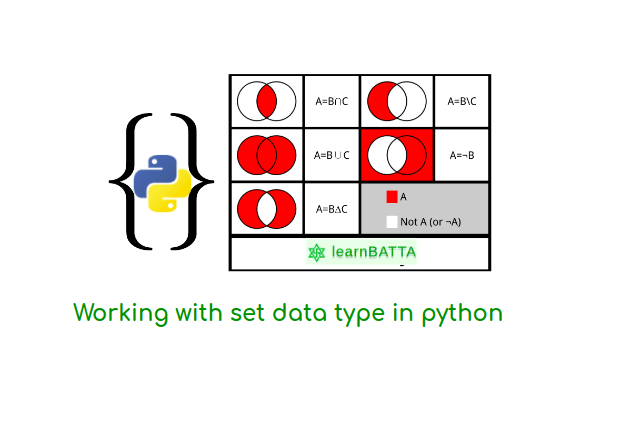
- Mathematical Operations: Supports union, intersection, difference, and symmetric difference operations natively, mirroring set theory.
- Memory Efficiency: Uses hash tables to minimize storage overhead, especially for large datasets where duplicates would bloat memory usage.
- Immutability Support: Only hashable (immutable) types can be elements, preventing accidental modifications that could corrupt the set’s structure.
Comparative Analysis
While python sets excel in specific scenarios, other data structures offer complementary strengths. Below is a comparison of sets against lists, dictionaries, and tuples:| Feature | Python Set | List |
|---|---|---|
| Ordering | Unordered (Python 3.7+ dicts preserve order, but sets do not) | Ordered (insertion order preserved) |
| Duplicates | Not allowed (enforces uniqueness) | Allowed (can contain duplicates) |
| Membership Test | O(1) average case (hash-based) | O(n) (linear scan required) |
| Use Case | Uniqueness, fast lookups, mathematical operations | Sequential data, ordered collections |
Future Trends and Innovations
As Python continues to evolve, so too will the role of python sets. One emerging trend is the integration of sets with probabilistic data structures like Bloom filters, which could enable approximate membership tests with even lower memory footprints. Additionally, Python’s type hints and static analysis tools (e.g., `mypy`) are increasingly leveraging sets to enforce constraints, such as ensuring a function only accepts unique identifiers. Future versions may also introduce specialized set methods for machine learning workflows, where deduplication and intersection operations are common.Another frontier is the optimization of sets for parallel processing. Given that sets are thread-safe for individual operations (though not for concurrent modifications), future implementations might explore lock-free designs or distributed set structures for multi-core systems. As data grows more complex—think graph databases or real-time analytics—sets will likely remain a linchpin, adapted to handle larger scales and more nuanced operations.
Conclusion
The python set is more than a data structure; it’s a paradigm shift in how developers handle uniqueness and performance. Its design reflects a balance between mathematical rigor and practical efficiency, making it indispensable in everything from small scripts to large-scale systems. While other structures like lists or dictionaries may seem more versatile at first glance, sets shine where speed and uniqueness are paramount. Mastering them isn’t just about syntax—it’s about recognizing when to leverage their strengths and when to combine them with other tools in Python’s arsenal.As the language evolves, sets will continue to adapt, but their core principles—hashing, uniqueness, and mathematical operations—will endure. For developers, this means staying attuned to new methods, optimizations, and integrations, ensuring that the python set remains a cornerstone of efficient and elegant coding.
Comprehensive FAQs
Q: Can a Python set contain mutable elements like lists or dictionaries?
A: No. Sets require all elements to be hashable, and mutable types (like lists or dictionaries) cannot be hashed because their content can change, making their hash values inconsistent.
Q: How does Python handle hash collisions in sets?
A: Python uses open addressing to resolve collisions. When two elements hash to the same index, the set stores them in subsequent slots until an empty one is found. This ensures O(1) average-case performance but can degrade to O(n) in worst-case scenarios (e.g., many collisions).
Q: Are Python sets ordered in Python 3.7+?
A: No. Sets remain unordered, even in Python 3.7+. However, insertion-order preservation was added to dictionaries in that version, which can be used as a workaround for ordered uniqueness via `dict.fromkeys()`.
Q: What’s the difference between `set.add()` and `set.update()`?
A: `set.add(x)` inserts a single element `x` into the set. `set.update(iterable)` adds multiple elements from an iterable (e.g., a list or another set) at once. For example, `s.update([1, 2])` is equivalent to `s.add(1); s.add(2)`.
Q: Can I use sets to find the difference between two lists?
A: Yes. Convert both lists to sets and use the `-` operator: `set(list1) - set(list2)`. This returns elements in `list1` that are not in `list2`. For asymmetric differences (elements in either list but not both), use `symmetric_difference()`.
Q: Why is `set([1, 2, 2, 3])` equal to `{1, 2, 3}`?
A: Because sets automatically discard duplicates. The expression `set([1, 2, 2, 3])` creates a set with only the unique values `{1, 2, 3}`, demonstrating the structure’s core purpose of enforcing uniqueness.
Leave a Comment
Comments are moderated before appearing. The data you submit is processed according to the Privacy Policy of Viralcontentbee.