How an Online Python Interpreter Transforms Coding Accessibility
Python’s ascent as the world’s most accessible programming language is undeniable, but its true revolution lies in the online Python interpreter—a tool that has dismantled barriers between aspiring coders and complex computational tasks. No longer confined to local installations or clunky IDEs, these cloud-based environments let users execute Python scripts in real time, debug on the fly, and collaborate seamlessly. The shift from desktop-bound development to browser-accessible Python interpreters online has redefined how educators, hobbyists, and professionals engage with the language, turning abstract concepts into tangible results with a single keystroke.
Yet the implications stretch beyond convenience. Online interpreters have become the silent backbone of computational education, enabling teachers to demonstrate algorithms without setup hassles or students to experiment without fear of corrupting their systems. For freelancers and remote teams, they eliminate dependency on uniform development environments, while for data scientists, they offer instant sandboxing for experimental code. The question is no longer whether to use an online Python interpreter, but how to leverage it effectively—and the answer lies in understanding its architecture, capabilities, and evolving role in modern software development.

The Complete Overview of Online Python Interpreter Platforms
The online Python interpreter represents a convergence of web technology and computational power, where Python’s interpreter—traditionally a local binary—runs in a remote server environment accessible via HTTP. This model isn’t just about convenience; it’s a paradigm shift that decouples execution from installation, allowing users to write, test, and iterate without infrastructure overhead. Platforms like Replit, PythonAnywhere, and Jupyter Notebook’s online variants have popularized this approach, each tailoring the experience to specific needs: from beginner-friendly syntax highlighting to enterprise-grade collaboration tools.What distinguishes these Python interpreters online from their offline counterparts is their emphasis on immediacy and accessibility. Local Python installations require version management, dependency resolution, and system compatibility checks—steps that can deter novices or slow down iterative workflows. Online interpreters abstract these complexities, offering pre-configured environments with libraries pre-installed (NumPy, Pandas, Flask) and versioned Python kernels. This democratization has turned coding into a low-friction activity, where the primary barrier is no longer technical setup but creative limitation.
Historical Background and Evolution
The origins of online Python interpreters trace back to the early 2000s, when web-based IDEs emerged as a response to the growing demand for remote development. Projects like PythonAnywhere (launched in 2010) were among the first to offer persistent Python environments over the web, targeting educators and researchers who needed remote access to computational resources. Meanwhile, the rise of cloud computing—epitomized by AWS and Google Cloud—provided the infrastructure to scale these interpreters, reducing latency and enabling real-time collaboration.The turning point came with the proliferation of Python interpreters online as standalone services rather than ancillary tools. Platforms like Replit (2015) and CodePen’s Python integration (2017) gamified coding by embedding interpreters directly into web interfaces, while Jupyter Notebook’s migration to cloud-based solutions (via Binder and Google Colab) made data science more inclusive. Today, these tools are no longer niche experiments but staples in tech curricula, corporate training programs, and open-source communities—proving that the online Python interpreter is as much a cultural shift as a technical innovation.
Core Mechanisms: How It Works
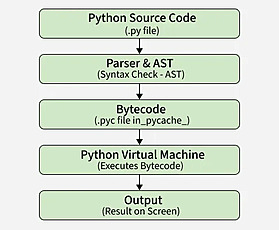
Under the hood, an online Python interpreter operates through a layered architecture that balances performance with accessibility. At its core, the platform hosts a Python runtime (CPython, PyPy, or JIT-compiled variants) in a containerized or virtualized environment, isolated from other users to ensure stability. When a user submits code via a web interface, the request is routed through a load balancer to a worker node, where the Python interpreter processes the input, executes the script, and returns output—often via WebSockets for real-time updates.The magic lies in the abstraction of system dependencies. Traditional Python development requires managing packages via `pip`, resolving conflicts between library versions, and configuring virtual environments. Online Python interpreters sidestep these issues by offering pre-configured "templates" (e.g., Django stacks, data science environments) or allowing users to specify dependencies in a declarative manner (e.g., `requirements.txt` uploads). Some platforms even integrate with GitHub or GitLab, pulling entire repositories into ephemeral environments for instant testing—a feature that has revolutionized CI/CD pipelines for small teams.
Key Benefits and Crucial Impact
The adoption of Python interpreters online isn’t merely a trend; it’s a response to the fragmentation of modern software development. For educators, these tools eliminate the "works on my machine" problem, ensuring consistency across classrooms. For professionals, they provide a safety net for experimenting with untested code without risking local system corruption. Even for seasoned developers, the ability to spin up a disposable environment for a quick prototype or a one-off data analysis task saves hours of setup time.Table of Contents
- The Complete Overview of Online Python Interpreter Platforms
- Historical Background and Evolution
- Core Mechanisms: How It Works
- Key Benefits and Crucial Impact
- Major Advantages
- Comparative Analysis
- Future Trends and Innovations
- Conclusion
- Comprehensive FAQs
- Q: Are online Python interpreters secure?
- Q: Can I use an online Python interpreter for production?
- Q: Do online interpreters support all Python libraries?
- Q: How do I collaborate in real time with an online Python interpreter?
- Q: Are there offline alternatives to online Python interpreters?
- Q: Can I save my work in an online Python interpreter?
The impact extends to economic accessibility. In regions with limited hardware resources or restrictive IT policies, online Python interpreters bridge the gap, allowing students and entrepreneurs to participate in the digital economy without upfront costs. This aligns with Python’s philosophy of "batteries included"—now extended to the cloud.
"The most profound technologies are those that disappear into the background, making the impossible routine. Online Python interpreters do exactly that—they vanish the friction of setup, leaving only the code." — Guido van Rossum (Python’s creator, reflecting on the tool’s role in education)
Major Advantages
- Instant Accessibility: No installation required. Users can start coding within seconds, regardless of their operating system or local Python version.
- Collaboration-First Design: Features like shared workspaces (Replit), live pair programming (PythonAnywhere), and version control integration (GitHub) make teamwork seamless.
- Educational Scalability: Teachers can distribute pre-configured coding exercises with embedded interpreters, ensuring all students work in identical environments.
- Library and Dependency Management: Pre-loaded environments (e.g., TensorFlow, Django) eliminate the "dependency hell" of local setups, while customizable templates support niche use cases.
- Cost Efficiency: Free tiers (e.g., Replit, Google Colab) remove financial barriers, while pay-as-you-go models (PythonAnywhere) scale with usage—ideal for freelancers and startups.

Comparative Analysis
| Platform | Key Features and Trade-offs |
|---|---|
| Replit |
|
| PythonAnywhere |
|
| Google Colab |
|
| JDoodle |
|
Future Trends and Innovations
The next evolution of online Python interpreters will likely focus on AI-assisted development and edge computing. Platforms may embed LLMs to auto-generate boilerplate code, suggest optimizations, or explain errors in natural language—blurring the line between interpreter and IDE. Meanwhile, the rise of WebAssembly (WASM) could enable local-like performance in browser-based interpreters, reducing latency for CPU-intensive tasks.Another frontier is multi-language interoperability. Tools like Pyodide (Python in the browser via WebAssembly) are already enabling Python to run alongside JavaScript, opening doors for hybrid web applications. As quantum computing libraries mature, we may see online Python interpreters with quantum simulation backends, letting users experiment with Qiskit or Cirq without specialized hardware.
Conclusion
The online Python interpreter is more than a convenience—it’s a catalyst for inclusivity in technology. By removing the technical and financial barriers to entry, these platforms have accelerated Python’s adoption in fields from finance to biology, proving that powerful tools don’t need to be exclusive. For developers, the choice of which Python interpreter online to use now hinges on specific needs: collaboration, education, or scalability. Yet the overarching trend is clear: the future of coding will be increasingly cloud-native, interactive, and accessible.As these tools evolve, their impact will extend beyond individual productivity to systemic change. Imagine a world where every student, regardless of background, can run their first Python script without friction—a world where innovation isn’t gated by setup steps. That future is already here, powered by the online Python interpreter.
Comprehensive FAQs
Q: Are online Python interpreters secure?
Most reputable platforms (Replit, PythonAnywhere) use containerization and sandboxing to isolate user code, preventing cross-contamination. However, users should avoid uploading sensitive data (e.g., API keys) to free tiers. Always review a platform’s privacy policy for data retention practices.
Q: Can I use an online Python interpreter for production?
While some platforms (PythonAnywhere, Replit Pro) offer scalable hosting, online Python interpreters are generally not designed for high-traffic production workloads. For deployments, consider pairing them with cloud services (AWS Lambda, Heroku) or traditional VPS solutions.
Q: Do online interpreters support all Python libraries?
Popular libraries (NumPy, Pandas, Flask) are pre-installed on most platforms, but niche or recently released packages may require manual installation (e.g., uploading a `requirements.txt` file). Check the platform’s documentation for supported versions.
Q: How do I collaborate in real time with an online Python interpreter?
Platforms like Replit and PythonAnywhere support live collaboration via shared workspaces. Invite teammates by generating a link, and use built-in chat tools to discuss changes. Version control (Git) can also be integrated for tracking modifications.
Q: Are there offline alternatives to online Python interpreters?
Yes. Local options include:
- Anaconda (for data science environments).
- VS Code with Python extensions (e.g., Pylance).
- Docker containers (for reproducible setups).
Q: Can I save my work in an online Python interpreter?
Most platforms auto-save code to the cloud, but persistence varies:
- Replit: Saves to your account (free tier includes 5GB).
- PythonAnywhere: Offers persistent filesystems on paid plans.
- Google Colab: Ties to Google Drive for backup.
Leave a Comment
Comments are moderated before appearing. The data you submit is processed according to the Privacy Policy of Viralcontentbee.