What Is A Machine Definition Explored Across Disciplines
Table of Contents
- Core Concept of Machine Definition: Foundational Principles and Disciplinary Perspectives
- Foundational Principles: Mechanical vs. Computational Perspectives
- Categorization of Machines: A Structured Taxonomy
- Historical Evolution of Machine Definitions
- Technical Components of Machines: Structural and Functional Decomposition
- Core Components and Their Interdependencies
- Step-by-Step Decomposition of a Hypothetical Machine
- Functional Hierarchy of Machine Components
- Energy Conversion and Propagation in Machines
- Machine Behavior and Functionality
- Methodologies for Modeling Machine Behavior
- Deterministic vs. Stochastic Approaches: Trade-Off Analysis
- Role of Algorithms in Defining Machine Operations
- Machines in Computational Theory
- Theoretical Limits of Machines: Turing Completeness and the Church-Turing Thesis
- Abstract Machines: Formalisms, Capabilities, and Restrictions
- Formal Languages and Parsing Machines: Interaction with Machine Definitions
- Designing a Minimal Machine: Step-by-Step Construction of a Counter-Based System
- Real-World Applications and Examples of Machine Definitions Across Disciplines
- Taxonomy of Machines by Application Domain
- Granular Mechanisms of Select Machines
Machines have long transcended their mechanical origins to become the cornerstone of modern innovation, shaping everything from industrial automation to artificial intelligence. At its core, the definition of a machine evolves alongside technological progress, blending engineering precision with computational abstraction. This exploration dissects the foundational principles that distinguish machines in technical and philosophical contexts, tracing their development from ancient automata to contemporary AI systems. By examining how disciplines such as engineering, biology, and computer science interpret machines—through structured categorizations, theoretical frameworks, and real-world applications—we uncover the adaptability and complexity inherent in their design and function.
The interplay between deterministic and probabilistic systems, the role of algorithms in defining behavior, and the theoretical limits imposed by computational theory collectively redefine what constitutes a machine. Whether analyzing a Turing machine’s logical operations or a neural network’s adaptive learning, the boundaries between mechanical and computational models continue to blur. This discussion not only clarifies the technical components that constitute machines—input/output systems, processing units, and feedback mechanisms—but also highlights how their functional hierarchies and energy conversions underpin diverse applications. From manufacturing robots to quantum computing systems, the definition of a machine remains dynamic, reflecting both historical milestones and emerging frontiers in technology.

Core Concept of Machine Definition: Foundational Principles and Disciplinary Perspectives
The definition of a "machine" transcends its colloquial association with mechanical devices, encompassing a spectrum of theoretical frameworks that integrate physics, computation, and even biology. At its core, a machine is an abstract or physical entity designed to perform tasks with predefined rules, transforming inputs into outputs through structured processes. This definition bridges deterministic systems—where outcomes are predictable based on initial conditions—and probabilistic or adaptive systems, where uncertainty or learning mechanisms influence behavior. The evolution of machine definitions reflects broader intellectual shifts, from the deterministic automata of antiquity to the emergent complexity of modern artificial intelligence, where machines exhibit properties akin to cognition or autonomy.The conceptualization of machines varies significantly across disciplines, each emphasizing distinct attributes such as energy transformation, information processing, or biological mimicry. Engineering prioritizes functional efficiency and material constraints, while computer science frames machines as computational agents governed by algorithms. Biology, meanwhile, explores machines through the lens of evolutionary systems, where "machines" may refer to molecular pathways or neural networks. These disciplinary divergences underscore the need for a unified yet nuanced taxonomy that acknowledges both the material and abstract dimensions of machines.
Foundational Principles: Mechanical vs. Computational Perspectives
The distinction between mechanical and computational machines hinges on their operational paradigms. Mechanical machines adhere to classical physics, where energy transfer and physical constraints dictate behavior. Their defining feature is the conversion of one form of energy into another (e.g., a steam engine transforming thermal energy into mechanical motion), governed by laws such as Newtonian mechanics or thermodynamics. In contrast, computational machines operate under the principles of information theory and discrete mathematics, processing symbolic representations of data rather than physical forces. A key divergence lies in their determinism: mechanical systems are inherently deterministic (given inputs, outputs are fixed), whereas computational machines may incorporate probabilistic elements (e.g., stochastic algorithms in AI).A machine, in its most general sense, is a device or system that accepts an input, processes it, and produces an output, where the processing follows a set of rules or laws.The philosophical underpinnings of these perspectives trace back to the mechanistic worldview of the 17th century (Descartes, Leibniz), which posited that natural phenomena could be explained through mechanical interactions. This view laid the groundwork for cybernetics (Norbert Wiener, 1948), which expanded the definition to include feedback-controlled systems, and later, artificial intelligence (John McCarthy, 1956), which introduced the idea of machines capable of "rational thought." The computational perspective further complicates the definition by introducing Turing completeness—the ability of a system to simulate any algorithmic process—thereby blurring the line between machines and abstract mathematical entities.
— Alan Turing, "Computing Machinery and Intelligence" (1950)
Categorization of Machines: A Structured Taxonomy
Machines can be systematically categorized based on complexity, determinism, and functional scope. Below is a structured breakdown highlighting key distinctions:| Type | Key Characteristics | Examples | Theoretical Basis |
|---|---|---|---|
| Simple Machines |
|
|
|
| Complex Machines |
|
|
|
| Deterministic Machines |
|
|
|
| Probabilistic/Adaptive Machines |
|
|
|
Historical Evolution of Machine Definitions
The trajectory of machine definitions mirrors humanity’s expanding understanding of causality, energy, and information. Key milestones include:- Ancient Automata (4th century BCE–1st century CE):
The Antikythera mechanism (c. 100 BCE) and Hero of Alexandria’s steam engine (1st century CE) exemplified early mechanical machines, designed for astronomical calculations and energy conversion. These devices embodied the Aristotelian view of machines as tools for extending human capability, rooted in empirical observation rather than abstract theory.
- Industrial Revolution (18th–19th centuries):
James Watt’s steam engine (1776) and Charles Babbage’s Analytical Engine (1837) marked a shift toward energy-based and computational machines. Babbage’s work, in particular, introduced the concept of a machine as a programmable calculator, foreshadowing modern computers. The First Law of Thermodynamics (1850) further formalized the relationship between machines and energy dissipation.
- Cybernetics and Information Theory (Mid-20th Century):
Norbert Wiener’s Cybernetics (1948) redefined machines as feedback-controlled systems, emphasizing self-regulation and communication. Claude Shannon’s information theory (1948) later provided a mathematical framework for understanding machines as information processors, distinct from their mechanical counterparts.
- Artificial Intelligence and Cognitive Machines (Late 20th Century–Present):
The Turing Test (1950) and subsequent advancements in machine learning (e.g., back
Technical Components of Machines: Structural and Functional Decomposition
Machines, whether computational, mechanical, or hybrid systems, rely on a systematic integration of technical components to execute predefined tasks. These components—ranging from input/output interfaces to energy conversion subsystems—operate in tandem to achieve functional objectives. The interdependencies among these elements dictate efficiency, responsiveness, and adaptability. Below, the foundational technical elements are dissected into their core constituents, with a focus on their hierarchical organization, procedural analysis, and energy dynamics.
Core Components and Their Interdependencies
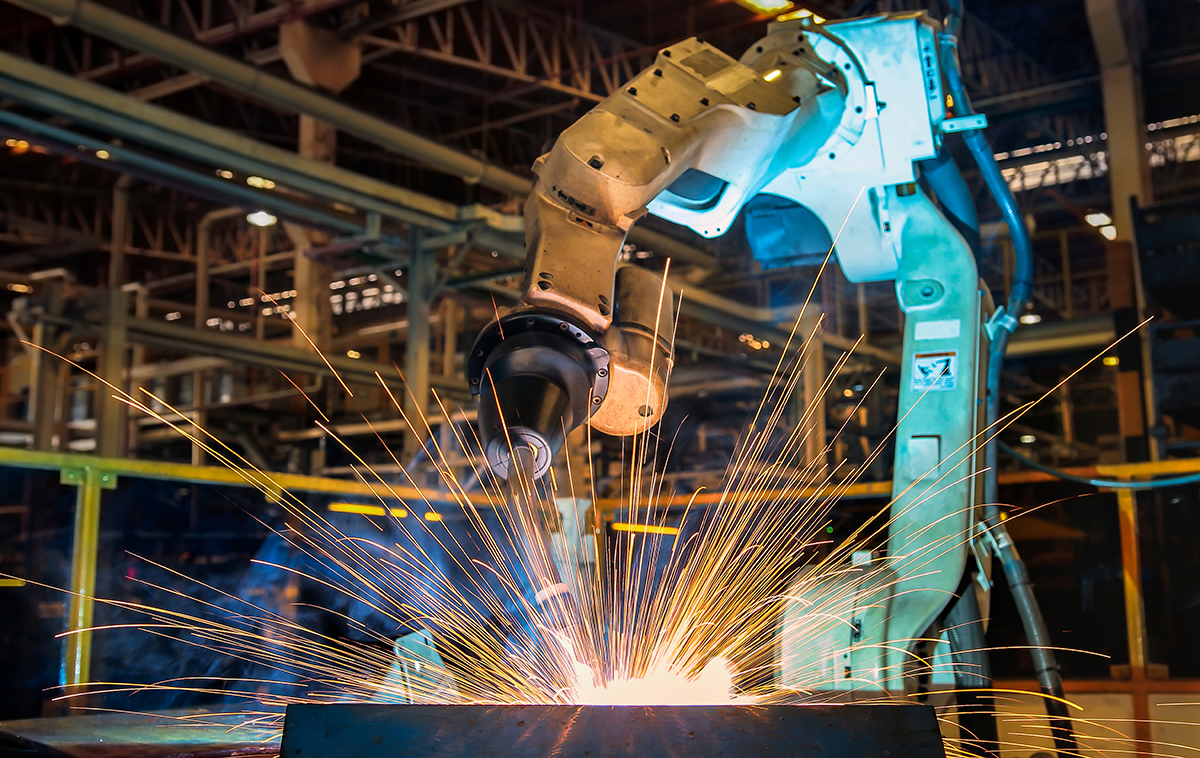
The technical architecture of a machine is governed by three primary systems: input/output (I/O) systems, processing units, and feedback mechanisms. These systems are not isolated but are intricately linked through data flow, control signals, and energy transfer. For instance, a robotic arm’s sensors (I/O) feed data to a central processing unit (CPU), which interprets commands and adjusts actuators (output) via a feedback loop to maintain precision. Disruptions in any component—such as sensor noise or actuator latency—propagate through the system, degrading performance.
The interdependency principle states that a machine’s reliability is proportional to the weakest link in its component chain. For example, a Turing machine’s tape reader (I/O) must synchronize with its finite state controller (processing unit) to ensure accurate symbol transitions.
Step-by-Step Decomposition of a Hypothetical Machine
To systematically analyze a machine’s components, a structured dissection approach is required. Below is a procedural breakdown using a Turing machine as an illustrative example, adaptable to industrial robots or cyber-physical systems.
For an industrial robot, the procedure mirrors this structure:
Define the machine’s purpose (e.g., computation, manipulation, or data processing). For a Turing machine, this is symbolic manipulation on a tape.
1. Function: Autonomous material handling.
2. I/O: Cameras (visual input) + grippers (actuators).
3. Processing: PLC (Programmable Logic Controller) + kinematic solvers.
4. Feedback: Force sensors adjusting grip strength.
5. Energy: Hydraulic/pneumatic conversion for joint movement.
Functional Hierarchy of Machine Components
The organization of machine parts follows a sensory-control-actuation paradigm, where each layer builds on the previous one. Below is a nested hierarchical representation, applicable to both computational and mechanical systems:
Sensory Layer → Control Layer → Actuation Layer
Key Insight: The hierarchy ensures that sensory data is processed into actionable commands before physical execution. For example, a drone’s IMU (sensory) feeds into a flight controller (control), which adjusts rotor speeds (actuation) via PWM signals.
Energy Conversion and Propagation in Machines
Energy transformation is the lifeblood of mechanical and electromechanical systems, enabling motion, computation, or signal amplification. Below is a stage-by-stage breakdown of how energy flows through a servo-driven robotic arm, a ubiquitous example in automation:
Real-World Analogy:
Electrical power (e.g., 24V DC) is supplied to the system. In industrial settings, this may originate from a power grid or battery bank, with voltage regulators ensuring stability (±5% tolerance).
The DC current passes through the motor’s stator windings, generating a magnetic field via Lorentz force principles. Efficiency at this stage is ~85–90% for brushed motors; higher for brushless designs (~95%).
The rotor, composed of permanent magnets or electromagnets, aligns with the stator field, inducing torque. Back-EMF (electromotive force) opposes the input current, a phenomenon exploited in sensorless control.
The motor’s high-speed, low-torque output is converted to low-speed, high-torque via gear reduction (e.g., harmonic drives or planetary gears). This stage introduces mechanical losses (~3–10% due to friction and heat).
Auxiliary systems (e.g., pneumatic grippers) may draw power from the same source, with pressure regulators converting electrical signals to compressed air (via solenoids), introducing another conversion layer (electrical → hydraulic/pneumatic).
In a hard disk drive (HDD), energy conversion follows a similar pipeline:
1
Machine Behavior and Functionality
Machine behavior and functionality encompass the methodologies, algorithms, and theoretical frameworks that govern how machines process inputs, transition between states, and execute tasks. These mechanisms range from deterministic finite automata to adaptive reinforcement learning models, each offering distinct advantages in predictability, scalability, and responsiveness. The interplay between algorithmic design and behavioral modeling determines a machine’s efficiency, reliability, and applicability across domains such as robotics, automation, and AI-driven systems. Below, the discussion focuses on modeling techniques, comparative trade-offs between deterministic and stochastic approaches, and the role of algorithms in shaping operational dynamics.Methodologies for Modeling Machine Behavior
Modeling machine behavior involves abstracting real-world or computational processes into formal representations that capture transitions, states, and decision-making logic. Three primary methodologies—state machines, finite automata, and reinforcement learning frameworks—provide foundational tools for designing systems with predictable or adaptive responses.State machines represent discrete transitions between states based on inputs, while finite automata extend this by incorporating memory (Mealy/Moore models). Reinforcement learning (RL) frameworks, conversely, model behavior through trial-and-error interactions with an environment, optimizing actions via reward signals. Below are pseudocode snippets illustrating each approach:
Finite Automaton (Deterministic State Transitions)
// Pseudocode for a Mealy Machine (output depends on state + input)
STATES = {idle, active, error}
TRANSITIONS = {
idle: {start: active},
active: {pause: idle, error: error},
error: {reset: idle}
}
OUTPUTS = {
idle: {start: "Initializing..."},
active: {pause: "Stopping...", error: "Critical failure"}
}
current_state = idle
while True:
input = read_input()
if (current_state, input) in TRANSITIONS:
current_state = TRANSITIONS[(current_state, input)]
print(OUTPUTS.get((current_state, input), "No output"))
Reinforcement Learning (Stochastic Policy Optimization)
// Pseudocode for Q-Learning (Tabular RL)
STATES = ["idle", "active", "error"]
ACTIONS = ["start", "pause", "reset"]
Q = initialize_table(STATES, ACTIONS, zeros) // Q-table
LEARNING_RATE = 0.1
DISCOUNT = 0.9
while episode < MAX_EPISODES:
state = reset_environment()
while not terminal(state):
action = epsilon_greedy_select(Q[state], epsilon)
next_state, reward = step_environment(state, action)
Q[state][action] = Q[state][action] + LEARNING_RATE (
reward + DISCOUNT max(Q[next_state]) - Q[state][action]
)
state = next_state
episode += 1
Key Considerations for Selection
The choice of methodology depends on the system’s requirements:
Deterministic vs. Stochastic Approaches: Trade-Off Analysis
Deterministic and stochastic approaches to machine functionality differ fundamentally in their handling of uncertainty, predictability, and computational requirements. The following table summarizes their trade-offs:| Approach | Predictability | Use Cases | Limitations |
|---|---|---|---|
| Deterministic | Guaranteed output for identical inputs; no randomness in execution. Example: A sorting algorithm (e.g., Quicksort) will always produce the same output for a given input array. |
|
|
| Stochastic | Outputs may vary across runs due to probabilistic elements (e.g., random sampling, noise). Example: A Monte Carlo Tree Search (MCTS) in AlphaGo may explore different move sequences with varying probabilities. |
|
|
Modern applications often integrate both paradigms. For instance:
Role of Algorithms in Defining Machine Operations
Algorithms serve as the computational backbone of machine operations, dictating efficiency, scalability, and functional capabilities. Their selection is contingent on the problem’s constraints (e.g., time complexity, memory usage) and the desired trade-offs between speed and optimality. Below are examples of how algorithms shape behavior in practical applications:Sorting Algorithms in Data Processing
- Average-case time complexity: O(n log n); worst-case O(n²) (mitigated via randomized pivots).
- Time complexity: O(n log n) (worst-case).
- Combines Dijkstra’s algorithm with a heuristic (e.g., Manhattan distance) for efficiency.
- Replans paths incrementally for dynamic environments (e.g., moving obstacles).
- Lazy learner; classifies based on majority vote of nearest training samples.
Machines in Computational Theory
Theoretical foundations of machines in computational theory establish the boundaries of what can be computed, modeled, or simulated by abstract systems. These principles, rooted in formal logic and mathematics, define the limits of algorithmic processes, including the Church-Turing thesis and Turing completeness. Abstract machines—such as lambda calculus, cellular automata, and Turing machines—serve as theoretical frameworks to explore computational feasibility, while formal languages and parsing mechanisms (e.g., pushdown automata) illustrate how input strings are processed according to syntactic rules. This section examines the theoretical constraints of machines, their abstract representations, and the interplay between grammars and computational models, culminating in a step-by-step design of a minimal machine from fundamental components.Theoretical Limits of Machines: Turing Completeness and the Church-Turing Thesis
The Church-Turing thesis posits that any function computable by a human following a finite, well-defined procedure can be computed by a Turing machine, a theoretical model of computation. This thesis, though not a mathematical proof, underpins the notion of Turing completeness: a system is Turing-complete if it can simulate any Turing machine, implying it can solve any problem decidable by an algorithm. Key implications include:The Church-Turing thesis is not a theorem but a hypothesis that unifies computational theory by asserting the equivalence of intuitive and formal notions of computation.Formal Restrictions:
Abstract Machines: Formalisms, Capabilities, and Restrictions
Abstract machines provide minimalist models to study computation without hardware constraints. Below is a structured comparison of key formalisms, highlighting their unique properties and limitations.| Machine Type | Formalism | Capabilities | Restrictions |
|---|---|---|---|
| Turing Machine | Finite-state control + infinite tape |
|
|
| Lambda Calculus | Function application and reduction |
|
|
| Cellular Automata | Discrete grid with local transition rules |
|
|
| Pushdown Automata | Finite-state control + stack |
|
|
| Register Machines | Finite registers with arithmetic/logic operations |
|
|
Formal Languages and Parsing Machines: Interaction with Machine Definitions
Formal languages classify strings based on syntactic rules, and parsing machines (e.g., finite automata, pushdown automata) determine whether a string belongs to a language. This interaction is fundamental to compilers, interpreters, and linguistic theory.Hierarchy of Languages and Machines:
Pushdown Automata Processing Example:
Consider parsing the string `((a))` for the CFL defined by the grammar:
S → SS | (S) | a
A PDA processes this as follows:
1. Initial State (q₀): Push two `(` symbols onto the stack.
2. Transition: On reading `(`, push a marker (e.g., `#`). On reading `a`, pop `#` and accept.
3. Final State (q₁): Stack must be empty after processing.
A pushdown automaton’s stack enables it to "remember" nested structures, but it cannot count arbitrarily (e.g., {aⁿbⁿcⁿ} is not context-free).Limitations:
Designing a Minimal Machine: Step-by-Step Construction of a Counter-Based System
A counter machine is a minimal Turing-complete model with a finite set of states, a single counter (memory), and basic arithmetic operations. Below is a structured design for a counter machine capable of simulating any Turing machine.Components:
1. Memory: A single unbounded counter initialized to `0`.
2. States: Finite set `Q = {q₀, q₁, ..., qₙ}` (e.g., `q₀` = initial, `qₙ` = halt).
3. Operations:
Real-World Applications and Examples of Machine Definitions Across Disciplines
The operational and theoretical frameworks of machines extend far beyond traditional mechanical systems, permeating fields such as manufacturing, biology, quantum physics, and artificial intelligence. Each domain redefines machine characteristics based on functional requirements, material constraints, and environmental interactions. This section examines how machine definitions adapt to diverse applications, presenting case studies, a structured taxonomy, and granular analyses of specific systems. The focus lies on contextualizing machine behavior through real-world implementations, emphasizing scalability, structural complexity, and interdisciplinary convergence.Taxonomy of Machines by Application Domain
Machines are categorized based on their primary functional roles, material substrates, and operational environments. Below is a taxonomy structured to highlight key features and societal impacts across domains, illustrating how foundational principles manifest in practice.| Domain | Machine Type | Key Features | Impact |
|---|---|---|---|
| Industrial Automation | Robotic Arms (e.g., KUKA KR10) |
|
|
| Additive Manufacturing Systems (e.g., Stratasys F900) |
|
|
|
| Computer Numerical Control (CNC) Machines |
|
|
|
| Biological Systems | Muscle Fibers (Skeletal/ Cardiac) |
|
|
| DNA-Based Molecular Machines (e.g., DNA Origami) |
|
|
|
| Quantum Computing | Superconducting Qubits (e.g., IBM Eagle) |
|
|
| Photonic Quantum Machines |
|
|
|
| Cognitive and AI Systems | Neural Networks (e.g., DeepMind AlphaFold) |
|
|
| Autonomous Robotic Agents (e.g., Boston Dynamics Atlas) |
|
|
Granular Mechanisms of Select Machines
Understanding machine functionality requires dissecting their operational layers—from low-level physics to high-level abstraction. Below are descriptions of critical systems, emphasizing their unique mechanisms without reliance on visual aids.Additive Manufacturing (Fused Deposition Modeling - FDM)
The FDM process begins with a G-code instruction set, which decomposes the 3D model into thin, horizontal layers. The extruder head, heated to the material’s melting point (e.g., 210–250°C for PLA), deposits thermoplastic filaments through a nozzle with 0.2–0.5 mm diameter. A stepper motor advances the filament rod via friction-driven feed, while a servo-controlled build platform moves in the Z-axis.
The definition of a machine is not static but a living framework that adapts to the demands of innovation and discovery. By dissecting their core components—whether in the structured logic of a Turing machine or the adaptive learning of a neural network—we reveal how machines bridge the gap between theoretical abstraction and practical functionality. The evolution from ancient automata to modern AI underscores a broader truth: machines are not merely tools but systems of interaction, shaped by the disciplines that define them. As computational theory pushes boundaries with concepts like Turing completeness and formal languages, the very essence of what a machine represents continues to expand, challenging traditional categorizations and inspiring new applications across industries. Ultimately, understanding these definitions equips us to harness machines not just as instruments of progress, but as catalysts for redefining the limits of human and technological capability.
Leave a Comment
Comments are moderated before appearing. The data you submit is processed according to the Privacy Policy of viralcontentbee.com.