The Essential Guide to How to Calculate Fahrenheit to Celsius
The transition between Fahrenheit and Celsius isn’t just a mathematical exercise—it’s a bridge between two worlds of measurement, each with deep historical roots and practical implications. Whether you’re adjusting a recipe from an American cookbook, interpreting weather forecasts abroad, or calibrating scientific equipment, understanding how to calculate Fahrenheit to Celsius ensures precision. The formula itself, though simple, carries layers of context: from the 18th-century scientists who defined these scales to the modern global reliance on Celsius in nearly every field except the U.S. and its territories. Mastering this conversion isn’t about memorization; it’s about recognizing the patterns that govern temperature scales and how they interact in daily life.
Yet, beyond the formula lies a critical question: why does this conversion matter at all? In an era where digital tools automate calculations with a tap, the ability to perform Fahrenheit to Celsius conversions manually remains a fundamental skill—one that sharpens analytical thinking and reveals the underlying logic of measurement systems. The discrepancy between the two scales (a 100-degree range for water’s freezing/boiling points in Celsius versus 180 in Fahrenheit) isn’t arbitrary; it reflects the empirical observations of Daniel Gabriel Fahrenheit and Anders Celsius, whose work shaped how we perceive temperature today. Ignoring this history risks treating the conversion as a mere arithmetic task rather than a reflection of scientific evolution.
Consider this: a chef in Berlin following a U.S. recipe must convert Fahrenheit temperatures to Celsius to avoid ruining a dish, while a meteorologist in London relies on Celsius for consistency in global climate data. The stakes are higher than convenience—they’re about accuracy, safety, and communication. This guide dissects not only the mechanics of converting Fahrenheit to Celsius but also the broader implications of these scales, from their origins to their modern-day dominance in fields like medicine, engineering, and environmental science.

The Complete Overview of How to Calculate Fahrenheit to Celsius
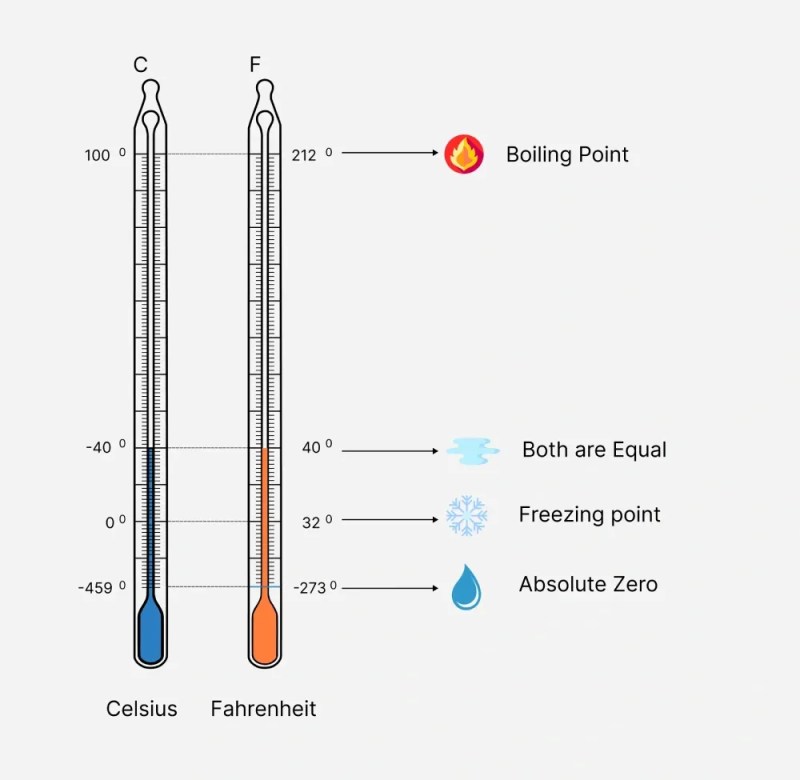
The core of how to calculate Fahrenheit to Celsius lies in a single, elegant formula: °C = (°F − 32) × 5/9. At its heart, this equation accounts for two key differences between the scales: the offset (32°F vs. 0°C for freezing water) and the gradient (1.8°F per 1°C). The subtraction of 32 adjusts for the offset, while multiplying by 5/9 (the inverse of 9/5) scales the temperature to the Celsius range. This process is reversible—Celsius to Fahrenheit uses °F = (°C × 9/5) + 32—but the unidirectional focus here is on the critical Fahrenheit to Celsius conversion, a skill demanded in laboratories, kitchens, and travel planning alike.
What often confuses learners isn’t the formula itself but the context in which it’s applied. For instance, converting 98.6°F (normal human body temperature) to Celsius yields 37°C—a value instantly recognizable to global medical professionals. Conversely, a 70°F day in the U.S. translates to 21.1°C, a temperature that feels markedly different to someone accustomed to Celsius-based weather reports. The formula’s simplicity belies its utility, but its effectiveness hinges on understanding why the scales diverge and how to interpret the results in real-world scenarios. Whether you’re a student, a professional, or a curious traveler, grasping this conversion is a gateway to navigating temperature data across cultures and disciplines.
Historical Background and Evolution
The Fahrenheit scale, proposed by Daniel Gabriel Fahrenheit in 1724, was originally calibrated using a mixture of ice, water, and ammonium chloride (0°F), with human body temperature set at 96°F—a value later adjusted to 98.6°F. This scale’s granularity (dividing the freezing/boiling range of water into 180 degrees) made it precise for early scientific instruments, but its lack of alignment with the metric system soon became a liability. Meanwhile, Anders Celsius introduced his scale in 1742, defining 0°C as boiling water and 100°C as freezing—a counterintuitive arrangement later reversed by Carl Linnaeus. The Celsius scale’s decimal-based structure aligned perfectly with the metric system, which France adopted in the 1790s, leading to its global dominance in science and daily life.
Table of Contents
- The Complete Overview of How to Calculate Fahrenheit to Celsius
- Historical Background and Evolution
- Core Mechanisms: How It Works
- Key Benefits and Crucial Impact
- Major Advantages
- Comparative Analysis
- Future Trends and Innovations
- Conclusion
- Comprehensive FAQs
- Q: Why is the formula for converting Fahrenheit to Celsius (°C = (°F − 32) × 5/9) structured this way?
- Q: Can I convert Fahrenheit to Celsius without using a calculator?
- Q: Why do some countries still use Fahrenheit?
- Q: What’s the fastest way to convert Celsius back to Fahrenheit?
- Q: How does this conversion apply in real-world scenarios, like cooking?
- Q: Are there any common mistakes to avoid when converting Fahrenheit to Celsius?
- Q: Why do body temperatures differ between Fahrenheit and Celsius?
- Q: How does this conversion work in programming or spreadsheet software?
- Q: Is there a mnemonic to remember the conversion formula?
- Q: How accurate is the approximation method compared to the exact formula?
The persistence of Fahrenheit today is largely a legacy of British colonialism and the U.S.’s resistance to metrication. While most countries phased out Fahrenheit in the 20th century, its remnants endure in weather forecasts, cooking, and some industrial contexts within the U.S. This duality creates a persistent need for Fahrenheit to Celsius conversions, particularly in fields like aviation, where international standards require Celsius, while domestic operations may default to Fahrenheit. The historical tension between these scales underscores why understanding their conversion isn’t just a technical skill but a cultural and scientific literacy requirement.
Core Mechanisms: How It Works
The formula for converting Fahrenheit to Celsius emerges from the relationship between the two scales’ reference points and increments. Fahrenheit’s 32° offset (relative to Celsius’s 0° for freezing water) is addressed by subtracting 32 from the Fahrenheit value. The remaining step—multiplying by 5/9—accounts for the fact that a 1°C change corresponds to a 1.8°F change (since 9/5 = 1.8). For example, converting 68°F to Celsius: (68 − 32) × 5/9 = 36 × 5/9 = 20°C. This method ensures accuracy whether you’re dealing with everyday temperatures or extreme scientific measurements.
Digital tools and calculators automate this process, but manual calculation reinforces comprehension. The key is breaking the formula into steps: first adjust for the offset, then scale the result. This two-phase approach mirrors how scientists and engineers validate conversions in critical applications, such as medical diagnostics or HVAC systems. Even a minor error in Fahrenheit to Celsius conversion can have tangible consequences—imagine miscalibrating an oven or misreading a patient’s fever. The formula’s reliability depends on its consistent application, making it a cornerstone of technical communication.
Key Benefits and Crucial Impact
Proficiency in how to calculate Fahrenheit to Celsius transcends mere arithmetic—it’s a tool for global collaboration, scientific accuracy, and practical problem-solving. In medicine, for instance, body temperatures are universally reported in Celsius, yet U.S. medical records may default to Fahrenheit. A nurse or doctor must seamlessly switch between the two to avoid misdiagnosis. Similarly, chefs, engineers, and meteorologists rely on these conversions to ensure consistency across borders. The ability to perform this conversion manually also serves as a safeguard against digital errors, reinforcing critical thinking in high-stakes environments.
Beyond professional contexts, understanding this conversion fosters cultural adaptability. Travelers adjusting to Celsius-based weather reports, students navigating international textbooks, and hobbyists experimenting with global recipes all benefit from this skill. The ripple effects of mastering Fahrenheit to Celsius conversion extend to education, where it serves as a practical example of algebraic reasoning, and to technology, where embedded conversion tools often lack the transparency of manual calculation. In an interconnected world, this knowledge is a bridge between systems of measurement—and by extension, between cultures and disciplines.
— Anders Celsius, whose 1742 scale became the foundation for the metric system, once remarked that "the true measure of a civilization is its ability to standardize what it values." The persistence of Fahrenheit today challenges this ideal, but the universal need to convert between the two underscores the enduring relevance of his work.
Major Advantages
- Global Scientific Compatibility: Nearly all scientific research, from climate studies to chemistry, uses Celsius. Converting Fahrenheit data ensures alignment with international standards.
- Medical Precision: Body temperatures and clinical thresholds are defined in Celsius. Errors in Fahrenheit to Celsius conversion can lead to misdiagnoses or treatment failures.
- Culinary Accuracy: Recipes from non-U.S. sources use Celsius. A miscalculation could ruin a dish or, in extreme cases, pose safety risks (e.g., improperly cooked meat).
- Travel and Weather Readiness: Weather forecasts in most countries use Celsius. Understanding the conversion helps travelers plan clothing and activities effectively.
- Engineering and Technical Work: Industrial processes, from manufacturing to HVAC systems, often require temperature conversions for calibration and safety.

Comparative Analysis
| Aspect | Fahrenheit | Celsius |
|---|---|---|
| Origin | Daniel Gabriel Fahrenheit (1724), based on brine mixtures and human body temperature. | Anders Celsius (1742), later reversed by Linnaeus; aligned with metric system. |
| Freezing/Boiling Points of Water | 32°F (freezing), 212°F (boiling). | 0°C (freezing), 100°C (boiling). |
| Degree Increment | 1°F = 1/180 of the freezing-boiling range. | 1°C = 1/100 of the freezing-boiling range. |
| Global Adoption | Primarily U.S., its territories, and a few Caribbean nations. | Used worldwide in science, medicine, and daily life. |
Future Trends and Innovations
The future of temperature measurement may see further standardization, but the need for Fahrenheit to Celsius conversions will persist as long as the U.S. retains its scale. Advances in AI-driven translation tools could automate conversions in real-time, but manual proficiency remains vital for fields requiring absolute precision. Meanwhile, global initiatives like the International System of Units (SI) continue to promote Celsius, though cultural inertia and practical dependencies (e.g., Fahrenheit in HVAC systems) slow progress. Innovations in sensor technology may also reduce reliance on manual conversions, embedding Fahrenheit to Celsius algorithms into smart devices for seamless switching.
On a broader scale, climate science’s emphasis on Celsius-based data could accelerate the phase-out of Fahrenheit in professional contexts, even in the U.S. Yet, the duality of scales may endure as a testament to historical legacy. For now, the onus remains on individuals to master how to calculate Fahrenheit to Celsius, ensuring they remain adaptable in an increasingly interconnected world where temperature is both a scientific measurement and a cultural marker.
Conclusion
The formula for converting Fahrenheit to Celsius is deceptively simple, but its implications are profound. It reflects centuries of scientific inquiry, cultural exchange, and practical necessity. Whether you’re a professional navigating global standards or a traveler adjusting to new weather reports, this skill is a testament to the power of measurement in shaping human understanding. The persistence of Fahrenheit alongside Celsius highlights the tension between tradition and progress—a dynamic that plays out in countless technical and everyday contexts.
Ultimately, the ability to perform this conversion manually is more than a mathematical exercise; it’s a reminder of how systems of knowledge evolve and intersect. In an era where digital tools handle the heavy lifting, the effort to understand how to calculate Fahrenheit to Celsius preserves a critical link between human ingenuity and the natural world. It’s a skill that endures, not because it’s complex, but because it’s foundational.
Comprehensive FAQs
Q: Why is the formula for converting Fahrenheit to Celsius (°C = (°F − 32) × 5/9) structured this way?
A: The formula accounts for two key differences between the scales: the offset (32°F vs. 0°C for freezing water) and the gradient (1.8°F per 1°C). Subtracting 32 adjusts for the offset, while multiplying by 5/9 scales the temperature to the Celsius range, where a 100-degree span covers water’s freezing/boiling points.
Q: Can I convert Fahrenheit to Celsius without using a calculator?
A: Yes. For quick estimates, use the approximation °C ≈ (°F − 30) / 2. For example, 70°F becomes (70 − 30)/2 = 20°C. However, this method loses precision for extreme temperatures or professional applications.
Q: Why do some countries still use Fahrenheit?
A: The U.S. and its territories retain Fahrenheit due to historical inertia, colonial influence, and practical dependencies in industries like HVAC and cooking. While most nations adopted Celsius for its alignment with the metric system, cultural and economic factors have slowed change in the U.S.
Q: What’s the fastest way to convert Celsius back to Fahrenheit?
A: Use the formula °F = (°C × 9/5) + 32. For speed, multiply by 2 (approximating 9/5) and add 30: °F ≈ (2 × °C) + 30. For example, 20°C becomes 2 × 20 + 30 = 70°F.
Q: How does this conversion apply in real-world scenarios, like cooking?
A: Recipes often use Celsius for precision. To convert Fahrenheit oven temperatures to Celsius, subtract 32 and multiply by 5/9. For example, 350°F becomes (350 − 32) × 5/9 ≈ 177°C. Always round to the nearest degree for safety.
Q: Are there any common mistakes to avoid when converting Fahrenheit to Celsius?
A: Yes. Common errors include:
- Forgetting to subtract 32 before scaling (e.g., multiplying 98.6°F by 5/9 without subtracting 32 first).
- Using the wrong multiplier (e.g., 9/5 instead of 5/9 for Fahrenheit to Celsius).
- Rounding prematurely, which compounds errors in multi-step calculations.
Q: Why do body temperatures differ between Fahrenheit and Celsius?
A: Normal human body temperature is 98.6°F (37°C). The difference arises from the scales’ origins: Fahrenheit’s 96°F (later adjusted to 98.6°F) was based on early medical observations, while Celsius’s 37°C aligns with the metric system’s decimal structure.
Q: How does this conversion work in programming or spreadsheet software?
A: In most programming languages (e.g., Python, JavaScript) and spreadsheets (e.g., Excel), use the formula = (Fahrenheit − 32) 5/9. For example, in Excel, entering = (A1 − 32) 5/9 in cell B1 converts a Fahrenheit value in A1 to Celsius.
Q: Is there a mnemonic to remember the conversion formula?
A: Yes. Use the phrase "Subtract 32, then divide by 9 and multiply by 5" or the rhyme: "Thirty-two down, five over nine." These aid recall by breaking the formula into visual or auditory steps.
Q: How accurate is the approximation method compared to the exact formula?
A: The approximation °C ≈ (°F − 30) / 2 works well for temperatures between 30°F and 100°F, with errors typically under 2°C. For precise applications (e.g., medical or scientific), always use the exact formula.
Leave a Comment
Comments are moderated before appearing. The data you submit is processed according to the Privacy Policy of Viralcontentbee.