How a Simple Random Sample Transforms Data Accuracy in Research
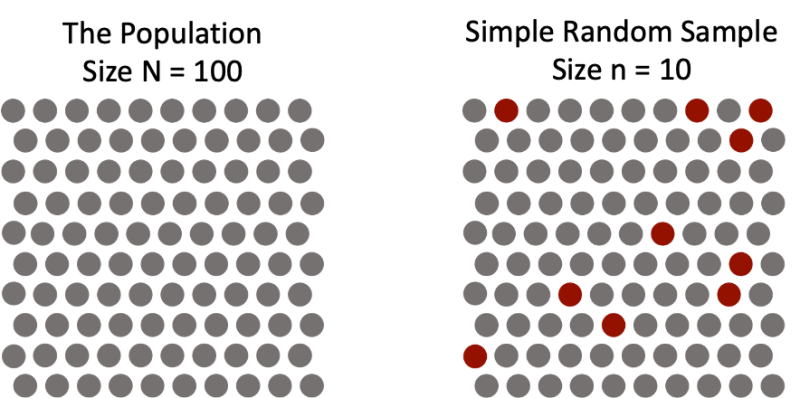
The moment a researcher selects a simple random sample, they’re not just choosing data points—they’re laying the foundation for unbiased conclusions. This method, the bedrock of modern survey design, ensures every possible subset of a population has an equal chance of inclusion, eliminating systematic bias before it can distort results. Yet despite its apparent simplicity, its implementation demands precision: a misstep in randomization can introduce errors that undermine years of fieldwork.
The power of random sampling lies in its ability to mirror a population’s diversity. Whether analyzing voter preferences, drug efficacy, or consumer behavior, the technique’s strength is its neutrality—no demographic is over- or underrepresented by design. But this neutrality comes with trade-offs. Critics argue that in an era of big data, where stratified or cluster sampling often yields more efficient insights, the simple random sample risks inefficiency. The debate hinges on balancing purity of method with practical constraints.
###

The Complete Overview of Simple Random Sampling
At its core, a simple random sample is a probabilistic sampling technique where each member of a population has an independent and equal probability of being selected. This method is the gold standard for ensuring representativeness, as it minimizes selection bias by relying solely on chance. However, its effectiveness hinges on two critical prerequisites: a well-defined population and a reliable sampling frame. Without these, even the most meticulous randomization becomes meaningless.The technique’s elegance lies in its mathematical foundation. By assigning each unit a unique identifier and using random number generators or lottery systems, researchers create a selection process that is both transparent and reproducible. This reproducibility is crucial—it allows other scholars to verify results, a cornerstone of scientific rigor. Yet, in practice, achieving true randomness is challenging. Human error, incomplete sampling frames, or non-response bias can all introduce subtle distortions.
###
Historical Background and Evolution
The concept of random sampling traces back to 18th-century probability theory, but its application in social sciences gained traction in the early 20th century. Pioneers like Jerzy Neyman and Ladislaus Bortkiewicz formalized its use in surveys, arguing that randomness was the only way to quantify sampling error. The 1936 Literary Digest fiasco—a failed presidential election prediction due to non-random sampling—further cemented the method’s necessity.By the mid-20th century, advances in computing allowed researchers to scale simple random samples to larger populations. Today, while more sophisticated techniques like stratified or multi-stage sampling dominate, the simple random sample remains the benchmark against which other methods are measured. Its historical resilience stems from one unassailable principle: in an ideal world, randomness is the only fair way to select a sample.
Table of Contents
- The Complete Overview of Simple Random Sampling
- Historical Background and Evolution
- Core Mechanisms: How It Works
- Key Benefits and Crucial Impact
- Major Advantages
- Comparative Analysis
- Future Trends and Innovations
- Conclusion
- Comprehensive FAQs
- Q: How do I generate a simple random sample in practice?
- Q: What’s the difference between sampling with and without replacement?
- Q: Can a simple random sample be biased?
- Q: When should I avoid a simple random sample?
- Q: How does sample size affect a simple random sample?
- Q: What’s the relationship between simple random sampling and the Central Limit Theorem?
###
Core Mechanisms: How It Works
The execution of a simple random sample begins with defining the population—every individual or entity the study seeks to represent. Next, a sampling frame (e.g., a list of email addresses, phone numbers, or census records) must be compiled. Each entry is then assigned a unique identifier, and a random selection tool (such as a random number table or software like R or Python’s `random.sample()`) determines inclusion.The critical step is ensuring independence: the selection of one unit must not influence another. For example, drawing names from a hat without replacement (sampling without replacement) maintains this independence, whereas systematic errors—like selecting every 10th name from a sorted list—can introduce hidden patterns. Modern tools now automate this process, reducing human bias but requiring rigorous validation of the randomness algorithm.
###
Key Benefits and Crucial Impact
The simple random sample is not just a tool—it’s a safeguard against flawed conclusions. By design, it eliminates selection bias, ensuring that any discrepancies between the sample and population are attributable to chance rather than method. This property is invaluable in legal, medical, and policy research, where impartiality is non-negotiable. The method’s transparency also fosters trust: stakeholders can audit the sampling process to confirm fairness.Yet its impact extends beyond ethics. Statistically, random sampling provides a framework for calculating confidence intervals and margins of error. Without this foundation, even the most detailed analysis would lack a measure of reliability. The technique’s ability to quantify uncertainty is why it remains indispensable in fields where precision matters most.
> "Randomness is the only democratic principle in sampling—every voice has an equal shot at being heard, regardless of who’s listening." — Dr. Nancy Breen, Sampling Methodology Expert
###
Major Advantages
- Unbiased Representation: Every population segment has an equal chance of inclusion, mirroring the target group’s diversity.
- Statistical Rigor: Enables precise calculations of sampling error, confidence intervals, and hypothesis testing.
- Simplicity and Transparency: The method is easy to explain and audit, reducing disputes over methodology.
- Scalability: Works for populations of any size, from small lab studies to national surveys.
- Foundation for Advanced Techniques: Serves as the baseline against which stratified, cluster, or systematic sampling are evaluated.
Comparative Analysis
| Simple Random Sample | Stratified Sampling |
|---|---|
| Every unit has equal probability of selection. | Population divided into subgroups (strata) before random sampling within each. |
| Ideal for homogeneous populations or when subgroup analysis isn’t critical. | Superior for heterogeneous populations where subgroups vary significantly. |
| Higher sampling error if population is unevenly distributed. | Lower error for key subgroups but requires prior knowledge of strata. |
| Implementation is straightforward but may be inefficient for large populations. | More complex but yields precise estimates for specific demographics. |
Future Trends and Innovations
As data collection shifts to digital platforms, simple random sampling faces new challenges. Online surveys and social media samples often suffer from coverage bias, as certain demographics (e.g., elderly or low-income groups) are underrepresented. Innovations like adaptive sampling—where selection probabilities adjust based on real-time data—may partially address this, but purists argue these deviations risk compromising randomness.The future may lie in hybrid approaches: combining simple random samples with machine learning to identify and correct for hidden biases. Tools like differential privacy could also allow researchers to share aggregated insights without exposing individual data, preserving randomness while enhancing security. One thing is certain: the core principle of equal probability will endure, even as the methods to achieve it evolve.
###

Conclusion
The simple random sample is more than a statistical technique—it’s a philosophical commitment to fairness in data. Its enduring relevance stems from an unshakable truth: without randomness, sampling is just guesswork. While modern research often employs more nuanced methods, the simple random sample remains the touchstone for validity. It teaches us that in the pursuit of knowledge, the most powerful tool isn’t complexity, but the unyielding principle of chance.For practitioners, the takeaway is clear: mastering this method isn’t about memorizing formulas, but understanding its limitations and when to apply it. In an age of algorithmic bias and targeted data collection, the simple random sample stands as a bulwark against manipulation—a reminder that rigor begins with randomness.
###
Comprehensive FAQs
Q: How do I generate a simple random sample in practice?
A: Use statistical software (e.g., R’s `sample()` function, Python’s `random.sample()`) or physical methods like numbered balls in a lottery. Ensure your sampling frame is complete and free of duplicates to avoid skew.
Q: What’s the difference between sampling with and without replacement?
A: With replacement allows the same unit to be selected multiple times (useful for theoretical probability). Without replacement (standard in surveys) ensures each unit is selected once, reducing variability but requiring adjustments for finite populations.
Q: Can a simple random sample be biased?
A: Only if the sampling frame is flawed (e.g., missing key demographics) or non-response rates vary systematically. True randomness doesn’t guarantee representativeness—it only ensures selection fairness.
Q: When should I avoid a simple random sample?
A: For large or geographically dispersed populations, where stratified or cluster sampling is more cost-effective. Also avoid it if subgroups require precise estimates (e.g., rare diseases in health studies).
Q: How does sample size affect a simple random sample?
A: Larger samples reduce sampling error but increase costs. The optimal size depends on desired confidence levels and population variability. Use power analysis to determine the minimum viable sample.
Q: What’s the relationship between simple random sampling and the Central Limit Theorem?
A: The CLT states that sample means from a random sample will approximate a normal distribution, regardless of the population’s shape. This property underpins confidence intervals and hypothesis tests in simple random sampling.
Leave a Comment
Comments are moderated before appearing. The data you submit is processed according to the Privacy Policy of Viralcontentbee.