How SQL Functions Reshape Data Logic in Modern Systems
The first time a developer encounters SQL functions, they often mistake them for mere syntactic shortcuts—elegant but dispensable. Nothing could be further from the truth. These functions are the invisible architecture of every database operation, silently transforming raw data into actionable insights. Without them, complex queries would collapse into unmanageable spaghetti code, and performance bottlenecks would cripple even the most robust systems. The distinction between a query that runs in milliseconds and one that grinds for minutes often hinges on how—or whether—SQL functions are applied.
Yet their power extends beyond efficiency. SQL functions are the linguistic backbone of data integrity, enabling developers to enforce rules, standardize formats, and automate validation without writing custom scripts. In an era where databases process petabytes of unstructured data, these functions act as the gatekeepers between chaos and clarity. The ability to aggregate, filter, and transform data in a single statement isn’t just convenience; it’s a competitive necessity.
What separates seasoned database architects from novices isn’t just familiarity with syntax—it’s an intuitive grasp of when to leverage built-in SQL functions versus writing procedural logic. A misplaced `CASE` statement can turn a 10-line query into a 100-line nightmare, while the right `WINDOW` function can unlock insights that would otherwise require hours of post-processing. The mastery of SQL functions isn’t about memorizing commands; it’s about understanding their underlying logic and strategic deployment.
The Complete Overview of SQL Functions
SQL functions are the operational core of structured query language, serving as specialized routines that perform calculations, transformations, or validations on database data. They range from simple arithmetic operations to advanced analytical procedures, each designed to solve a specific problem in data retrieval or manipulation. Unlike procedural programming languages, where functions are explicitly called, SQL functions are embedded within queries, allowing developers to process data dynamically without leaving the query interface. This seamless integration makes them indispensable in environments where performance and readability are critical.The versatility of SQL functions spans across relational databases, from legacy systems like Oracle to modern cloud-based solutions such as PostgreSQL and Snowflake. These functions can be categorized broadly into aggregate functions (e.g., `SUM`, `AVG`), scalar functions (e.g., `UPPER`, `CONCAT`), window functions (e.g., `ROW_NUMBER`, `LEAD`), and table-valued functions (e.g., `CROSS APPLY`). Each category addresses distinct use cases, from summarizing large datasets to performing row-level computations. The choice of function often determines whether a query executes in seconds or fails due to resource constraints.
Historical Background and Evolution
The concept of SQL functions traces back to the 1970s, when Edgar F. Codd formalized relational algebra—the mathematical foundation for database queries. Early implementations of SQL, such as those in IBM’s System R, included basic functions like `COUNT` and `SUM` to simplify aggregations. However, it wasn’t until the 1990s, with the rise of client-server architectures, that SQL functions began to diversify. Vendors like Oracle and Microsoft introduced extensions to standard SQL, adding functions for string manipulation, date handling, and conditional logic.A pivotal moment arrived with the introduction of window functions in SQL:2003, which allowed analysts to perform calculations across sets of rows without collapsing them into a single output. This innovation transformed how developers approached complex analytics, enabling operations like moving averages and rank-based filtering directly within queries. Today, SQL functions have evolved into a hybrid of declarative and procedural paradigms, with some databases supporting user-defined functions (UDFs) written in languages like Python or Java. This evolution reflects the growing demand for flexibility in handling increasingly complex data workflows.
Core Mechanisms: How It Works
At their core, SQL functions operate by accepting input values, processing them according to predefined logic, and returning a result. Aggregate functions, for instance, iterate over a group of rows to produce a single value (e.g., `MAX(sales)`), while scalar functions apply transformations to individual rows (e.g., `TRIM(name)`). The execution model varies by database engine: some systems evaluate functions row-by-row, while others optimize by pushing computations into the query planner for early filtering.Table of Contents
- The Complete Overview of SQL Functions
- Historical Background and Evolution
- Core Mechanisms: How It Works
- Key Benefits and Crucial Impact
- Major Advantages
- Comparative Analysis
- Future Trends and Innovations
- Conclusion
- Comprehensive FAQs
- Q: Can SQL functions be used in stored procedures?
- Q: How do window functions differ from aggregate functions?
- Q: Are there performance penalties for using custom SQL functions?
- Q: Can SQL functions handle JSON or semi-structured data?
- Q: What’s the best practice for debugging SQL functions?
- Q: How do I migrate SQL functions between different database systems?
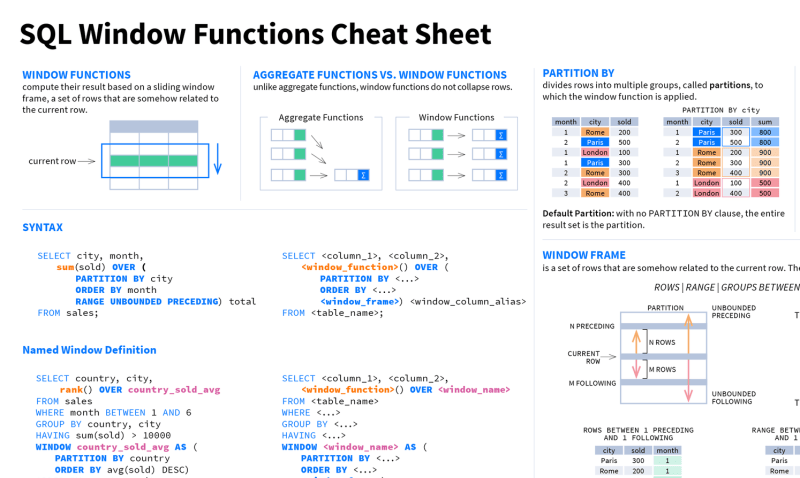
Window functions introduce a layer of sophistication by enabling calculations that reference multiple rows while preserving the original row structure. Unlike aggregate functions, which group data, window functions use over() clauses to define partitions and ordering, allowing for operations like cumulative sums or percentile rankings. This mechanism is particularly valuable in time-series analysis, where trends must be analyzed without losing granularity. Understanding these mechanics is critical for writing queries that balance performance with accuracy, especially in large-scale environments.
Key Benefits and Crucial Impact
The adoption of SQL functions isn’t merely a technical convenience—it’s a strategic advantage. In industries where data-driven decisions dictate success, the ability to manipulate and analyze datasets efficiently can mean the difference between a reactive and a proactive organization. Functions reduce the need for external scripts or ETL processes, streamlining workflows and minimizing latency. For example, a retail analytics team might use window functions to calculate year-over-year growth per product category in a single query, whereas a procedural approach would require multiple steps and increased risk of errors.Beyond operational efficiency, SQL functions enhance data quality by enforcing consistency. Functions like `COALESCE` handle null values gracefully, while `CHECK` constraints (often implemented via custom functions) validate data before insertion. This level of control is particularly critical in regulatory environments, where compliance hinges on accurate and auditable data processing. The ripple effects of well-designed SQL functions extend to cost savings, as optimized queries reduce server load and storage requirements.
"SQL functions are the silent revolution in data processing—what once required hours of manual scripting now executes in milliseconds, freeing analysts to focus on insights rather than infrastructure." — Martin Fowler, Chief Scientist at ThoughtWorks
Major Advantages
- Performance Optimization: Functions like `INDEX` hints or `MERGE` operations allow databases to execute queries more efficiently by leveraging internal optimizations.
- Code Reusability: User-defined functions (UDFs) encapsulate complex logic, reducing duplication and easing maintenance.
- Data Integrity: Functions such as `ISNULL` or `CASE` ensure consistent handling of edge cases, minimizing errors in downstream processes.
- Scalability: Window functions enable analytics on massive datasets without requiring intermediate tables or temporary storage.
- Cross-Platform Compatibility: Standard SQL functions (e.g., `SUBSTRING`, `DATE_PART`) ensure queries port seamlessly across different database systems.

Comparative Analysis
| SQL Functions Category | Key Use Cases |
|---|---|
| Aggregate Functions (e.g., `SUM`, `GROUP BY`) | Summarizing large datasets (e.g., monthly sales totals, average user ratings). |
| Scalar Functions (e.g., `CONCAT`, `DATEADD`) | Row-level transformations (e.g., formatting dates, concatenating strings). |
| Window Functions (e.g., `ROW_NUMBER`, `LAG`) | Analytical operations (e.g., ranking products, calculating moving averages). |
| Table-Valued Functions (e.g., `CROSS APPLY`) | Complex joins and subqueries (e.g., splitting delimited strings, hierarchical data traversal). |
Future Trends and Innovations
The trajectory of SQL functions is increasingly intertwined with advancements in machine learning and distributed computing. Modern databases are integrating AI-driven functions that automatically suggest optimizations or detect anomalies, blurring the line between SQL and predictive analytics. For instance, PostgreSQL’s `ml_predict` extension allows developers to call scikit-learn models directly within queries, while Snowflake’s `APPLY` function enables real-time data transformations using external APIs.Another emerging trend is the federation of SQL functions across hybrid cloud environments. As organizations adopt multi-cloud strategies, the ability to execute consistent functions across on-premise, private, and public clouds will become critical. Vendors are already experimenting with serverless SQL functions, where computations are triggered on-demand without requiring dedicated infrastructure. These innovations suggest that SQL functions will continue to evolve from static tools to dynamic, intelligent components of data ecosystems.

Conclusion
SQL functions are not mere utilities—they are the architectural pillars of modern data systems. Their ability to simplify complex operations, enforce consistency, and scale performance makes them indispensable in an era where data volume and velocity are accelerating. The key to leveraging them effectively lies in understanding their mechanics and strategic application, rather than treating them as interchangeable components. As databases grow more sophisticated, the role of SQL functions will expand, bridging the gap between raw data and actionable intelligence.For developers and analysts, mastering these functions isn’t optional—it’s a prerequisite for staying competitive. The difference between a query that runs efficiently and one that fails under load often comes down to the thoughtful use of SQL functions. In a world where data is the new oil, these tools are the refinery.
Comprehensive FAQs
Q: Can SQL functions be used in stored procedures?
A: Yes. SQL functions can be embedded within stored procedures to perform calculations or transformations. However, stored procedures are designed for transactional logic, while functions are typically used for data retrieval or pure computations. Some databases (like SQL Server) allow functions to be called from procedures, but the context differs—procedures can modify data, whereas functions are often read-only.
Q: How do window functions differ from aggregate functions?
A: Aggregate functions (e.g., `SUM`, `AVG`) collapse groups of rows into a single value, effectively reducing the dataset. Window functions, however, perform calculations across sets of rows while preserving the original row structure. For example, `SUM(sales) OVER (PARTITION BY region)` calculates a running total per region without grouping the data. This distinction is crucial for analytics requiring granularity.
Q: Are there performance penalties for using custom SQL functions?
A: Custom functions (UDFs) can introduce overhead, especially if they’re written in interpreted languages or involve complex logic. Databases may not optimize UDFs as aggressively as built-in functions, leading to slower execution. For performance-critical applications, prefer native SQL functions or inline logic where possible. Always test UDFs under realistic workloads.
Q: Can SQL functions handle JSON or semi-structured data?
A: Modern SQL databases (PostgreSQL, MySQL 8.0+, SQL Server) include functions for parsing and querying JSON, such as `JSON_EXTRACT`, `JSON_QUERY`, or `JSON_VALUE`. These functions allow you to navigate nested structures, extract values, or validate JSON formats directly within SQL queries, eliminating the need for external processing.
Q: What’s the best practice for debugging SQL functions?
A: Start by isolating the function in a simple query to verify its logic. Use `PRINT` statements (SQL Server) or `RAISE NOTICE` (PostgreSQL) to log intermediate values. For complex functions, break them into smaller sub-queries and test incrementally. Database-specific tools like Oracle’s `DBMS_OUTPUT` or SQL Server’s `EXECUTE AS` can also help diagnose permissions or context issues.
Q: How do I migrate SQL functions between different database systems?
A: Migration requires identifying vendor-specific functions (e.g., Oracle’s `NVL` vs. SQL Server’s `ISNULL`) and replacing them with standard SQL equivalents or database-specific alternatives. Tools like AWS Schema Conversion Tool (SCT) or custom scripts can automate this process. Always test functions in the target environment, as syntax and behavior may vary (e.g., date functions in MySQL vs. PostgreSQL).
Leave a Comment
Comments are moderated before appearing. The data you submit is processed according to the Privacy Policy of Viralcontentbee.