How to Spot Starlink Satellites Viewing: A Guide to Tracking Space’s New Constellation
Since their debut in 2019, SpaceX’s Starlink satellites have become one of the most visible—and debated—features of the modern night sky. Unlike traditional satellites, which glide silently overhead, Starlinks move in synchronized clusters, their reflective surfaces catching sunlight long after sunset. For astronomers, casual skywatchers, and tech enthusiasts, the phenomenon of Starlink satellites viewing has transformed passive observation into an interactive experience. Whether you’re tracking a "Starlink train" or analyzing their orbital patterns, the activity bridges cutting-edge technology with age-old curiosity about the cosmos.
The sheer scale of the project—thousands of satellites deployed and more launching monthly—has made Starlink satellites viewing a global pastime. From urban centers to remote observatories, people now rely on apps and forums to predict passes, debate their impact on astronomy, and even photograph them against celestial backdrops. Yet beyond the spectacle lies a complex interplay of engineering, policy, and public perception. The satellites’ visibility isn’t just a quirk of their low-Earth orbit; it’s a byproduct of their design, intended to deliver high-speed internet but inadvertently turning the night sky into a dynamic, ever-changing canvas.
What began as a niche hobby has now evolved into a cultural touchstone, sparking conversations about space debris, light pollution, and humanity’s expanding footprint beyond Earth. The ability to witness Starlink satellites viewing in real time has democratized access to orbital mechanics, allowing anyone with a clear sky and a smartphone to engage with space technology. But as the constellation grows, so do the questions: How do they stay visible for so long? What distinguishes them from other satellites? And what does their future hold for both internet connectivity and stargazing?

The Complete Overview of Starlink Satellites Viewing
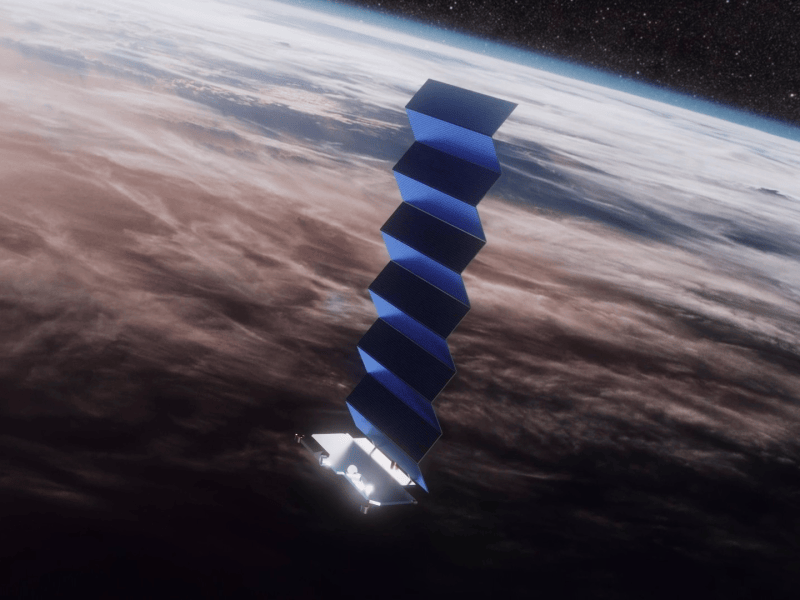
SpaceX’s Starlink program represents the largest low-Earth orbit (LEO) satellite network ever deployed, with over 6,000 satellites operational as of 2024 and plans to expand to tens of thousands. The core appeal of Starlink satellites viewing lies in their collective brightness and coordinated movement. Unlike geostationary satellites, which appear fixed in the sky, Starlinks orbit Earth every 90 minutes, creating predictable but fleeting appearances. Their reflective solar panels and phased-array antennas scatter sunlight, making them visible to the naked eye even in urban areas—often as a string of dots moving in unison, dubbed a "Starlink train."The phenomenon isn’t accidental; it’s a direct result of their operational altitude (around 550 km) and deployment strategy. New satellites are launched in groups, stacked closely together before dispersing into their operational orbits. During this phase, they form tightly packed formations that are particularly bright, offering skywatchers a rare opportunity to observe Starlink satellites viewing in high contrast against the twilight sky. However, as the constellation matures, older satellites are deorbited or moved to graveyard orbits, altering the visibility landscape. This dynamic nature means the experience of tracking them is constantly evolving, requiring observers to adapt their methods.
Historical Background and Evolution
The origins of Starlink satellites viewing trace back to SpaceX’s 2015 announcement of the project, which aimed to provide global broadband via a megaconstellation. The first operational satellites launched in 2018, but it wasn’t until February 2019—when a group of 60 satellites deployed in a single mission—that the public first noticed their collective brightness. Astronomers and hobbyists quickly realized these satellites would be visible to the unaided eye, sparking both fascination and concern. Early observations revealed that the satellites’ reflective surfaces could reach magnitudes as bright as Venus under optimal conditions, far outshining traditional satellites.As the constellation expanded, so did the tools for tracking Starlink satellites viewing. Platforms like Heavens-Above, FindStarlink, and Space-Track.org became essential for predicting passes, while social media groups (e.g., r/Starlink on Reddit) emerged as hubs for sharing sightings and photographs. The visibility issue also prompted SpaceX to experiment with solutions, such as darker coatings on newer satellites (V2 Mini) to reduce albedo. Yet even these adjustments haven’t eliminated the phenomenon entirely; the sheer number of satellites ensures that Starlink satellites viewing remains a daily occurrence for millions. The evolution of the project reflects a broader tension between technological ambition and its unintended consequences on the night sky.
Core Mechanisms: How It Works
The visibility of Starlink satellites during Starlink satellites viewing events stems from three key factors: their orbital altitude, solar reflection properties, and deployment timing. Low-Earth orbit (LEO) satellites like Starlinks are closer to Earth than geostationary counterparts, which means they reflect sunlight for longer periods after sunset and before sunrise. At an altitude of ~550 km, they remain illuminated for up to an hour after the Sun has set for ground observers, creating a "terminator phase" where they’re highly visible. Additionally, their phased-array antennas and solar panels act as giant mirrors, scattering light in ways that traditional satellites do not.Table of Contents
- The Complete Overview of Starlink Satellites Viewing
- Historical Background and Evolution
- Core Mechanisms: How It Works
- Key Benefits and Crucial Impact
- Major Advantages
- Comparative Analysis
- Future Trends and Innovations
- Conclusion
- Comprehensive FAQs
- Q: Why do Starlink satellites appear so bright during viewing?
- Q: Can I see Starlink satellites from a city?
- Q: What’s the best time to observe Starlink satellites?
- Q: Are there any risks to astronomy from Starlink’s visibility?
- Q: How do I distinguish Starlink satellites from other objects?
- Q: Will future Starlink satellites be harder to see?
- Q: Can I photograph Starlink satellites?
- Q: Are there any legal restrictions on tracking Starlink?
- Q: How does Starlink’s visibility compare to the ISS?
- Q: What’s the best app for predicting Starlink passes?
The deployment process further enhances visibility. When new satellites are launched, they’re released in a tightly packed formation and gradually disperse into their operational orbits over weeks. During this phase, their collective brightness is amplified, making them appear as a slow-moving "train" of lights. Once dispersed, individual satellites dim slightly but remain visible due to their low altitude and reflective surfaces. Apps like Stellarium or Satellite Safari calculate these trajectories by cross-referencing orbital data from Space-Track and SpaceX’s own tracking systems, allowing users to pinpoint when and where to observe Starlink satellites viewing with precision.
Key Benefits and Crucial Impact
The cultural and practical significance of Starlink satellites viewing extends beyond mere spectacle. For one, it has democratized access to orbital mechanics, turning satellite tracking into a mainstream activity. Amateur astronomers, students, and tech enthusiasts now use the phenomenon as a gateway to understanding space technology, with educational institutions incorporating Starlink observations into STEM curricula. The visibility of these satellites has also sparked public discourse about space sustainability, with debates centering on light pollution, collision risks, and the long-term effects of megaconstellations on astronomy.On a broader scale, Starlink satellites viewing serves as a tangible reminder of humanity’s growing presence in space. Unlike distant stars or planets, these satellites are actively managed, their movements influenced by software updates and orbital maneuvers. This interactivity fosters a sense of connection between Earth and the cosmos, even as it raises ethical questions about who controls the night sky. The impact isn’t just observational; it’s also economic, with tourism operators in remote areas (e.g., Iceland, New Zealand) marketing "Starlink viewing" as a unique experience for visitors.
"Starlink has turned the night sky into a dynamic, almost interactive medium—one where technology and tradition collide. It’s not just about seeing satellites; it’s about witnessing the infrastructure that’s reshaping global connectivity in real time."
— Dr. Jonathan McDowell, Harvard-Smithsonian Center for Astrophysics
Major Advantages
- Accessibility: Starlink satellites viewing requires no specialized equipment—just clear skies and basic tracking tools (e.g., smartphone apps). This lowers the barrier to entry for casual observers compared to deep-sky astronomy.
- Educational Value: The predictability of Starlink passes allows educators to use them as teaching aids for orbital mechanics, physics, and even satellite communications.
- Cultural Phenomenon: The visibility of these satellites has sparked global interest in space technology, with communities sharing sightings via social media and citizen science projects.
- Technological Transparency: Unlike classified military satellites, Starlink’s open deployment data enables real-time tracking, fostering public trust in space operations.
- Urban Observability: Due to their brightness, Starlinks are often visible from cities, where light pollution typically obscures celestial objects, making Starlink satellites viewing a rare urban astronomical event.

Comparative Analysis
While Starlink dominates discussions about Starlink satellites viewing, other satellite constellations and objects offer distinct observational experiences. Below is a comparison of key factors:| Feature | Starlink (SpaceX) | OneWeb (UK/US) | Iridium NEXT | ISS (International Space Station) |
|---|---|---|---|---|
| Orbital Altitude | ~550 km (LEO) | ~1,200 km (LEO) | ~780 km (LEO) | ~400 km (LEO) |
| Visibility Duration | Up to 1 hour post-sunset | Brief passes (minutes) | Fleeting (seconds to minutes) | Visible for ~5–10 minutes |
| Brightness | Magnitude -1 to +4 (train formations) | Fainter (~+6 magnitude) | Moderate (~+3 to +6) | Brightest (~-3 magnitude) |
| Tracking Difficulty | Moderate (requires apps) | High (less predictable) | High (rapid movement) | Easy (frequent passes) |
Future Trends and Innovations
The landscape of Starlink satellites viewing is poised for significant changes as SpaceX and competitors refine their technologies. Upcoming generations of Starlink satellites (e.g., V2 Mini) feature darker coatings and optimized orientations to reduce albedo, potentially dimming their appearance by up to 50%. However, the sheer scale of the constellation—with plans to deploy 42,000 satellites—means that Starlink satellites viewing will remain a common sight, albeit with altered characteristics. Innovations like laser-based inter-satellite links could also reduce the need for ground-based antennas, indirectly affecting their visibility patterns.Beyond SpaceX, other companies (e.g., Amazon’s Project Kuiper, AST SpaceMobile) are launching their own megaconstellations, which may introduce new variables to satellite tracking. The rise of "space debris mitigation" technologies—such as robotic servicing or deorbiting systems—could also influence how long satellites remain visible. As Starlink satellites viewing becomes a global norm, observers may need to adapt to a more crowded sky, where distinguishing between different constellations requires advanced tools. The future of satellite visibility hinges on balancing technological progress with sustainable practices, ensuring that the night sky remains accessible for both science and inspiration.
Conclusion
The ability to observe Starlink satellites viewing encapsulates a pivotal moment in human history: the intersection of rapid technological advancement and our enduring fascination with the cosmos. What began as an engineering marvel has become a cultural phenomenon, bridging the gap between high-tech infrastructure and the timeless act of looking upward. For astronomers, it presents challenges—light pollution and orbital congestion—but also opportunities, such as using satellites as calibration tools for telescopes. For the public, it offers a front-row seat to the infrastructure shaping the future of global communication.As the constellation expands, the experience of Starlink satellites viewing will continue to evolve, reflecting broader debates about space governance and accessibility. Whether you’re a seasoned observer or a casual skywatcher, the sight of these satellites gliding across the sky serves as a reminder that the night sky is no longer static. It’s a dynamic, evolving canvas—one where humanity’s ambitions and curiosities collide in real time.
Comprehensive FAQs
Q: Why do Starlink satellites appear so bright during viewing?
Their brightness stems from three factors: low-Earth orbit (~550 km), highly reflective solar panels, and phased-array antennas that scatter sunlight. When launched in groups, their close formation amplifies this effect, creating "train" visibility for up to an hour after sunset.
Q: Can I see Starlink satellites from a city?
Yes, due to their brightness (often magnitude -1 to +4), Starlinks are frequently visible from urban areas, especially during twilight hours. Light pollution affects fainter objects, but Starlinks’ reflective surfaces compensate for this.
Q: What’s the best time to observe Starlink satellites?
The optimal window is 30–60 minutes after sunset or before sunrise, when the satellites are still illuminated by sunlight but the sky is dark enough for visibility. Use apps like Stellarium or FindStarlink to find precise timing for your location.
Q: Are there any risks to astronomy from Starlink’s visibility?
Yes, professional astronomers have raised concerns about light pollution during sensitive observations (e.g., deep-sky imaging). However, SpaceX has implemented measures like darker coatings and orbital adjustments to mitigate these effects, though the long-term impact remains debated.
Q: How do I distinguish Starlink satellites from other objects?
Starlinks move in tight groups (trains) or as single dots in a line, unlike aircraft (which have steady lights) or meteors (which streak briefly). Their slow, steady motion and lack of blinking help differentiate them from planes or drones.
Q: Will future Starlink satellites be harder to see?
Potentially. Newer models (e.g., V2 Mini) use darker coatings and sun-shielding designs to reduce albedo by up to 50%. However, the sheer number of satellites ensures that Starlink satellites viewing will remain common, though individual satellites may appear dimmer.
Q: Can I photograph Starlink satellites?
Absolutely. Use a DSLR or smartphone with a tripod and long exposure (10–30 seconds) to capture their trails. Apps like PhotoPills can help align shots with their predicted paths for sharper results.
Q: Are there any legal restrictions on tracking Starlink?
No, tracking Starlink satellites is legal worldwide. However, some observatories restrict satellite laser communications to avoid interference with astronomical instruments. Always check local regulations if photographing near sensitive facilities.
Q: How does Starlink’s visibility compare to the ISS?
The ISS is brighter (~magnitude -3) and moves faster, often visible for 5–10 minutes per pass. Starlink satellites are dimmer individually but appear in groups, creating a longer, more dynamic viewing experience.
Q: What’s the best app for predicting Starlink passes?
Popular options include:
- FindStarlink (specialized for Starlink tracking)
- Heavens-Above (general satellite tracking)
- Satellite Safari (iOS/Android)
- Stellarium (desktop/planetarium software)
Leave a Comment
Comments are moderated before appearing. The data you submit is processed according to the Privacy Policy of Viralcontentbee.