How Data Structures Power Modern Computing
The way information is stored isn’t just an afterthought—it’s the foundation of what makes software fast, scalable, or even possible. Consider a database managing millions of transactions: without the right data structures, queries would collapse under their own weight. Or an AI model processing real-time sensor data: its performance hinges on how efficiently those inputs are structured. These aren’t abstract concepts; they’re the invisible scaffolding that determines whether a system thrives or stalls.
The choice between a linked list and a hash table isn’t arbitrary. It’s a decision that affects memory usage, search times, and even how errors propagate. Developers don’t just write code—they architect solutions where the underlying data structures dictate the rules of engagement. Ignore this layer, and you’re building on quicksand.
Yet most discussions about data structures treat them as static tools, when in reality, they’re dynamic systems evolving alongside computational needs. From the early days of punch cards to today’s distributed ledgers, their development mirrors the broader story of technology: a relentless pursuit of order in chaos.

The Complete Overview of Data Structures
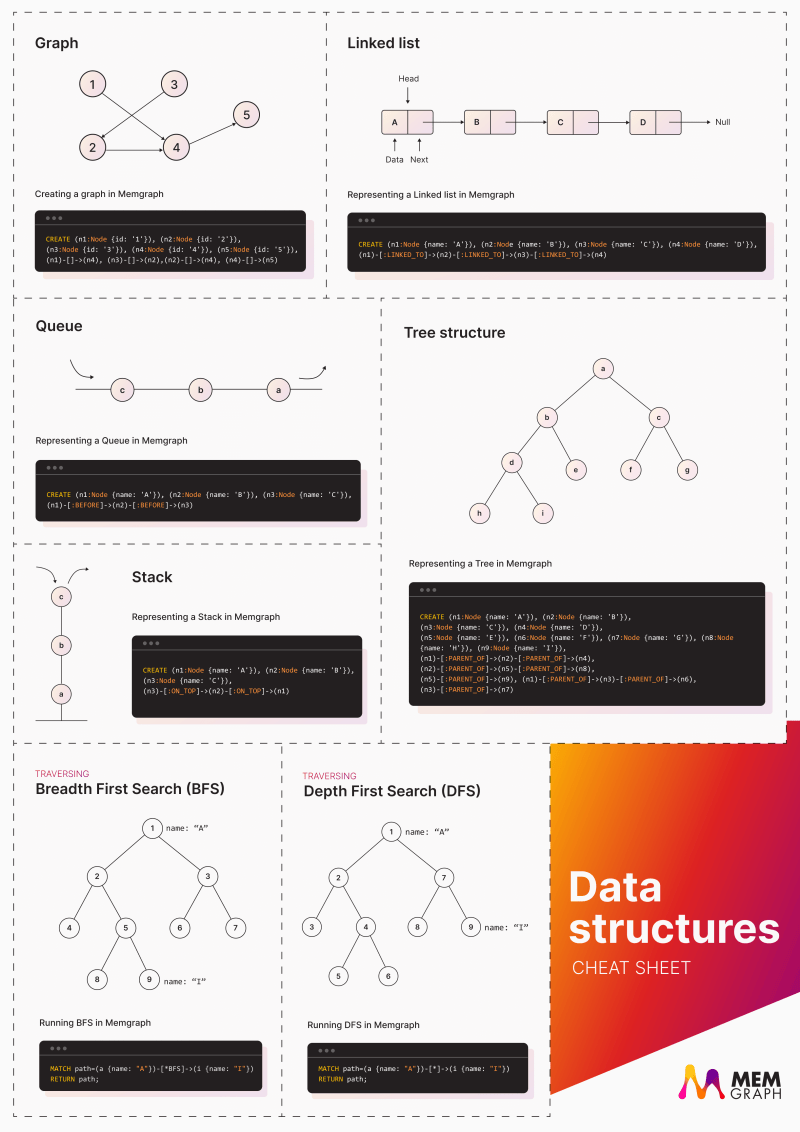
At their core, data structures are specialized formats for organizing, storing, and retrieving data to optimize specific operations. They bridge the gap between raw information and executable logic, transforming abstract problems into solvable puzzles. A poorly chosen structure can turn a linear process into an exponential nightmare, while the right one—like a balanced binary search tree—reduces complexity from O(n²) to O(log n). The stakes are clear: inefficiency isn’t just a bug; it’s a systemic flaw.What makes data structures uniquely powerful is their adaptability. A queue might excel at managing task scheduling, while a graph shines in modeling social networks or GPS routes. The key lies in matching the structure’s inherent properties to the problem’s demands. For instance, a priority queue (often implemented with a heap) ensures that the most urgent task is always processed first—a critical feature in operating systems or real-time analytics.
Historical Background and Evolution
The concept of organizing data predates computers. Early mathematicians like Leonhard Euler used graph theory to map Königsberg’s bridges in 1736, laying groundwork for modern networks. But the real turning point came with the advent of programmable machines. In the 1950s, researchers like John McCarthy (creator of Lisp) and Niklaus Wirth (designer of Pascal) formalized data structures as a discipline, recognizing that code efficiency depended as much on data organization as on algorithmic logic.The 1960s and 70s saw the rise of structured programming, where data structures like trees, stacks, and arrays became standardized. Donald Knuth’s The Art of Computer Programming cemented their theoretical footing, while practical implementations in languages like C and later Python democratized their use. Today, frameworks like TensorFlow rely on optimized data structures (e.g., sparse tensors) to handle the massive datasets of deep learning, proving that the principles remain timeless—only the scale has changed.
Core Mechanisms: How It Works
Under the hood, data structures operate through two fundamental mechanisms: abstraction and trade-offs. Abstraction hides implementation details (e.g., a hash table’s internal hashing function) behind a clean interface, while trade-offs dictate performance trade-offs. For example, a binary search tree offers O(log n) lookups but degrades to O(n) if unbalanced. The challenge is selecting structures where the trade-offs align with the use case—like choosing a B-tree for disk-based databases where random access is costly.Table of Contents
- The Complete Overview of Data Structures
- Historical Background and Evolution
- Core Mechanisms: How It Works
- Key Benefits and Crucial Impact
- Major Advantages
- Comparative Analysis
- Future Trends and Innovations
- Conclusion
- Comprehensive FAQs
- Q: How do I choose the right data structure for my project?
- Q: Are there data structures optimized for specific hardware?
- Q: Can data structures be combined for hybrid solutions?
- Q: How do data structures impact security?
- Q: What’s the difference between a data structure and an algorithm?
- Q: Are there emerging data structures I should learn?
Memory management is another critical layer. Some structures, like linked lists, use dynamic allocation for flexibility but suffer from fragmentation. Others, like arrays, offer constant-time access at the cost of rigid sizing. Modern systems often combine approaches: a cache might use a hash map for O(1) lookups while a database indexes data with a B+ tree for range queries. The result is a layered architecture where each data structure plays a precise role in the larger system.
Key Benefits and Crucial Impact
The impact of data structures extends beyond code optimization into the fabric of modern technology. They enable real-time systems like stock trading platforms to execute thousands of transactions per second, or GPS devices to recalculate routes in milliseconds. Without them, tasks like compressing video streams (using Huffman trees) or predicting user behavior (via decision trees) would be computationally infeasible.At a broader level, data structures reduce cognitive load by encapsulating complexity. A developer working with a graph library doesn’t need to reinvent adjacency list algorithms—they can focus on the problem domain. This abstraction is why data structures are the silent enablers of innovation, from blockchain’s Merkle trees to recommendation engines’ collaborative filtering matrices.
“Algorithms are ideas. Data structures are the vessels that carry them to life.”
— Adapted from Donald Knuth’s lectures on programming fundamentals
Major Advantages
- Performance Optimization: Structures like heaps or skip lists minimize time complexity for critical operations (e.g., O(1) average-case lookups in hash tables).
- Memory Efficiency: Sparse matrices or tries (prefix trees) reduce storage overhead by eliminating redundant data.
- Scalability: Distributed systems use structures like consistent hashing to partition data across nodes without bottlenecks.
- Problem-Specific Solutions: A suffix array accelerates text search, while a disjoint-set (union-find) structure optimizes network connectivity algorithms.
- Interoperability: Standardized data structures (e.g., JSON objects, XML trees) ensure compatibility across languages and platforms.

Comparative Analysis
| Structure | Best Use Case |
|---|---|
| Arrays | Fixed-size, random-access data (e.g., pixel grids in image processing). Trade-off: Insertions/deletions are O(n). |
| Hash Tables | Key-value lookups (e.g., caching, databases). Average O(1) time but requires handling collisions. |
| Graphs | Relationship modeling (e.g., social networks, pathfinding). Adjacency lists save memory; adjacency matrices speed up dense graphs. |
| Tries | Prefix-based searches (e.g., autocomplete systems). Memory-intensive but O(L) search time (L = key length). |
Future Trends and Innovations
The next frontier for data structures lies in adaptive and probabilistic designs. As data grows exponentially, traditional structures face limitations. Research into self-balancing trees (e.g., AVL, Red-Black) is evolving toward dynamic versions that adjust to workload patterns. Meanwhile, probabilistic structures like Bloom filters (for approximate membership tests) and cuckoo filters (memory-efficient hashing) are gaining traction in big data pipelines.Another shift is toward quantum-aware data structures, where operations like Grover’s algorithm exploit quantum parallelism to redefine search complexity. Even classical systems are being reimagined: persistent data structures (immutable versions of trees/maps) enable safer concurrency in distributed systems, while learned indexes use machine learning to predict data access patterns, blending data structures with AI.
Conclusion
Data structures are the unsung heroes of computational science—a blend of theory and pragmatism that turns raw data into actionable intelligence. Their evolution reflects the broader trajectory of technology: from manual calculations to self-optimizing systems. The lesson for developers and architects is clear: mastering these structures isn’t optional; it’s the difference between a system that works and one that works effortlessly.As fields like quantum computing and edge AI emerge, the role of data structures will only expand. The challenge isn’t just understanding them but anticipating how they’ll shape the next generation of problems—whether in autonomous vehicles navigating dynamic maps or decentralized networks processing transactions in real time.
Comprehensive FAQs
Q: How do I choose the right data structure for my project?
Start by identifying the most frequent operations (e.g., search vs. insertion) and their required time complexity. For example, use a hash table if lookups dominate, but switch to a balanced tree if range queries are critical. Profile your data’s access patterns—random access favors arrays, while sequential access suits linked lists.
Q: Are there data structures optimized for specific hardware?
Yes. GPU-accelerated structures like sparse tensors (for deep learning) or cache-optimized arrays (for SIMD processing) leverage hardware parallelism. Similarly, persistent data structures minimize memory churn in multi-core systems by avoiding destructive updates.
Q: Can data structures be combined for hybrid solutions?
Absolutely. A common pattern is using a hash table for O(1) lookups while storing values as linked lists to handle collisions. Databases often combine B-trees (for disk I/O) with bitmaps (for filtering). The key is designing the hybrid to exploit each structure’s strengths.
Q: How do data structures impact security?
Poorly chosen structures can introduce vulnerabilities. For instance, a poorly implemented hash table might lead to denial-of-service via hash collisions. Cryptographic structures like Merkle trees (used in blockchain) rely on data structures to ensure tamper-proof integrity.
Q: What’s the difference between a data structure and an algorithm?
Data structures organize data for efficient access/modification, while algorithms define the step-by-step logic to manipulate that data. A binary search algorithm, for example, depends on a sorted array or BST to achieve O(log n) performance. One without the other is incomplete.
Q: Are there emerging data structures I should learn?
Watch for:
- Learned indexes (ML-optimized data structures)
- Probabilistic data structures (e.g., Count-Min Sketch for streaming data)
- Quantum-friendly structures (e.g., amplitude amplification for search)
- Geometric structures (e.g., k-d trees for spatial queries)
Leave a Comment
Comments are moderated before appearing. The data you submit is processed according to the Privacy Policy of Viralcontentbee.