How Coding Dojo Transforms Learning Into a Collaborative Mastery Game
The first time a developer steps into a coding dojo, they’re not just writing code—they’re participating in a ritual of deliberate practice. Unlike traditional coding bootcamps or self-directed tutorials, a coding dojo strips away distractions and forces participants to confront problems under constraints, mirroring the pressure of real-world development. The room hums with focus; keyboards clatter in unison as teams rotate between roles, each iteration refining their approach. It’s less about memorizing syntax and more about cultivating intuition, a skill that separates junior developers from those who architect systems.
What makes the coding dojo unique is its fusion of martial arts discipline with software craftsmanship. The term borrows from the Japanese dojo—a training ground for mastery—where repetition and feedback loop into muscle memory. Here, the "kata" isn’t a form but a coding exercise, repeated until perfection. Yet unlike solo drills, the coding dojo thrives on collective intelligence. Observers critique, drivers execute, and navigators guide, creating a feedback ecosystem that accelerates learning exponentially. This isn’t just another team-building exercise; it’s a microcosm of how high-performing engineering teams operate.
The paradox of the coding dojo lies in its simplicity: no flashy tools, no gimmicks, just raw problem-solving under time pressure. Yet its impact is profound. Studies show that participants retain concepts 40% better when taught through iterative, constraint-driven practice—closer to how musicians or athletes train than how most developers learn. The method’s rise parallels the shift from individualistic coding to collaborative, pair-programming-centric workflows. But where pair programming often feels like a pair of eyes on a single screen, the coding dojo scales that collaboration into a full-spectrum experience, blending structure with spontaneity.

The Complete Overview of Coding Dojo
At its core, a coding dojo is a structured environment designed to hone programming skills through repetitive, constraint-based exercises. Unlike hackathons or coding challenges, it’s not about solving novel problems but refining existing ones under artificial limitations—time constraints, language restrictions, or even forbidden tools. This mirrors the "noisy channel" theory in communication: by removing shortcuts, participants must rely on fundamental principles. The result? A deeper, more instinctive understanding of algorithms, design patterns, and debugging.The coding dojo operates on three pillars: kata (repetitive exercises), mob programming (whole-team collaboration), and retrospectives (post-session debriefs). Katas range from simple FizzBuzz variations to complex system simulations, while mob programming ensures every team member contributes. Retrospectives dissect failures and successes, turning each session into a learning amplifier. This trifecta creates a feedback loop that traditional coding exercises lack. The method’s flexibility allows it to adapt to any language or framework, making it a universal tool for developers at all levels.
Historical Background and Evolution
The concept emerged in the early 2000s as agile methodologies gained traction, particularly within the Extreme Programming (XP) community. Dave Astels, a software consultant, popularized the term after observing how martial arts dojos cultivated discipline through repetition. His 2003 article, "The Coding Dojo", framed it as a "safe space" for developers to experiment without fear of failure—a direct response to the high-pressure, often punitive culture of early software engineering. The first documented coding dojo sessions in Europe and the U.S. were informal gatherings where developers would tackle a single problem in 30-minute bursts, rotating roles to keep engagement high.By the late 2000s, the practice evolved beyond ad-hoc meetups into structured workshops, often hosted by companies like ThoughtWorks and Microsoft. The rise of pair programming and mob programming further cemented its place in modern development cultures. Today, coding dojos are used in corporate training, universities, and open-source communities. Tools like Coding Dojo London’s "KataCatalog" and platforms like Codewars (which borrowed the kata concept) democratized access, turning it from a niche agile experiment into a mainstream learning technique. Its longevity stems from its adaptability—whether used to onboard juniors, refine senior architects, or even test new programming languages.
Core Mechanisms: How It Works
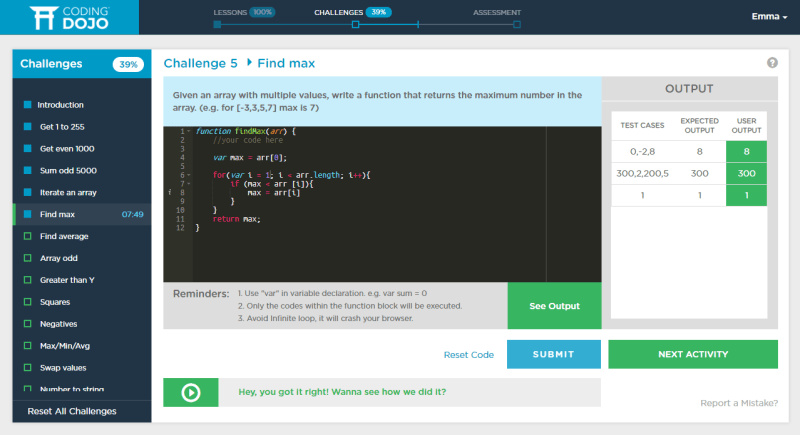
A coding dojo session typically follows a rigid but adaptable structure. First, a kata—a pre-defined coding exercise—is selected, often with constraints (e.g., "solve this in Python without loops"). Participants then divide into roles: driver (writes code), navigator (guides strategy), and observer (notes issues). Timeboxes (usually 10–30 minutes) force rapid iteration. After each cycle, roles rotate, ensuring everyone engages deeply. The session concludes with a retrospective where the team discusses what worked, what didn’t, and how to improve—mirroring agile sprint reviews.Table of Contents
- The Complete Overview of Coding Dojo
- Historical Background and Evolution
- Core Mechanisms: How It Works
- Key Benefits and Crucial Impact
- Major Advantages
- Comparative Analysis
- Future Trends and Innovations
- Conclusion
- Comprehensive FAQs
- Q: Can a coding dojo work for non-programmers, like designers or product managers?
- Q: How often should a team run a coding dojo?
- Q: What’s the best way to facilitate a coding dojo for beginners?
- Q: How do you measure the success of a coding dojo?
- Q: Are there industry-specific coding dojos (e.g., for embedded systems or game dev)?
- Q: Can a coding dojo replace pair programming?
The magic lies in the constraints. By limiting tools or time, participants uncover creative solutions they’d overlook in open-ended environments. For example, a coding dojo might ban recursion to force iterative thinking, or restrict a problem to 10 lines of code to emphasize clarity. This mirrors how senior developers debug: by stripping away complexity to reveal root causes. The method also exposes cultural blind spots—e.g., how teams handle disagreements or prioritize readability over speed. Over time, these micro-interactions build habits that translate to real-world collaboration.
Key Benefits and Crucial Impact
The coding dojo’s most immediate benefit is accelerated skill retention. Neuroscience confirms that spaced repetition and active recall—both staples of coding dojo practice—enhance memory formation. Developers who engage in regular sessions report faster debugging, sharper design decisions, and reduced "analysis paralysis." Beyond individual growth, the method fosters psychological safety: participants learn to fail quickly and iterate, a skill critical in fast-moving tech environments. Companies like Spotify and GitLab have integrated coding dojos into their onboarding, citing 30% faster ramp-up times for new hires.Yet its impact extends beyond technical proficiency. The coding dojo acts as a cultural catalyst, breaking down silos between frontend and backend teams, or between engineers and designers. By forcing collaboration under pressure, it surfaces communication gaps that might otherwise go unnoticed. For example, a coding dojo where a backend developer must explain an API to a frontend teammate reveals documentation flaws—or highlights the need for better abstraction. This aligns with research from Google’s Project Aristotle, which found that psychological safety and dependency awareness are the top predictors of team success.
"A coding dojo isn’t about writing perfect code—it’s about writing code under imperfect conditions and learning to adapt. That’s the real skill in software engineering." —Laurie Williams, Professor of Computer Science, North Carolina State University
Major Advantages
- Skill Mastery Through Repetition: Katas reinforce fundamental concepts (e.g., sorting algorithms, design patterns) until they become instinctive, akin to a musician’s scales.
- Collaborative Debugging: Mob programming exposes blind spots faster than solo work, as multiple perspectives attack a problem simultaneously.
- Cultural Alignment: Sessions reveal team dynamics—who dominates discussions, who stays silent—and surface opportunities for coaching.
- Adaptability: Constraints (e.g., "no Google," "use only functional programming") force creative problem-solving, mimicking real-world limitations.
- Low-Cost, High-Impact Training: Requires only a whiteboard, code editor, and willing participants—no expensive tools or infrastructure.
Comparative Analysis
| Aspect | Coding Dojo vs. Traditional Bootcamps |
|---|---|
| Learning Focus |
|
| Collaboration |
|
| Feedback Loop |
|
| Scalability |
|
Future Trends and Innovations
The next evolution of the coding dojo lies in gamification and AI integration. Platforms like Codewars and Exercism have already blended coding dojos with leaderboards and automated feedback, but future iterations may use AI to generate dynamic constraints or simulate real-world system failures. Imagine a coding dojo where the kata adapts based on a participant’s skill level, or where an AI "observer" highlights subtle bugs human reviewers might miss. This aligns with the rise of AI pair programming tools like GitHub Copilot, which could serve as a coding dojo’s "navigator" role, suggesting optimizations in real time.Another trend is the globalization of coding dojos. Remote coding dojo sessions, facilitated by tools like Miro or Figma, are bridging geographical gaps, allowing distributed teams to sync on practice. Virtual coding dojos could also incorporate augmented reality (AR), where participants "build" code in a shared 3D space, visualizing algorithms as physical structures. As remote work becomes permanent, these adaptations will ensure the coding dojo remains relevant beyond the office walls. The method’s core—structured, constraint-driven collaboration—will endure, but its delivery will grow more immersive and data-driven.

Conclusion
The coding dojo is more than a training technique; it’s a philosophy that challenges the passive learning models dominant in tech education. By embracing constraints, iteration, and collective intelligence, it turns coding into a craft—one honed through deliberate practice, not just exposure. Its rise reflects a broader shift toward experiential learning in tech, where doing trumps theory. For individuals, it’s a path to mastery; for teams, it’s a culture builder; for companies, it’s a competitive edge in an era where software quality separates winners from followers.Yet its power lies in its simplicity. No need for cutting-edge tools or revolutionary pedagogy—just a room, a problem, and a willingness to fail fast. As AI and remote work reshape the industry, the coding dojo’s principles will only grow in relevance. The question isn’t whether it’s the future of learning, but how quickly organizations will adopt it before their competitors do.
Comprehensive FAQs
Q: Can a coding dojo work for non-programmers, like designers or product managers?
Absolutely. While the exercises are code-focused, the coding dojo’s core—collaborative problem-solving under constraints—is universally applicable. Designers might participate in "design kata" sessions where they refine UI prototypes in 15-minute sprints, while product managers could engage in "problem framing dojos" to hone their ability to articulate technical requirements. The key is adapting the kata to the audience’s goals.
Q: How often should a team run a coding dojo?
Frequency depends on the team’s goals. For skill-building, weekly 60-minute sessions are ideal—consistent enough to create habits but not so frequent that they feel like a chore. High-pressure teams (e.g., startups) might opt for biweekly sessions, while larger enterprises may run them monthly as part of a broader training program. The critical factor is consistency over intensity; sporadic sessions yield diminishing returns.
Q: What’s the best way to facilitate a coding dojo for beginners?
Start with simple, familiar katas (e.g., FizzBuzz, Fibonacci sequence) and avoid complex constraints. Use a rotating facilitator model where a senior developer guides the first few sessions, then hands off to peers. Provide a kata catalog with varying difficulty levels so beginners can progress at their own pace. Most importantly, normalize mistakes—beginners should leave feeling challenged, not defeated.
Q: How do you measure the success of a coding dojo?
Quantitative metrics include code quality improvements (e.g., fewer bugs in production after sessions), reduced onboarding time, or higher survey scores on collaboration and confidence. Qualitative signs include more active participation in retrospectives, fewer "siloed" discussions in standups, and junior developers asking more technical questions. The ultimate measure? Teams that adopt coding dojo principles organically—e.g., spontaneously mob-programming during debugging sessions.
Q: Are there industry-specific coding dojos (e.g., for embedded systems or game dev)?
Yes. While the coding dojo framework is language-agnostic, communities have tailored it to domains like:
- Embedded Systems: Katas focus on memory constraints, real-time scheduling, or hardware interactions.
- Game Development: Sessions might involve optimizing shaders or designing finite state machines under latency constraints.
- Data Science: Katas could center on cleaning messy datasets or tuning ML models within compute limits.
Q: Can a coding dojo replace pair programming?
No—but it complements it beautifully. Pair programming is a reactive practice (solving problems as they arise), while a coding dojo is proactive (preventing problems through deliberate practice). Some teams use coding dojos to refine skills before pair programming, or as a way to onboard new pairs under structured guidance. Think of it as calisthenics for developers: pair programming is the workout, and the coding dojo is the warm-up.
Leave a Comment
Comments are moderated before appearing. The data you submit is processed according to the Privacy Policy of Viralcontentbee.