seo tips for newbies mastering essential strategies quickly
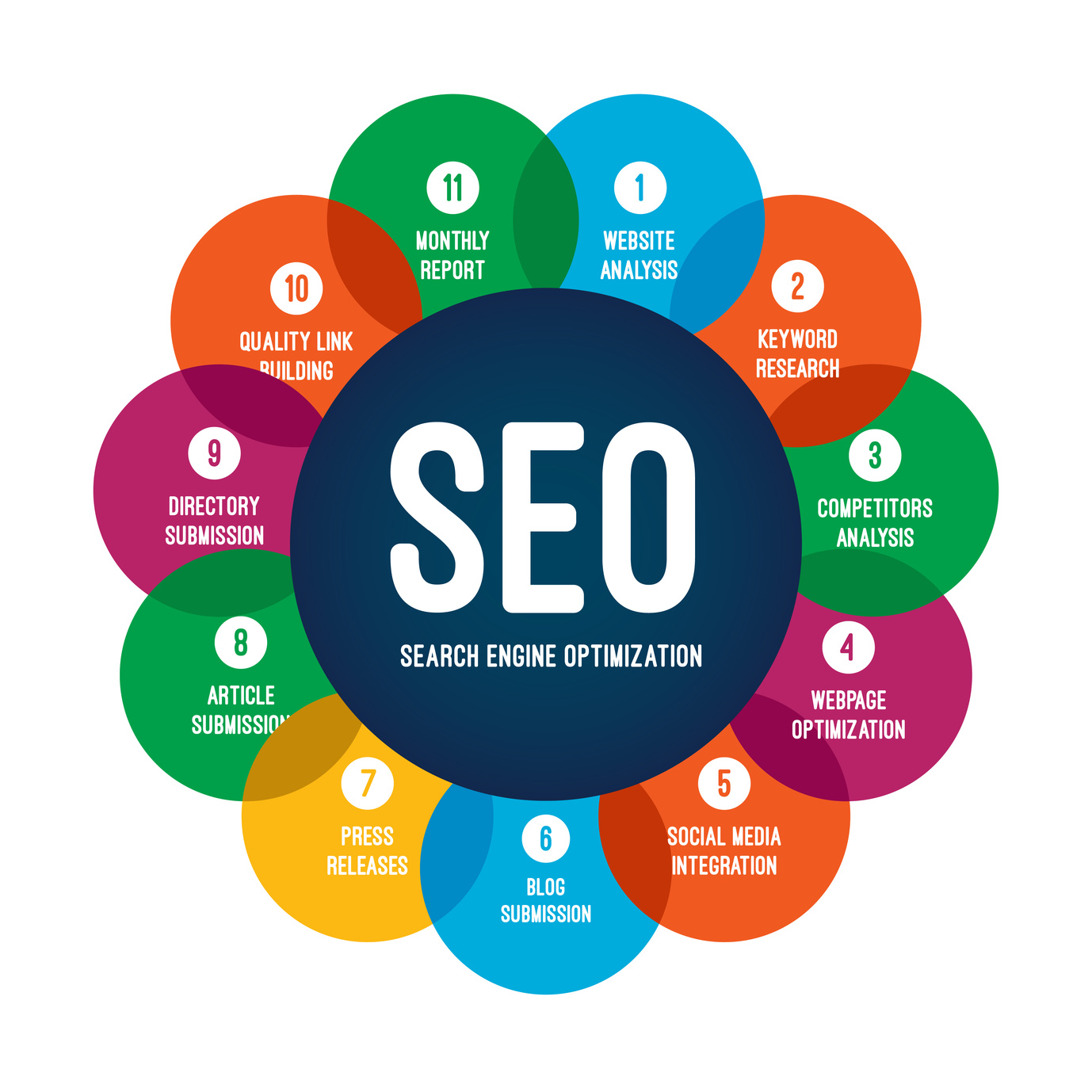
Table of Contents
- Understanding the Basics of SEO for Beginners
- Core Components of SEO and Their Roles in Visibility
- How Search Engines Crawl, Index, and Rank Web Pages
- Organic vs. Paid Search Results: Why Long-Term Growth Depends on Rankings
- Beginner-Friendly Infographic: The SEO Process Simplified
- Identifying Low-Hanging Fruit in SEO: Quick Wins for Immediate Impact
- ` for the main title and ` / ` for subtopics. A poorly structured page (e.g., all text in ` ` tags) confuses search engines about content hierarchy. Data-Driven Example: A case study by Moz found that fixing title tags and meta descriptions alone improved click-through rates (CTR) by 16% for tested pages. Similarly, adding alt text to images increased organic traffic by 10% for e-commerce sites, as images often appear in Google Images results. Audit Tools: Leverage free tools like Google Search Console, On-Page SEO Techniques for New Websites On-page SEO forms the foundation of a search-engine-friendly website, directly influencing how search engines interpret and rank content. For new websites, optimizing on-page elements ensures clarity, relevance, and user engagement while aligning with search engine algorithms. This section explores the structural and content-based techniques essential for crafting pages that balance readability with search engine requirements. A well-optimized webpage adheres to a logical hierarchy, prioritizes semantic markup, and integrates primary keywords naturally. Search engines like Google prioritize pages that offer value to users, which begins with a well-structured framework. Below are the core components of on-page SEO, including their ideal formatting and best practices for implementation. Webpage Structure and Content Hierarchy The structure of a webpage dictates both user experience and search engine crawlability. A well-organized page follows a pyramid-like hierarchy, starting with high-level headings and branching into subtopics. This approach ensures content is scannable and semantically coherent. Key structural elements include: Title Tag (H1): The primary heading that defines the page’s topic. It should be concise (50–60 characters), include the primary keyword, and avoid duplication across pages. Subheadings (H2, H3, etc.): Break content into digestible sections, using H2 for main subtopics and H3/H4 for nested details. Subheadings should reflect the content they introduce and incorporate secondary keywords where relevant. URL Structure: Short, descriptive URLs (50–60 characters) with hyphens separating words (e.g., `/guide-on-page-seo-techniques`). Avoid stop words (e.g., "the," "and") and dynamic parameters. Meta Description: A 150–160-character summary of the page’s content, including the primary keyword and a call-to-action (e.g., "Learn on-page SEO techniques for beginners"). While not a direct ranking factor, it impacts click-through rates (CTR). Example of a Hierarchical Structure: H1: On-Page SEO Techniques for New Websites H2: Webpage Structure and Content Hierarchy H3: Title Tags and Headings H3: URL Optimization H3: Meta Descriptions H2: Keyword Integration Without Overstuffing ... Best Practices for Readability: Paragraph Length: Keep paragraphs under 150 words to maintain engagement. Line Length: Limit lines to 60–80 characters to avoid horizontal scrolling. White Space: Use margins, bullet points, and short sentences to improve legibility. Font Size: Ensure body text is at least 16px for accessibility. Checklist of On-Page Elements and Ideal Formatting Optimizing on-page elements requires attention to detail and adherence to search engine guidelines. Below is a checklist of critical components, their ideal formatting, and purpose. On-Page SEO Checklist: Title Tag: Length: 50–60 characters. Format: ` Primary Keyword | Brand Name `. Example: ` On-Page SEO Guide for Beginners | TechBlog `. Headings (H1–H6): H1: Single per page, includes primary keyword. H2/H3: Logical progression, secondary keywords where applicable. Example: How to Optimize Images for SEO
- File Naming and Alt Text
- Best Practices for Compression
- Natural Keyword Integration Without Overstuffing
- Comparison: Optimized vs. Non-Optimized Content Snippets
- Content Creation and Optimization Strategies for SEO Beginners
- Researching High-Potential Topics Using Free Tools
- Structuring Blog Posts for Engagement and SEO
- Repurposing Content While Retaining SEO Value
- Writing for Humans and Search Engines: A Dual-Focus Guide
- Off-Page SEO and Link Building Fundamentals
- Domain Authority and the Role of Backlinks in Rankings
- Legitimate Methods to Earn Backlinks
- Step-by-Step Outreach Email Template for Backlink Acquisition
- FAQ
- What are the 5 most important SEO basics every beginner should start with?
- How can I optimize my website for SEO without spending money?
- What’s the fastest way to rank a new website in Google?
- Is SEO still worth it in 2024, or should I just focus on social media?
- How do I check if my SEO efforts are working?
Search engine optimization remains the cornerstone of digital visibility, yet many newcomers approach it with uncertainty about where to begin. This guide demystifies SEO by breaking down its three core pillars—technical, on-page, and off-page—into actionable steps tailored for beginners. From understanding how search engines evaluate content to identifying immediate optimizations, every element is designed to equip users with practical knowledge without overwhelming technical jargon. Whether addressing low-hanging fixes like meta tags or diving into advanced tactics such as structured data, the focus remains on clarity and measurable impact.
Organic search rankings drive sustainable traffic, but their potential is often underestimated compared to paid alternatives. By exploring the distinctions between organic and paid results, this discussion highlights why long-term growth hinges on mastering foundational SEO principles. Visual aids, comparative examples, and step-by-step processes ensure that even complex concepts—like backlink strategies or content repurposing—become accessible. The goal is to transform theoretical knowledge into executable strategies, empowering users to enhance their online presence systematically.
Understanding the Basics of SEO for Beginners
Search Engine Optimization (SEO) serves as the foundation for improving a website’s visibility in organic search results. For beginners, grasping its core components—technical optimization, content refinement, and external authority—is essential to developing a structured approach. These elements work synergistically: technical SEO ensures search engines can access and interpret a site efficiently, while on-page and off-page factors influence how well a page aligns with user intent and search engine algorithms. Without a clear understanding of these pillars, even high-quality content may fail to rank effectively. Below, we break down the process of how search engines evaluate and prioritize web pages, along with practical strategies to identify immediate opportunities for improvement.Core Components of SEO and Their Roles in Visibility
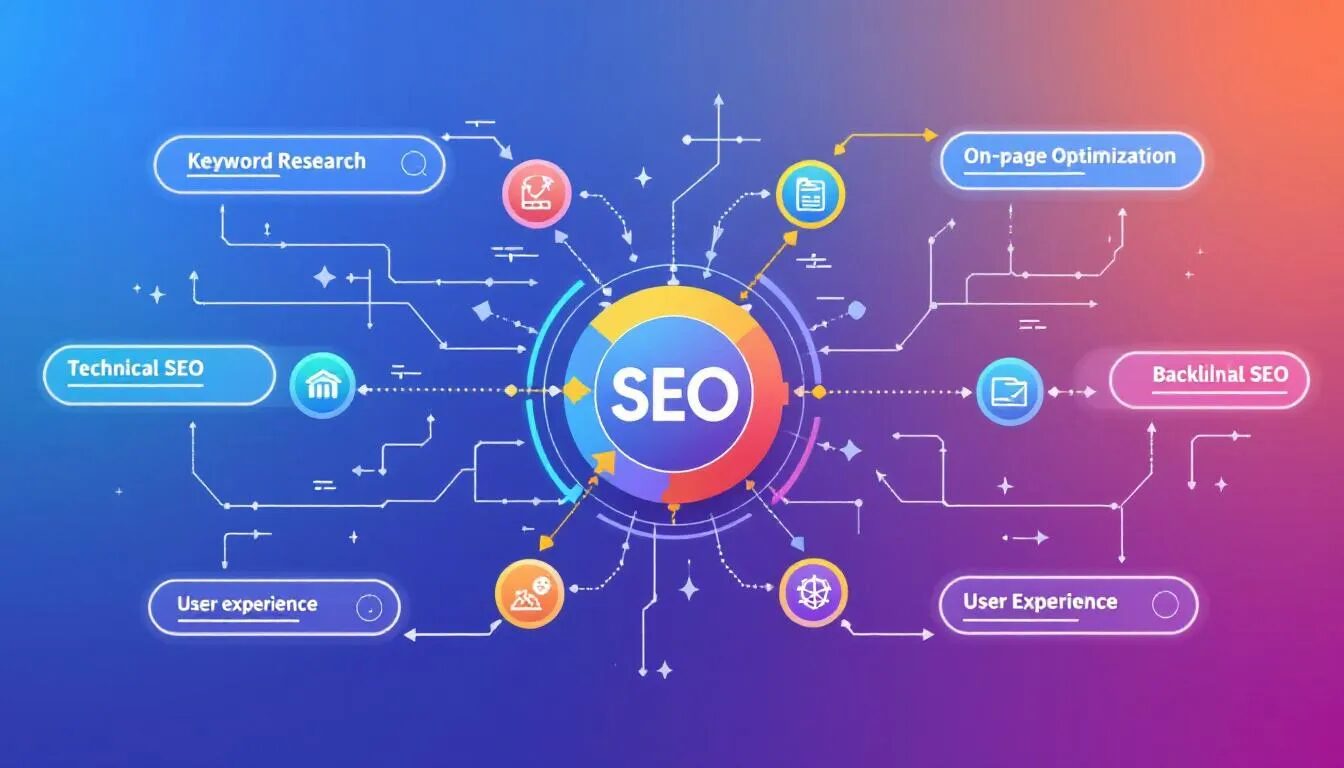
SEO is divided into three primary categories, each addressing distinct aspects of a website’s performance. These components are not isolated; they interdependently contribute to a site’s ability to attract and retain organic traffic.Technical SEO ensures search engines can crawl, render, and index a website without obstacles.
On-page SEO focuses on optimizing individual page elements to match search intent and improve relevance.
Off-page SEO builds external credibility through signals like backlinks and brand mentions.
- Technical SEO addresses infrastructure-related issues, such as site speed, mobile responsiveness, structured data, and XML sitemaps. For example, a slow-loading page (e.g., >3 seconds) can lead to higher bounce rates, directly impacting rankings. Tools like Google’s PageSpeed Insights or Screaming Frog can identify technical bottlenecks, such as unoptimized images or broken internal links.
- On-page SEO involves optimizing content and HTML elements to align with user queries. This includes refining titles, headers, and meta descriptions, as well as ensuring content answers specific questions (e.g., "how to fix a leaky faucet") with clarity and depth. Google’s "People Also Ask" feature often reveals gaps in content that can be addressed to improve visibility.
- Off-page SEO relies on external validation, primarily through backlinks from authoritative sources. A case study by Ahrefs demonstrated that pages ranking on the first page of Google for competitive keywords (e.g., "best running shoes") typically have 3.8x more backlinks than those on page 2. However, quality matters more than quantity; a single link from a reputable site (e.g., Wirecutter or NPR) can outweigh dozens of low-authority links.
How Search Engines Crawl, Index, and Rank Web Pages
Search engines operate through a three-stage process: crawling, indexing, and ranking, each governed by algorithms designed to deliver the most relevant results. Visualizing this process as a flowchart simplifies its complexity:1. Crawling: Search engine bots (e.g., Googlebot) discover and follow links to new or updated pages. The efficiency of this stage depends on factors like site structure (e.g., logical internal linking) and robots.txt directives. For instance, a poorly linked site may leave critical pages uncrawled, reducing their chances of appearing in search results.
2. Indexing: Crawled pages are stored in a database after being analyzed for content, keywords, and technical compliance. Pages with duplicate content, thin text, or poor mobile usability may be excluded from the index. Google Search Console’s "Coverage" report can reveal indexing errors, such as soft 404s or blocked resources.
3. Ranking: Indexed pages are evaluated against search queries using over 200+ ranking factors, including relevance, user engagement (e.g., dwell time), and page authority. For example, a page targeting "organic coffee beans" must demonstrate expertise (E-E-A-T) and satisfy user intent—whether informational (e.g., brewing guides) or transactional (e.g., product comparisons).
Key Insight: A page must be crawled to be indexed, and indexed to be ranked. Skipping any stage eliminates visibility.
Organic vs. Paid Search Results: Why Long-Term Growth Depends on Rankings
While paid search (e.g., Google Ads) offers immediate visibility, organic search results provide sustainable traffic with lower cost-per-click (CPC) over time. A study by HubSpot found that organic search drives 53% of all website traffic, compared to 10% from paid ads. The distinction lies in intent and trust:| Metric | Organic Search | Paid Search |
|---|---|---|
| Cost | Free (after initial optimization effort) | Ongoing ad spend (bid-based) |
| Trust & Credibility | Higher (users associate organic results with authority) | Lower (perceived as sponsored) |
| Scalability | Grows with content and backlinks | Limited by budget |
| Long-Term ROI | Compounded over months/years | Halts when ads are paused |
Beginner-Friendly Infographic: The SEO Process Simplified
To demystify SEO, imagine the process as a three-layer pyramid:1. Foundation (Technical SEO)
2. Middle Layer (On-Page Optimization)
3. Top Layer (Off-Page Authority)
Key Terms Embedded Visually:
Identifying Low-Hanging Fruit in SEO: Quick Wins for Immediate Impact
Low-hanging fruit refers to high-impact, low-effort optimizations that yield rapid improvements in rankings and traffic. These typically involve fixing technical or on-page issues that search engines can easily detect but many sites overlook.Actionable Opportunities:
Meta Tags: Ensure each page has a unique, compelling title tag (<60 characters) and meta description (<160 characters). Example: A page about "vegan meal prep" with a title like "🌱 7-Day Vegan Meal Plan (Easy & Budget-Friendly)" performs better than a generic "Recipe Ideas." Alt Text for Images: Missing or generic alt text (e.g., "IMG_1234.jpg") prevents images from contributing to rankings. Replace with descriptive phrases: `alt="close-up of hand pouring almond milk into oatmeal"`. Broken Links: Use tools like Screaming Frog or Google Search Console to identify 404 errors. Redirecting or fixing these improves crawl efficiency. For example, a broken link to a blog post on "best hiking trails" can be replaced with an updated resource. Internal Linking: Connect related pages to distribute authority. A blog post about "running shoes" should link to a product review page for "Nike Air Zoom Pegasus," improving both pages’ visibility. Header Structure: Use ` ` for the main title and `
/
` for subtopics. A poorly structured page (e.g., all text in `
` tags) confuses search engines about content hierarchy.
Data-Driven Example:
A case study by Moz found that fixing title tags and meta descriptions alone improved click-through rates (CTR) by 16% for tested pages. Similarly, adding alt text to images increased organic traffic by 10% for e-commerce sites, as images often appear in Google Images results.
- Audit Tools: Leverage free tools like Google Search Console,
On-Page SEO Techniques for New Websites
On-page SEO forms the foundation of a search-engine-friendly website, directly influencing how search engines interpret and rank content. For new websites, optimizing on-page elements ensures clarity, relevance, and user engagement while aligning with search engine algorithms. This section explores the structural and content-based techniques essential for crafting pages that balance readability with search engine requirements.A well-optimized webpage adheres to a logical hierarchy, prioritizes semantic markup, and integrates primary keywords naturally. Search engines like Google prioritize pages that offer value to users, which begins with a well-structured framework. Below are the core components of on-page SEO, including their ideal formatting and best practices for implementation.
Webpage Structure and Content Hierarchy
The structure of a webpage dictates both user experience and search engine crawlability. A well-organized page follows a pyramid-like hierarchy, starting with high-level headings and branching into subtopics. This approach ensures content is scannable and semantically coherent.Key structural elements include:
- Title Tag (H1): The primary heading that defines the page’s topic. It should be concise (50–60 characters), include the primary keyword, and avoid duplication across pages.
- Subheadings (H2, H3, etc.): Break content into digestible sections, using H2 for main subtopics and H3/H4 for nested details. Subheadings should reflect the content they introduce and incorporate secondary keywords where relevant.
- URL Structure: Short, descriptive URLs (50–60 characters) with hyphens separating words (e.g., `/guide-on-page-seo-techniques`). Avoid stop words (e.g., "the," "and") and dynamic parameters.
- Meta Description: A 150–160-character summary of the page’s content, including the primary keyword and a call-to-action (e.g., "Learn on-page SEO techniques for beginners"). While not a direct ranking factor, it impacts click-through rates (CTR).
Example of a Hierarchical Structure:
H1: On-Page SEO Techniques for New Websites
H2: Webpage Structure and Content Hierarchy
H3: Title Tags and Headings
H3: URL Optimization
H3: Meta Descriptions
H2: Keyword Integration Without Overstuffing
...Best Practices for Readability:
- Paragraph Length: Keep paragraphs under 150 words to maintain engagement.
- Line Length: Limit lines to 60–80 characters to avoid horizontal scrolling.
- White Space: Use margins, bullet points, and short sentences to improve legibility.
- Font Size: Ensure body text is at least 16px for accessibility.
Checklist of On-Page Elements and Ideal Formatting
Optimizing on-page elements requires attention to detail and adherence to search engine guidelines. Below is a checklist of critical components, their ideal formatting, and purpose.On-Page SEO Checklist:
Title Tag:
- Length: 50–60 characters.
- Format: `
Primary Keyword | Brand Name `.- Example: `
On-Page SEO Guide for Beginners | TechBlog `.Headings (H1–H6):
- H1: Single per page, includes primary keyword.
- H2/H3: Logical progression, secondary keywords where applicable.
- Example:
How to Optimize Images for SEO
File Naming and Alt Text
Best Practices for Compression
URL Structure:
- Static, lowercase, hyphen-separated.
- Avoid: `?id=123` or `page.php?sort=asc`.
- Example: `/seo-guide/image-optimization`.
Meta Description:
- Length: 150–160 characters.
- Include primary keyword and CTA.
- Example: `"Master image SEO with our guide on file naming, compression, and alt text—boost your site’s speed and rankings."`
Content Body:
- Primary keyword density: 1–2% (natural integration).
- Secondary keywords: Distribute in subheadings and paragraphs.
- Internal links: 2–4 per 1,000 words, using descriptive anchor text.
Image Optimization:
- File name: Descriptive, hyphen-separated (e.g., `seo-checklist-infographic.png`).
- Alt text: Concise, keyword-relevant (e.g., `alt="On-Page SEO Checklist for Beginners"`).
- Format: WebP or AVIF for compression; max dimensions: 2,000px width.
- File size: Under 100KB for optimal loading.
Internal Linking:
- Anchor text: Descriptive and keyword-rich (e.g., "learn about meta tags" instead of "click here").
- Relevance: Link to related content (e.g., link an "SEO basics" article to a "keyword research" guide).
- Depth: Aim for 3–5 clicks from homepage to critical pages.
Schema Markup (Structured Data):
- Implement for local businesses, blogs, or products using JSON-LD.
- Key attributes:
- LocalBusiness: `name`, `address`, `telephone`, `openingHours`.
- BlogPosting: `headline`, `datePublished`, `author`, `image`.
- Product: `name`, `price`, `availability`, `review`.
- Example (LocalBusiness):
{
"@context": "https://schema.org",
"@type": "LocalBusiness",
"name": "TechBlog SEO Services",
"address": {
"@type": "PostalAddress",
"streetAddress": "123 SEO Ave",
"addressLocality": "Digital City",
"postalCode": "10001",
"addressCountry": "US"
},
"telephone": "+1-555-123-4567",
"openingHours": "Mo-Fr 09:00-17:00"
}
Natural Keyword Integration Without Overstuffing
Keyword integration must prioritize user intent and readability while signaling relevance to search engines. Overstuffing (e.g., repeating a keyword unnaturally) triggers penalties, whereas strategic placement in headings, introductions, and transitions enhances both SEO and UX.Before-and-After Examples:
Poor Example (Overstuffed):
"On-page SEO techniques for beginners include on-page SEO tips like on-page SEO strategies. Learn on-page SEO best practices to improve your on-page SEO rankings."Optimized Example (Natural Integration):Strategies for Natural Integration:
"For beginners, mastering on-page SEO involves optimizing core elements like title tags, headings, and content structure. These strategies improve search rankings while enhancing user experience—key for long-term visibility."
- Headings: Include primary keyword in H1 and 1–2 H2s.
- Introduction: State the topic and primary keyword within the first 100 words.
- Transitions: Use LSI (Latent Semantic Index) keywords (e.g., "tactics," "methods," "guidelines") to vary phrasing.
- Content Depth: Address user queries comprehensively (e.g., "How to optimize images for SEO" should cover file naming, compression, and alt text).
Keyword Placement Checklist:
- H1: Primary keyword (100% inclusion).
- First 100 words: Primary keyword (1x).
- Subheadings (H2/H3): Secondary keywords (1–2 per heading).
- Body text: Primary keyword density: 1–2%; secondary keywords: 0.5–1%.
- URL and meta description: Primary keyword (1x each).
Comparison: Optimized vs. Non-Optimized Content Snippets
Below is a table contrasting poorly optimized and SEO-friendly content elements, along with explanations for their effectiveness.
Element Poor Example Optimized Example Why It Works < Title Tag <title>Homepage</title><title>Beginner’s Guide to On-Page SEO Techniques | TechBlog</title>Includes primary keyword ("On-Page SEO Techniques") and brand name, improving CTR and relevance.
Content Creation and Optimization Strategies for SEO Beginners
Content creation lies at the core of SEO success, directly influencing search rankings, user engagement, and organic traffic. Effective strategies involve identifying high-value topics, structuring content for both search engines and readers, and maximizing existing assets through repurposing. This section explores data-driven topic selection, content frameworks, repurposing techniques, and optimization methods to enhance visibility and authority.
Researching High-Potential Topics Using Free Tools
Selecting topics with strong search intent and low competition is critical for new websites. Free tools like Google Keyword Planner, Ubersuggest, AnswerThePublic, and Google Trends provide actionable insights into search volume, trends, and competitor gaps.
High-potential topics combine search volume (demand), low competition (feasibility), and user intent (relevance).Competitor Analysis for Topic Gaps
1. Identify Competitors: Use tools like Ahrefs’ Free Backlink Checker or SEMrush’s Organic Research (limited free version) to analyze top-ranking pages for target keywords.
2. Examine Content Gaps: Compare competitors’ content depth, multimedia integration, and engagement metrics (e.g., comments, shares). Tools like SurferSEO’s Free Audit highlight undercovered subtopics.
3. Leverage "People Also Ask" (PAA) and "Related Searches": Google’s autocomplete and PAA sections reveal unanswered queries. For example, searching "best SEO tools for beginners" may show PAA questions like:
- "Which free SEO tools are most effective?"
- "How do I track keyword rankings without paid tools?"
Integrate these into content to address broader intent.Search Volume Trends
- Google Trends: Compare seasonal fluctuations (e.g., "how to prepare for winter driving" spikes in November).
- Ubersuggest’s Keyword Difficulty Score: Prioritize keywords with scores <30 (low competition) and monthly searches >500.
- Example: A keyword like "how to start a blog in 2024" (500+ searches/month, KD 25) is ideal for beginners.
Structuring Blog Posts for Engagement and SEO
A well-organized post improves readability, dwell time, and SEO signals. Below is a modular template with placeholders for headings, subheadings, and multimedia, optimized for both humans and search engines.
Google’s Helpful Content Update prioritizes content that satisfies user intent. Structure aligns with E-E-A-T (Experience, Expertise, Authoritativeness, Trustworthiness).Template Breakdown
1. Title Tag (H1)
- Include primary keyword naturally (e.g., "15 Free SEO Tools for Beginners in 2024").
- Use power words (e.g., "Ultimate," "Proven," "Step-by-Step") to boost CTR.
2. Introductory Paragraph (150–200 words)
- Hook with a statistic, question, or pain point (e.g., "80% of bloggers fail due to poor SEO—here’s how to avoid it.").
- Introduce the main topic + subtopics covered (e.g., "We’ll explore 15 free tools, how to use them, and their SEO impact.").
3. Hierarchical Headings (H2–H4)
- H2 Subtopics: Break content into 5–7 logical sections (e.g., "Keyword Research Tools," "On-Page Optimization Tools").
- H3 Subheadings: Add actionable steps or examples (e.g., "How to Use Ubersuggest for Keyword Difficulty").
- Example Structure:
H2: Keyword Research Tools
H3: Ubersuggest – Free Keyword Overview
H3: Google Keyword Planner – Search Volume Data4. Multimedia Integration
- Images: Use compressed, descriptive filenames (e.g., `seo-tools-ubersuggest-dashboard.png`) and alt text (e.g., "Ubersuggest keyword difficulty score for ‘SEO tools’").
- Visuals: Embed screenshots, infographics, or GIFs to explain complex steps (e.g., a step-by-step guide for setting up Google Search Console).
- Tables: Compare tools (e.g., features, pricing, best use cases).
5. Internal/External Links
- Link to related posts (e.g., "For advanced analytics, see our guide on Google Analytics 4").
- Cite authoritative sources (e.g., "According to Moz, backlinks remain a top ranking factor").
6. Conclusion (Call-to-Action)
- Summarize key takeaways in bullet points.
- Encourage engagement (e.g., "Try Ubersuggest today and share your results in the comments!").
Repurposing Content While Retaining SEO Value
Repurposing extends content reach without creating new material from scratch. Methods include adapting formats, updating data, or targeting new audiences. Below are three high-impact strategies with SEO preservation techniques.
Repurposing leverages existing backlinks, domain authority, and user signals—critical for new websites with limited resources.1. Blog-to-Video Conversion
- Process:
- Transcribe the H2/H3 sections into a script (use tools like Descript or Otter.ai for accuracy).
- Add visuals (screenshots, animations) to illustrate key points.
- Upload to YouTube with:
- Title: "How to Use [Tool] in 2024 – Step-by-Step Guide" (include primary keyword).
- Description: Full transcript, timestamps, and links to the original blog.
- Tags: Mix of broad and long-tail keywords (e.g., "free SEO tools," "Ubersuggest tutorial").
- SEO Benefit: Videos rank for rich snippets and voice search queries (e.g., "How do I use Google Keyword Planner?").
2. Infographics for Data-Driven Content
- Process:
- Extract statistics, comparisons, or processes from the blog (e.g., "Top 10 Free SEO Tools in 2024").
- Design using Canva or Piktochart, ensuring:
- Text is readable (avoid clutter; use 12pt+ font).
- Colors contrast for accessibility.
- Host on Imgur or Flickr and embed with:
- Alt text: "Infographic comparing free SEO tools by features and pricing".
- Link back to the original post.
- SEO Benefit: Infographics attract backlinks and social shares, boosting domain authority.
3. Checklist or Email Lead Magnet
- Process:
- Convert step-by-step guides into a downloadable checklist (e.g., "SEO Audit Checklist for Beginners").
- Offer as a gated asset (via Mailchimp or ConvertKit) in exchange for email signups.
- Promote via:
- Pinterest pins (use keywords in pin descriptions).
- LinkedIn articles (tag relevant hashtags like #SEO #DigitalMarketing).
- SEO Benefit: Email lists enable direct traffic and repeat engagement, improving dwell time signals.
Writing for Humans and Search Engines: A Dual-Focus Guide
Content must balance keyword optimization with natural readability. Below are core principles with actionable examples.
Google’s BERT algorithm prioritizes contextual understanding—keywords alone are insufficient. Focus on semantic relevance and user satisfaction.1. Tone and Clarity
- Avoid Jargon: Replace "leverage synergies" with "use together effectively."
- Active Voice: "Optimize your meta tags" > "Meta tags should be optimized."
- Conversational Flow: Use short paragraphs (1–2 sentences) and bullet points for complex topics.
2. Keyword Integration
- Primary Keyword: Include in title, H1, first 100 words, and URL.
- Secondary Keywords: Distribute naturally in H2s, H3s, and body text (e.g., "SEO tools," "free keyword research," "beginner-friendly").
- LSI Keywords: Use semantically related terms (e.g., *"Google Analytics," "SE
Off-Page SEO and Link Building Fundamentals
Off-page SEO focuses on external signals that influence a website’s credibility and authority in search engines. Unlike on-page SEO, which optimizes content and structure within a site, off-page SEO relies on backlinks—hyperlinks from other domains pointing to your website. These backlinks act as "votes of confidence," signaling to search engines that your content is valuable and trustworthy. Domain Authority (DA), a metric developed by Moz, quantifies this perceived trustworthiness on a scale of 1 to 100, where higher scores correlate with better rankings. Backlinks remain one of the most critical ranking factors, as they help search engines discover, index, and prioritize pages based on relevance and authority.The quality, relevance, and diversity of backlinks determine their impact. A single high-authority link from a reputable source (e.g., The New York Times) carries more weight than dozens of low-quality links. However, earning backlinks requires strategic outreach, ethical practices, and continuous monitoring to mitigate risks like penalties from spammy or toxic links.
Domain Authority and the Role of Backlinks in Rankings
Domain Authority (DA) is a predictive metric that estimates how well a website will rank on search engine result pages (SERPs). While not a direct Google ranking factor, it correlates strongly with organic search performance. DA is influenced by:
- Linking root domains (unique websites linking to you).
- Link quality (authority and relevance of the linking site).
- Link diversity (variety of anchor text, link types, and referring domains).
For example, a local bakery with a DA of 30 may rank higher for "best croissants in [City]" if it earns backlinks from food blogs (DA 50+) and local chamber of commerce directories (DA 40+), compared to a site with 100 links from unrelated forums (DA 10 each). Backlinks serve as endorsements; the more authoritative the endorser, the stronger the signal to search engines.
Domain Authority is not a Google metric but a useful proxy for understanding how external signals may impact rankings. Focus on earning links from relevant, high-quality domains rather than chasing arbitrary DA scores.Legitimate Methods to Earn Backlinks
Earning backlinks requires a mix of content creation, networking, and strategic outreach. Below are proven, white-hat methods categorized by effort level and scalability. Always prioritize relevance and user intent when vetting opportunities.Criteria for Vetting Backlink Opportunities:
- Domain Authority/Trust Flow: Use tools like Moz, Ahrefs, or SEMrush to check if the linking site has a DA ≥ 20 (for competitive niches, aim for DA ≥ 30).
- Relevance: The linking site should align with your industry or topic (e.g., a fitness blog linking to a nutrition site is relevant; linking to a car dealership is not).
- Traffic and Engagement: Sites with organic traffic and low bounce rates indicate credibility.
- No Penalized History: Avoid sites with past manual actions (e.g., Google penalties) or excessive spammy links.
- Editorial Links: Prefer links earned through content merit (e.g., cited in an article) over paid or manipulative schemes.
- Guest Posting
Write high-quality articles for authoritative blogs in your niche. Target sites with:
- A "Write for Us" page or open submissions policy.
- A readership that overlaps with your target audience.
- No strict "no-follow" policies (unless the site is highly relevant).
Example: A digital marketing agency contributing to HubSpot’s blog or Search Engine Journal to earn editorial links.- Help a Reporter Out (HARO)
Respond to journalist queries on platforms like HARO, where experts provide insights for articles. Backlinks are earned when quoted in publications like Forbes, Business Insider, or TechCrunch.HARO sends 3+ emails daily with reporter requests. Craft concise, expert responses with a link to your resource (e.g., a case study or guide).- Resource Pages and Roundups
Create a comprehensive resource (e.g., "50 Best SEO Tools for 2024") and pitch it to websites that curate industry tools. Many blogs have dedicated pages linking to trusted resources.Example: Pitching a "Top 10 SaaS Companies in [Industry]" list to Product Hunt or G2 Crowd.- Broken Link Building
Identify broken links on high-authority sites using tools like Check My Links or Ahrefs’ Broken Link Checker. Create content that replaces the dead resource, then notify the site owner.Steps:
1. Find a broken link on a relevant site.
2. Create a superior resource on your site.
3. Email the site owner: "I noticed you linked to [dead URL]. My guide on [topic] covers this comprehensively—would you consider updating the link?"- Skyscraper Technique
Improve upon existing top-ranking content (e.g., a listicle with outdated stats). Publish an updated, more detailed version, then outreach to sites linking to the original.Example: Updating a 2018 "Best CRM Software" list with 2024 data and outreach to Capterra or G2 for link updates.- Local Citations and Directories
For small businesses, citations (mentions of NAP—Name, Address, Phone—on external sites) boost local SEO. Submit to:
- Industry-specific directories (e.g., Yelp, Google Business Profile).
- Local chambers of commerce.
- Niche directories (e.g., Angi for contractors, Zocdoc for healthcare).
Ensure NAP consistency: Typos or mismatched details (e.g., "123 Main St" vs. "123 Main Street") dilute local rankings.- Influencer and Expert Collaborations
Partner with influencers or subject-matter experts to co-create content (e.g., webinars, whitepapers). Their audiences may link back to your site.Example: A cybersecurity firm collaborating with a tech YouTuber to produce a "Phishing Scams in 2024" report.- Testimonials and Reviews
Offer genuine testimonials for products/services you’ve used. Many companies feature testimonials on their sites with backlinks.Example: Leaving a review for Shopify or Canva and requesting a link to your portfolio or blog.- Scholarly and Academic Citations
Publish research, case studies, or original data in academic journals or industry reports. These often include permanent links.Example: A healthcare startup citing its clinical trial data in JAMA Network Open.Step-by-Step Outreach Email Template for Backlink Acquisition
Crafting personalized, value-driven outreach emails increases response rates. Below is a modular template adaptable to guest posts, broken link building, or resource page pitches.Subject Line Options:
- For guest posts: "Collaboration Idea: [Your Topic] for [Target Site]"
- For broken links: "Quick Note About a Broken Link on [Site Name]"
- For resource pages: "Valuable Addition to Your [Topic] Roundup"
- For HARO responses: "Expert Response to Your Query on [Topic]"
Email Body Template:
Header:
"Hi [First Name], I hope this email finds you well. I’m a [your role] at [Your Company], specializing in [your niche]. I recently came across [specific page/article on their site] and found it incredibly useful for [mention a pain point or insight]."Value Proposition (Customize):
"I noticed you’re compiling a resource on [topic], and I’d love to contribute. We’ve created [specific asset, e.g., ‘a detailed guide on X’] that aligns perfectly with your audience’s needs. Here’s a preview: [link to relevant page].""Alternatively, I stumbled upon a broken link on [URL] pointing to [dead resource]. Our [page/resource] covers this topic comprehensively and might be a great replacement. Let me know if you’d like me to send it over!"
SEO is not a static discipline but an evolving practice that rewards consistency and adaptability. By prioritizing high-quality content, strategic keyword integration, and ethical link-building, newcomers can establish a strong foundation for visibility. The key lies in balancing immediate optimizations—such as fixing broken links or refining meta descriptions—with long-term investments, like comprehensive content updates and authoritative backlinks. Armed with these insights, users can navigate the complexities of search engine algorithms with confidence, ensuring their digital assets remain competitive in an ever-changing landscape.
FAQ
What are the 5 most important SEO basics every beginner should start with?
Focus on keyword research (use free tools like Google Keyword Planner), on-page SEO (titles, meta descriptions, headers), mobile-friendliness, fast page speed, and building high-quality backlinks from relevant sites. These form the foundation before diving into advanced tactics.
How can I optimize my website for SEO without spending money?
Use free tools like Google Search Console, Google Analytics, and Ubersuggest for keyword research. Write engaging, keyword-rich content, improve site structure with clear URLs, and leverage local SEO (Google My Business) if targeting a location. Also, promote content via social media and email.
What’s the fastest way to rank a new website in Google?
Start by targeting low-competition keywords (long-tail phrases with 100–1,000 monthly searches). Optimize technical SEO (fix broken links, improve crawlability), publish high-quality, original content consistently, and earn authority backlinks through guest posts or niche directories. Patience is key—ranking takes 3–6 months.
Is SEO still worth it in 2024, or should I just focus on social media?
SEO delivers long-term, passive traffic (unlike social media’s algorithm-dependent reach), and 80% of searchers ignore paid ads. While social media helps with visibility, organic SEO builds sustainable authority. Combine both: use social to drive traffic to SEO-optimized content.
How do I check if my SEO efforts are working?
Track Google Search Console for impressions/clicks, Google Analytics for organic traffic growth, and keyword rankings (use free tools like Ubersuggest or Ahrefs’ free trial). Monitor bounce rate (low = relevant content) and conversion rates to measure real impact. Adjust strategies if metrics stagnate after 3 months.
Leave a Comment
Comments are moderated before appearing. The data you submit is processed according to the Privacy Policy of viralcontentbee.com.