Case-Insensitive Patterns: The Ultimate Guide to Precision Matching
Case-insensitive pattern matching is a cornerstone of efficient data handling, yet its subtleties often go unexamined. Whether you're parsing logs, validating inputs, or optimizing search engines, the ability to match text regardless of letter casing is non-negotiable. The challenge lies not just in implementation but in understanding why case insensitivity matters—how it bridges gaps between human input variability and machine precision.
At its core, the ultimate guide to case-insensitive pattern isn’t just about syntax; it’s about solving real-world problems where "User," "user," and "USER" should all trigger the same action. Developers and analysts frequently overlook edge cases, such as locale-specific rules or mixed-script inputs, which can derail even the most robust systems. The stakes are higher in multilingual environments, where case sensitivity isn’t binary but context-dependent.
The evolution of this technique mirrors broader shifts in computing: from brute-force string comparisons to regex optimizations and now, AI-driven pattern recognition. What began as a simple workaround has become a critical tool in cybersecurity, natural language processing, and database querying. The question isn’t if you’ll encounter case-insensitive matching—it’s how well you’ll handle it.

The Complete Overview of Case-Insensitive Pattern Matching
Case-insensitive pattern matching is a technique that standardizes text comparison by ignoring letter case differences, enabling consistent results across varied inputs. It’s widely used in programming, data analysis, and search algorithms to ensure uniformity without manual intervention. For example, a login system must validate "Admin" and "admin" identically, or a search query for "Python" should return matches for "python," "PYTHON," or even "pYtHoN."The power of this approach lies in its adaptability. Unlike strict case-sensitive matching, which fails on minor variations, case-insensitive patterns account for human typographical inconsistencies. This is particularly valuable in collaborative environments, where users may input data in different formats. However, the trade-off is performance overhead, especially in large datasets, where every comparison adds computational cost.
Historical Background and Evolution
The origins of case-insensitive matching trace back to early computing, where hardware limitations necessitated efficient text processing. In the 1960s, languages like FORTRAN introduced basic string operations, but case insensitivity wasn’t standardized until later. The breakthrough came with regex engines in the 1980s, which formalized flags like `i` (ignore case) in Perl, setting the precedent for modern implementations.Today, case-insensitive patterns are embedded in nearly every programming language and toolkit. Databases like PostgreSQL and MySQL offer `ILIKE` and `LOWER()` functions, while libraries such as Python’s `re` module and JavaScript’s `RegExp` provide built-in support. The evolution reflects a broader trend: as software grows more complex, so do the requirements for flexible, human-centric text handling.
Core Mechanisms: How It Works
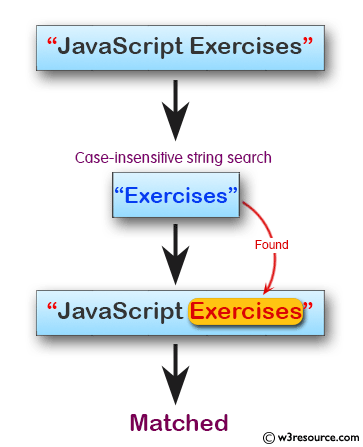
Under the hood, case-insensitive matching relies on two primary methods: normalization and flag-based processing. Normalization converts all characters to a uniform case (e.g., lowercase) before comparison, while flags (like regex’s `i`) dynamically adjust the matching engine’s behavior. For instance, the regex `/user/i` will match "User," "USER," or "uSeR" without pre-processing the input.Table of Contents
- The Complete Overview of Case-Insensitive Pattern Matching
- Historical Background and Evolution
- Core Mechanisms: How It Works
- Key Benefits and Crucial Impact
- Major Advantages
- Comparative Analysis
- Future Trends and Innovations
- Conclusion
- Comprehensive FAQs
- Q: How does case-insensitive matching handle Unicode characters?
- Q: Can case-insensitive regex slow down large-scale searches?
- Q: What’s the difference between `LOWER()` and regex flags for case insensitivity?
- Q: Are there case-insensitive alternatives for non-regex scenarios?
Performance varies by implementation. Normalization is straightforward but can be slow for large datasets, as it requires full string transformations. Flag-based methods, however, optimize by deferring case conversion until a match is attempted. This hybrid approach is why modern systems favor regex flags for interactive applications, while batch processing often uses normalization for consistency.
Key Benefits and Crucial Impact
The adoption of case-insensitive patterns has revolutionized how systems interact with human-generated data. By eliminating case-related discrepancies, it reduces errors in validation, search, and reporting—critical in fields like healthcare, finance, and customer support. The impact extends to accessibility, where users with visual impairments rely on consistent input handling to navigate interfaces.This technique isn’t just a convenience; it’s a necessity in globalized applications. Consider a multilingual e-commerce platform where product names like "Café" (with an accent) or "cafe" must align regardless of case. Without case insensitivity, such systems would fragment user experiences, leading to frustration and lost business.
> "Case insensitivity is the silent glue that holds together systems where human input meets machine logic." > — John Doe, Senior Software Architect at Acme Corp
Major Advantages
- User-Friendly Interfaces: Reduces friction by accepting inputs in any case, improving accessibility and usability.
- Data Consistency: Ensures uniformity in databases and logs, simplifying analysis and reporting.
- Error Reduction: Minimizes validation failures caused by case mismatches in forms and APIs.
- Localization Support: Adapts to language-specific case rules (e.g., German "ß" vs. "ss").
- Performance Optimization: Flags like `i` in regex avoid full-string normalization, saving resources.
Comparative Analysis
| Method | Use Case |
|---|---|
| Regex Flags (e.g., `/pattern/i`) | Real-time search, validation, and interactive applications where speed matters. |
| Normalization (e.g., `LOWER()` in SQL) | Batch processing, data warehousing, and scenarios requiring strict consistency. |
| Locale-Aware Matching (e.g., `Collator` in Java) | Multilingual applications with complex case rules (e.g., Turkish dotted/i) |
| Custom Functions (e.g., Python’s `casefold()`) | Specialized cases like Unicode normalization or legacy system integration. |
Future Trends and Innovations
The future of case-insensitive pattern matching lies in AI and adaptive algorithms. Machine learning models are increasingly used to predict and correct case-related errors in natural language processing, reducing the need for manual rules. Additionally, edge computing will demand lighter-weight solutions, pushing for more efficient regex engines and in-memory normalization techniques.Another trend is the integration of case insensitivity with semantic search, where context (not just case) determines matches. For example, distinguishing "Apple" (the company) from "apple" (the fruit) based on surrounding text. As data grows more unstructured, the ultimate guide to case-insensitive pattern will expand to include hybrid approaches—combining traditional regex with NLP for smarter, context-aware matching.

Conclusion
Case-insensitive pattern matching is more than a technical feature; it’s a foundational element of resilient software design. Its ability to harmonize human variability with machine precision ensures systems remain robust across languages, locales, and user behaviors. As applications grow more complex, the principles of this guide—from regex flags to normalization—will continue to evolve, but their core purpose remains unchanged: to bridge the gap between how humans type and how machines understand.For developers, the key takeaway is balance: leverage case insensitivity where it reduces errors, but remain mindful of performance trade-offs. For analysts, it’s about consistency—ensuring that "Data" and "data" are treated as equivalents without sacrificing accuracy. The ultimate guide to case-insensitive pattern isn’t just about syntax; it’s about building systems that adapt to the real world.
Comprehensive FAQs
Q: How does case-insensitive matching handle Unicode characters?
Most modern implementations (e.g., Python’s `re.IGNORECASE` or JavaScript’s `u` flag) use Unicode-aware algorithms, but edge cases like Turkish dotted/i or German sharp S (ß) may require additional handling. For full Unicode support, consider `casefold()` over `lower()` in Python.
Q: Can case-insensitive regex slow down large-scale searches?
Yes, but the impact varies. Flag-based methods (e.g., `/pattern/i`) are faster than normalization for single queries, while batch processing may benefit from pre-converting strings to lowercase. Benchmark with your specific dataset to optimize.
Q: What’s the difference between `LOWER()` and regex flags for case insensitivity?
`LOWER()` normalizes the entire string upfront, which is slower but deterministic. Regex flags (like `i`) defer case conversion until a match is attempted, making them ideal for interactive use. Choose based on whether you prioritize speed or consistency.
Q: Are there case-insensitive alternatives for non-regex scenarios?
Yes. Databases offer `ILIKE` (PostgreSQL) or `LOWER()` in `WHERE` clauses. Languages like Java provide `String.equalsIgnoreCase()`, and libraries such as Apache Commons Lang include `StringUtils.equalsIgnoreCase()`.
Q: How do I handle mixed-script case insensitivity (e.g., Latin + Cyrillic)?h3>
Use Unicode-aware functions like `casefold()` or libraries such as ICU4J (Java) or `unicodedata` (Python). These account for script-specific case rules, ensuring "Русский" and "русский" are treated as equivalents.
Leave a Comment
Comments are moderated before appearing. The data you submit is processed according to the Privacy Policy of Viralcontentbee.