The Science Behind Oxidation vs Reduction: How These Reactions Shape Modern Chemistry and Life
The first time you see rust on a car, or notice a battery lose charge, you’re witnessing the silent yet relentless force of oxidation vs reduction. These twin processes—often called redox reactions—are the invisible architects of chemical change, governing everything from the combustion in your engine to the photosynthesis in plants. Without them, life as we know it wouldn’t exist, yet most people overlook their ubiquity. The truth is, these reactions aren’t just confined to labs or industrial settings; they’re the reason your smartphone stays charged, why wine ages gracefully, and even how your body converts food into energy.
But what exactly distinguishes oxidation from reduction? On the surface, the terms seem straightforward—one involves losing electrons, the other gaining them—but the implications stretch far beyond basic chemistry. The oxidation vs reduction dynamic is a dance of electrons that fuels technological advancements, environmental cycles, and even medical breakthroughs. Misunderstand it, and you risk overlooking critical insights in fields like energy storage, corrosion science, or biochemistry. Master it, and you unlock a deeper appreciation for the molecular forces shaping our world.
The confusion often starts with the terminology. Many assume oxidation is simply about oxygen, while reduction is its opposite—a misconception that obscures the broader principle of electron transfer. In reality, these processes are two sides of the same coin, inseparable in any chemical reaction where electrons are exchanged. Whether you’re analyzing the corrosion of steel, the function of antioxidants in your diet, or the efficiency of a fuel cell, the oxidation-reduction (redox) framework provides the lens through which to understand it all.
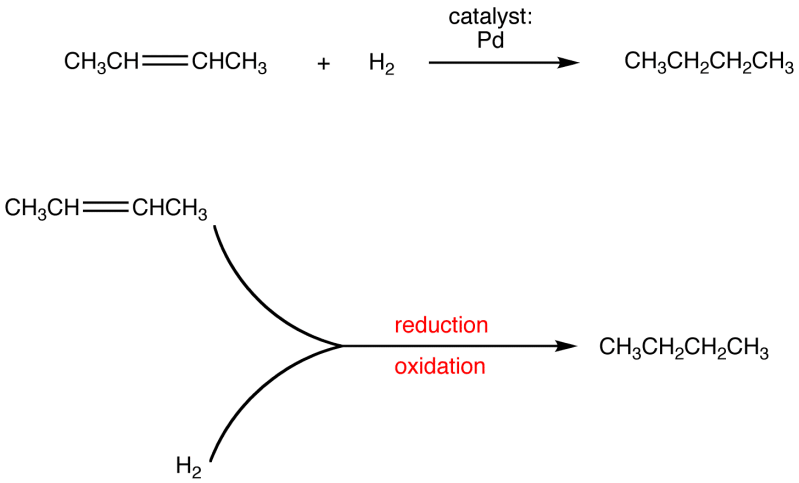
The Complete Overview of Oxidation vs Reduction
The study of oxidation vs reduction begins with a fundamental question: what happens when atoms or molecules trade electrons? At its core, oxidation is the loss of electrons, while reduction is their gain. These processes are always paired—one cannot occur without the other—because electrons lost by one species must be gained by another. This interplay is why chemists refer to the pair as a "redox couple." The terms themselves trace back to the 18th century, when Antoine Lavoisier coined "oxidation" to describe reactions with oxygen, and later scientists expanded the definition to include electron transfer more broadly.
What makes oxidation-reduction reactions uniquely powerful is their scalability. They can happen in a single molecule during a metabolic pathway or across vast systems like the Earth’s atmosphere. For instance, when iron rusts, iron atoms lose electrons (oxidation), and oxygen gains them (reduction). Similarly, in a lead-acid battery, lead dioxide is reduced to lead while sulfuric acid is oxidized to water. The key takeaway? These reactions aren’t just theoretical—they’re the engines of countless natural and artificial processes.
Historical Background and Evolution
The history of oxidation vs reduction is a story of scientific curiosity and gradual enlightenment. Early chemists like Robert Boyle and Joseph Priestley observed that substances like phosphorus burned brightly in air, but it wasn’t until Lavoisier’s work in the late 1700s that oxygen was identified as the reactive agent. His theory of combustion—where substances combined with oxygen to form "calces" (oxides)—laid the groundwork. However, it wasn’t until the early 19th century that Humphry Davy and others recognized that oxidation wasn’t limited to oxygen; metals like sodium could also lose electrons to form compounds, even without oxygen.
Table of Contents
- The Complete Overview of Oxidation vs Reduction
- Historical Background and Evolution
- Core Mechanisms: How It Works
- Key Benefits and Crucial Impact
- Major Advantages
- Comparative Analysis
- Future Trends and Innovations
- Conclusion
- Comprehensive FAQs
- Q: Can oxidation occur without oxygen?
- Q: How do antioxidants work in relation to oxidation?
- Q: Why do batteries rely on redox reactions?
- Q: What role does oxidation play in environmental pollution?
- Q: Are there any biological systems that use reduction for energy storage?
- Q: How does corrosion relate to oxidation?
The modern understanding of redox chemistry emerged in the 20th century, thanks to the work of Gilbert Lewis and his electron theory. Lewis proposed that chemical bonding involved shared or transferred electrons, which directly tied oxidation and reduction to electron movement. This shift from oxygen-centric definitions to electron-based explanations revolutionized chemistry, paving the way for fields like electrochemistry and biochemistry. Today, the oxidation-reduction potential (ORP) is a critical metric in everything from water treatment to medical diagnostics, proving how far the field has come.
Core Mechanisms: How It Works
To grasp oxidation vs reduction, you must first understand the role of electrons. In any redox reaction, electrons are the currency being exchanged. When a species loses electrons, it’s oxidized; when it gains them, it’s reduced. For example, in the reaction between zinc and copper sulfate, zinc metal (Zn) loses two electrons to become Zn²⁺ (oxidation), while Cu²⁺ ions in solution gain those electrons to form solid copper (reduction). This electron transfer is spontaneous because zinc has a higher tendency to lose electrons than copper.
The balance between oxidation and reduction is maintained through redox couples, where one species is oxidized and another is reduced simultaneously. This is why redox reactions are often written as half-reactions. For instance, in the combustion of methane (CH₄), carbon is oxidized to CO₂ while oxygen is reduced to water. The overall reaction is the sum of these two half-reactions, ensuring electron conservation. The energy released or absorbed in these processes can be harnessed—whether in batteries, fuel cells, or even biological systems like cellular respiration.
Key Benefits and Crucial Impact
The implications of oxidation vs reduction extend beyond academic curiosity into nearly every aspect of modern life. From the batteries powering electric vehicles to the antioxidants preserving your food, redox chemistry is the silent force driving innovation. Industries rely on these reactions to produce everything from fertilizers to pharmaceuticals, while environmental scientists use them to monitor pollution and remediate contaminated sites. Even the human body depends on redox balance—disruptions can lead to oxidative stress, a factor in aging and disease.
What’s often overlooked is how oxidation-reduction reactions bridge the gap between chemistry and other sciences. In biology, redox reactions power metabolism; in geology, they influence mineral formation; and in engineering, they enable energy storage. The ability to control these processes has led to breakthroughs like corrosion-resistant materials, more efficient solar cells, and even targeted cancer therapies. Without a deep understanding of redox chemistry, many of these advancements would remain out of reach.
"Redox chemistry is the language of energy—whether it’s the spark of a match, the beat of a heart, or the glow of a screen. Mastering it means unlocking the potential to harness that energy in ways we’re only beginning to imagine."
— Dr. Eleanor Voss, Professor of Electrochemistry, MIT
Major Advantages
- Energy Conversion: Redox reactions are the backbone of batteries, fuel cells, and solar panels, enabling efficient energy storage and conversion.
- Material Science: Understanding oxidation vs reduction allows engineers to design corrosion-resistant alloys and advanced composites for aerospace and infrastructure.
- Biomedical Applications: Redox biology explains how antioxidants combat free radicals, while redox-based sensors detect diseases like diabetes.
- Environmental Solutions: Redox processes break down pollutants in wastewater treatment and remediate heavy metal contamination in soil.
- Industrial Efficiency: From smelting metals to producing chemicals, redox reactions optimize production processes, reducing waste and energy use.

Comparative Analysis
The distinction between oxidation and reduction is clear in theory, but their real-world applications reveal deeper nuances. Below is a comparative breakdown of how these processes manifest in different contexts:
| Aspect | Oxidation | Reduction |
|---|---|---|
| Electron Movement | Loss of electrons (increase in oxidation state) | Gain of electrons (decrease in oxidation state) |
| Common Examples | Rusting of iron, combustion of fuels, metabolic oxidation in cells | Charging a battery, reduction of metal oxides in smelting, antioxidant action |
| Industrial Use | Corrosion control, bleaching agents, disinfection | Electroplating, hydrogen production, pharmaceutical synthesis |
| Biological Role | Production of reactive oxygen species (ROS), aging processes | Detoxification, energy production in mitochondria |
Future Trends and Innovations
The future of oxidation vs reduction lies in harnessing these reactions with greater precision and efficiency. Advances in nanotechnology are enabling redox-based sensors that can detect early-stage diseases or monitor air quality in real time. Meanwhile, researchers are exploring artificial photosynthesis to convert sunlight and CO₂ into fuels, a process that relies entirely on redox chemistry. In energy storage, next-generation batteries—like lithium-air or sodium-ion—are pushing the limits of what’s possible by optimizing redox couples for higher energy density.
Another frontier is redox biology, where scientists are uncovering how imbalances in oxidation-reduction states contribute to diseases like Alzheimer’s and Parkinson’s. Therapies targeting oxidative stress could revolutionize medicine, while bioelectrochemical systems might one day allow us to "charge" biological tissues directly. As materials science advances, we may see redox-active polymers that self-repair or adaptive coatings that resist corrosion indefinitely. The key trend? The line between chemistry and biology is blurring, and redox reactions are at the heart of this convergence.

Conclusion
The study of oxidation vs reduction is more than an academic exercise—it’s a window into the fundamental forces that shape our universe. From the microscopic scale of cellular respiration to the macroscopic scale of industrial processes, redox chemistry is the invisible thread connecting disparate fields. Ignoring it would be like trying to navigate a city without understanding its traffic flow; the consequences would be inefficiency, waste, and missed opportunities.
As technology evolves, so too will our ability to manipulate redox reactions. The next decade may bring breakthroughs in sustainable energy, medical diagnostics, and smart materials—all rooted in a deeper understanding of these twin processes. For now, the message is clear: whether you’re a chemist, engineer, biologist, or simply a curious observer, the oxidation-reduction dynamic is a cornerstone of modern science. And the more you know about it, the more you’ll see it everywhere—from the rust on a fence to the pulse of life itself.
Comprehensive FAQs
Q: Can oxidation occur without oxygen?
A: Absolutely. While the term "oxidation" originally referred to reactions with oxygen, modern chemistry defines it as the loss of electrons. For example, when hydrogen sulfide (H₂S) reacts with chlorine (Cl₂), sulfur is oxidized to sulfur (S) without any oxygen involvement. This broader definition is why we now use "redox" to describe electron transfer reactions universally.
Q: How do antioxidants work in relation to oxidation?
A: Antioxidants are molecules that inhibit oxidation by donating electrons to free radicals—highly reactive species that steal electrons from other molecules, causing cellular damage. For instance, vitamin C (ascorbic acid) can reduce free radicals by donating an electron, thereby preventing oxidative stress. This is a classic example of a reduction reaction (the antioxidant is oxidized while the free radical is reduced).
Q: Why do batteries rely on redox reactions?
A: Batteries store and release energy through reversible redox reactions. In a lithium-ion battery, lithium ions move between the anode and cathode, while electrons flow through an external circuit. During discharge, lithium is oxidized at the anode (losing electrons) and reduced at the cathode (gaining electrons). Charging reverses this process. The efficiency of a battery depends on the stability and reversibility of these redox couples.
Q: What role does oxidation play in environmental pollution?
A: Oxidation is both a solution and a problem in environmental science. On one hand, it’s used to break down pollutants like phenols or heavy metals in wastewater treatment. On the other, uncontrolled oxidation can lead to the formation of harmful byproducts, such as ozone (O₃) in photochemical smog. Redox reactions are also key in bioremediation, where microbes use oxidation-reduction cycles to degrade contaminants in soil or groundwater.
Q: Are there any biological systems that use reduction for energy storage?
A: Yes. One notable example is the process of nitrogen fixation in certain bacteria, where nitrogen gas (N₂) is reduced to ammonia (NH₃) using enzymes called nitrogenases. This reduction requires a significant input of energy, often derived from ATP or electron donors like hydrogen. Another example is the reduction of carbon dioxide (CO₂) to organic molecules during photosynthesis, a process plants use to store chemical energy.
Q: How does corrosion relate to oxidation?
A: Corrosion is essentially the uncontrolled oxidation of metals. When iron rusts, for instance, iron atoms lose electrons to form iron oxides (Fe₂O₃), a process accelerated by moisture and oxygen. The oxidation of metals isn’t always destructive—some alloys, like stainless steel, resist corrosion due to the formation of a passive oxide layer that protects the underlying metal. Understanding these redox dynamics is crucial for designing corrosion-resistant materials in infrastructure and manufacturing.
Leave a Comment
Comments are moderated before appearing. The data you submit is processed according to the Privacy Policy of Viralcontentbee.