The Hidden Force: What Are Electrons and Why They Power the Universe
Electrons are the silent architects of reality—tiny, negatively charged particles that dictate how atoms bond, how electricity flows, and even how life persists. Without them, chemistry as we know it would collapse, and the digital age would never have emerged. Yet despite their ubiquity, what are electrons remains a question that bridges abstract theory and tangible technology. They are both a fundamental building block of matter and the reason your smartphone screen glows when you tap it.
The story of electrons begins not in a lab but in the minds of philosophers who wondered why matter behaves the way it does. By the 19th century, scientists like Michael Faraday had already glimpsed their existence through experiments with electricity, though they lacked the tools to see them directly. It wasn’t until J.J. Thomson’s 1897 cathode-ray tube experiments that electrons were isolated as distinct particles—proving they were real, measurable entities. This revelation shattered the idea that atoms were indivisible, rewriting the rules of physics forever.
Today, electrons are the linchpin of modern science, engineering, and even biology. They enable the flow of electricity that powers cities, govern the chemical reactions in your cells, and define the properties of materials from semiconductors to superconductors. Understanding what electrons are isn’t just academic; it’s the key to unlocking breakthroughs in energy storage, quantum computing, and medical diagnostics. Their behavior at the atomic scale explains everything from the color of a sunset to the speed of a computer chip.
The Complete Overview of What Are Electrons
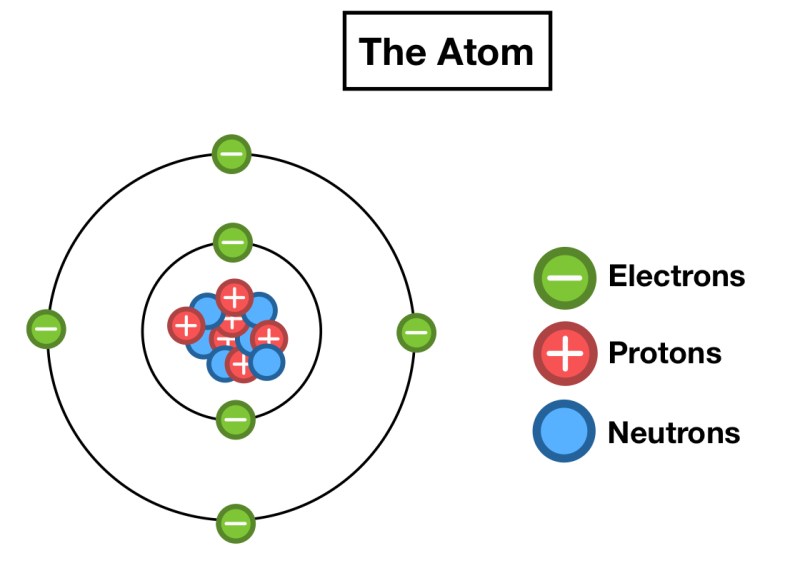
Electrons are subatomic particles with a negative electric charge, orbiting the nucleus of an atom in a probabilistic cloud rather than fixed paths. Their mass is roughly 1/1,836 that of a proton, making them the lightest charged particles in nature. Despite their small size—about 10^-18 meters in "radius" (a theoretical estimate, as they lack a defined boundary)—they dominate atomic interactions. The concept of what are electrons extends beyond mere definition; it encompasses their dual nature as both particles and waves, a principle central to quantum mechanics.At their core, electrons define an atom’s chemical identity. The number of electrons in an atom’s outer shell (valence electrons) determines how it bonds with other atoms, forming molecules that make up everything from water to DNA. Their movement between energy levels emits or absorbs light, giving rise to the spectra that astronomers use to analyze stars. Even more critically, electrons are the carriers of electricity in conductors, enabling the flow of current that powers technology. Without electrons, the principles governing what are electrons would remain theoretical—yet their real-world applications are the backbone of modern civilization.
Historical Background and Evolution
The journey to answer what are electrons began with ancient Greek speculation about the nature of matter. Democritus proposed atoms as indivisible units, but it took centuries before science could probe their structure. The turning point came in 1897, when J.J. Thomson’s experiments with cathode rays demonstrated that electrons were negatively charged particles emitted from atoms. This discovery earned him the Nobel Prize and forced a reevaluation of atomic theory.The 20th century refined our understanding of what electrons are with quantum mechanics. Niels Bohr’s 1913 model introduced electrons as orbiting the nucleus in discrete shells, while Erwin Schrödinger’s wave equation later described them as probability clouds. These advancements explained phenomena like electron spin (discovered by George Uhlenbeck and Samuel Goudsmit in 1925) and antimatter (predicted by Paul Dirac in 1928), expanding the scope of particle physics. Today, electrons are studied not just as atomic components but as fundamental constituents of the universe, influencing fields from condensed matter physics to cosmology.
Core Mechanisms: How It Works
Electrons exhibit wave-particle duality, meaning they behave as both particles and waves depending on observation. This duality is governed by quantum mechanics, where an electron’s position is described by a wavefunction—an abstract mathematical function that collapses into a measurable state upon interaction. When confined (e.g., in an atom), electrons occupy quantized energy levels, jumping between them by absorbing or emitting photons (light particles). This process underpins spectroscopy, a tool used in chemistry and astronomy to identify elements.Table of Contents
- The Complete Overview of What Are Electrons
- Historical Background and Evolution
- Core Mechanisms: How It Works
- Key Benefits and Crucial Impact
- Major Advantages
- Comparative Analysis
- Future Trends and Innovations
- Conclusion
- Comprehensive FAQs
- Q: Can electrons be destroyed?
- Q: Why do electrons move in conductors but not in insulators?
- Q: How do electrons contribute to color in light?
- Q: Are electrons affected by gravity?
- Q: Can we see electrons directly?
- Q: What happens if an atom loses an electron?
- Q: How do electrons enable solar panels?
- Q: Are there different types of electrons?
- Q: Why do electrons spin?
- Q: Could electrons exist outside atoms?
The movement of electrons between atoms or within a material creates electric current. In metals, free electrons drift through a lattice of positively charged ions, conducting electricity with minimal resistance. In semiconductors, electrons can be excited into a conductive band, enabling the precise control needed for transistors and microchips. Understanding how electrons work is essential for designing everything from solar panels to quantum computers, where their behavior at near-absolute zero temperatures defies classical physics.
Key Benefits and Crucial Impact
Electrons are the invisible workforce of the physical world, driving processes that sustain life and technology. Their ability to transfer energy efficiently makes them indispensable in electrical engineering, while their role in chemical bonding is the foundation of organic and inorganic chemistry. The question what are electrons isn’t just theoretical—it’s practical, as their manipulation underpins innovations from LED lighting to MRI machines. Without electrons, modern society would lack the tools to diagnose diseases, communicate globally, or explore space.The implications of electron behavior extend beyond technology. In biology, electron transfer in mitochondria powers cellular respiration, the process that keeps organisms alive. In astrophysics, electrons in plasma states generate the magnetic fields of stars and galaxies. Even the human brain relies on electron flow in neurons to transmit signals. The study of electrons bridges disciplines, proving that what are electrons is a question with answers that shape every aspect of existence.
"Electrons are the atoms of electricity, the fundamental units that make the universe tick—not just in wires, but in the very fabric of matter." — Richard Feynman, The Feynman Lectures on Physics
Major Advantages
- Energy Transmission: Electrons enable the efficient transfer of electrical energy, powering everything from household appliances to renewable energy grids.
- Chemical Reactions: Their movement between atoms drives photosynthesis, combustion, and metabolic processes, sustaining life on Earth.
- Technological Precision: Control over electron flow in semiconductors allows for the miniaturization of electronic devices, from smartphones to supercomputers.
- Medical Applications: Techniques like electron microscopy and PET scans rely on electron behavior to visualize cellular structures and diagnose diseases.
- Quantum Computing: Electrons’ quantum states (e.g., spin) are harnessed in qubits, offering exponential processing power for solving complex problems.

Comparative Analysis
| Property | Electrons vs. Protons |
|---|---|
| Charge | Negative (-1.602 × 10^-19 C) vs. Positive (+1.602 × 10^-19 C) |
| Mass | ~9.11 × 10^-31 kg (1/1,836 of a proton) vs. ~1.67 × 10^-27 kg |
| Location in Atom | Orbit nucleus in electron clouds vs. Reside in the nucleus |
| Role in Bonding | Form covalent/ionic bonds via sharing/transfer vs. Stabilize nucleus with neutrons |
Future Trends and Innovations
The study of what are electrons is evolving with advancements in quantum technology. Researchers are exploring electron-based qubits for fault-tolerant quantum computers, which could revolutionize cryptography and material science. Meanwhile, graphene and other 2D materials are being engineered to manipulate electron flow at the atomic scale, potentially leading to ultra-fast, energy-efficient electronics. In energy, scientists are investigating electron dynamics in photovoltaic cells to achieve near-perfect solar efficiency.Biological applications are also on the horizon. Techniques like optogenetics use light to control electron flow in neurons, offering new treatments for neurological disorders. Meanwhile, the search for exotic electron states—such as anyons in topological insulators—could unlock next-generation quantum devices. As our understanding of what electrons are deepens, their applications will continue to redefine technology, medicine, and our fundamental grasp of reality.

Conclusion
Electrons are more than just components of atoms; they are the invisible threads weaving together the physical and digital worlds. From the spark of a lightning bolt to the hum of a server farm, their behavior dictates the rules of nature. The question what are electrons has no single answer—it’s a spectrum of phenomena, from classical electricity to quantum entanglement. Yet their study remains one of the most rewarding pursuits in science, offering insights that could one day power a new era of innovation.As technology advances, electrons will remain at the forefront of discovery. Whether in the lab or the cosmos, they are the silent partners in every interaction that defines our universe. To ignore their role is to overlook the very essence of matter itself.
Comprehensive FAQs
Q: Can electrons be destroyed?
A: Electrons cannot be destroyed in the traditional sense, but they can be annihilated when they meet their antimatter counterpart, a positron. This process converts their mass into energy via Einstein’s E=mc², releasing gamma rays. In normal conditions, however, electrons remain stable within atoms.
Q: Why do electrons move in conductors but not in insulators?
A: In conductors (like copper), electrons in the outermost shell are loosely bound, allowing them to move freely when an electric field is applied. Insulators (like rubber) have tightly bound electrons in full shells, preventing movement. This difference is due to atomic structure and band theory in solid-state physics.
Q: How do electrons contribute to color in light?
A: When electrons in an atom absorb energy (e.g., from heat or light), they jump to higher energy levels. As they return to their ground state, they emit photons of specific wavelengths, producing color. This principle is used in neon signs, fireworks, and even the colors of stars.
Q: Are electrons affected by gravity?
A: Yes, but their interaction with gravity is extremely weak compared to electromagnetic forces. In most practical scenarios, gravity’s effect on electrons is negligible, though it plays a role in astrophysical phenomena like neutron star formation, where extreme densities alter electron behavior.
Q: Can we see electrons directly?
A: Electrons cannot be observed directly with visible light due to their tiny size (~10^-18 meters), but they can be detected using electron microscopes, which use electron beams to achieve resolutions at the atomic scale. Techniques like scanning tunneling microscopy (STM) also map electron density in materials.
Q: What happens if an atom loses an electron?
A: Losing an electron creates a positively charged ion (cation). This process is common in ionic bonding, where atoms transfer electrons to achieve stability. For example, sodium (Na) loses an electron to become Na⁺, while chlorine (Cl) gains one to become Cl⁻, forming table salt (NaCl).
Q: How do electrons enable solar panels?
A: In photovoltaic cells, photons from sunlight excite electrons in semiconductor materials (like silicon), knocking them loose from their atoms. These "free" electrons create an electric current when directed through an external circuit, generating electricity. The efficiency depends on how well the material absorbs light and separates electron-hole pairs.
Q: Are there different types of electrons?
A: While all electrons share the same fundamental properties (charge, mass, spin), they can exist in distinct states based on their environment. For example, "valence electrons" determine chemical reactivity, while "conduction electrons" enable electricity in metals. In quantum systems, electrons can form Cooper pairs (in superconductors) or exhibit fractional charge in anyonic states.
Q: Why do electrons spin?
A: Electron spin is an intrinsic quantum property, not a physical rotation. It arises from the particle’s wavefunction and contributes to its magnetic moment. Spin can be "up" or "down," and its alignment is crucial in phenomena like ferromagnetism (as in fridge magnets) and quantum computing, where spin states encode information.
Q: Could electrons exist outside atoms?
A: Free electrons (not bound to atoms) exist in plasmas, metals, and even in outer space as cosmic rays. In conductors, they move through a "sea of electrons" that isn’t tied to any specific nucleus. These free electrons are harnessed in technologies like vacuum tubes and particle accelerators.
Leave a Comment
Comments are moderated before appearing. The data you submit is processed according to the Privacy Policy of Viralcontentbee.