Mastering Python String Concatenation: Performance, Techniques, and Pitfalls
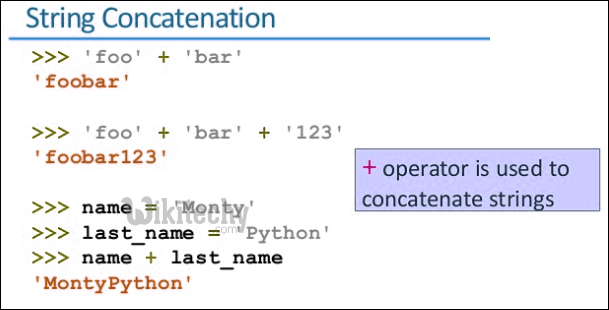
Python’s approach to Python string concatenation is both elegant and pragmatic, blending simplicity with underlying optimizations that often escape casual developers. The language treats strings as immutable sequences, forcing developers to adopt strategies that balance readability with computational efficiency. Whether you’re stitching together user-generated content, processing log files, or generating dynamic SQL queries, understanding the nuances of how Python handles string joining is critical. The `+` operator, while intuitive, can become a bottleneck in loops or high-frequency operations, whereas methods like `.join()` or f-strings (introduced in Python 3.6) offer performance advantages that align with modern coding standards.
The evolution of Python string concatenation reflects broader trends in language design—prioritizing developer experience without sacrificing performance. Early Python versions relied heavily on the `+` operator, which, while straightforward, created temporary string objects in memory for each concatenation. This inefficiency became particularly noticeable in performance-critical applications, prompting the introduction of more efficient alternatives. Today, developers leverage a toolkit of methods, each optimized for specific use cases, from micro-optimizations in tight loops to readability-focused syntax in template generation.
Behind the scenes, Python’s string concatenation mechanics hinge on immutability and memory management. Strings in Python are immutable, meaning any operation that appears to modify a string actually creates a new object. This design choice ensures thread safety but demands careful handling during concatenation. For instance, using the `+` operator in a loop to build a large string results in O(n²) time complexity, as each iteration creates a new string and copies all existing characters. In contrast, the `.join()` method pre-allocates memory for the final string, reducing overhead to O(n), making it the preferred choice for large-scale operations.

The Complete Overview of Python String Concatenation
Python’s handling of string concatenation is a study in trade-offs between simplicity and performance. At its core, the language provides multiple ways to combine strings, each suited to different scenarios—from quick prototyping to high-performance applications. The `+` operator, for example, is the most intuitive for developers transitioning from other languages, but its inefficiency in iterative contexts often leads to suboptimal code. Meanwhile, methods like `.join()` and formatted strings (f-strings) address these limitations by leveraging internal optimizations, such as pre-allocation and compiler-level transformations.The choice of concatenation method can significantly impact application performance, especially in loops or functions processing large datasets. For instance, concatenating 1,000 strings with `+` in a loop can result in a 100x slower execution compared to using `.join()`. This disparity underscores the importance of selecting the right tool for the job. Python’s documentation and community best practices emphasize `.join()` for performance-critical scenarios, while f-strings and the `%` operator (for older Python versions) cater to readability and maintainability.
Historical Background and Evolution
The journey of Python string concatenation mirrors the language’s broader evolution toward performance and clarity. Early versions of Python (pre-2.0) relied almost exclusively on the `+` operator, which, while simple, suffered from quadratic time complexity in loops. This became a pain point as Python adopted more complex applications, such as web servers and data processing tools, where string manipulation was frequent. The introduction of the `join()` method in Python 2.0 addressed this by allowing developers to pre-allocate memory for the final string, drastically reducing overhead.The release of Python 3.6 in 2016 marked another turning point with the introduction of f-strings, a syntax designed to combine the readability of formatted strings with the efficiency of compiled expressions. F-strings allowed developers to embed expressions directly within string literals (e.g., `f"Hello, {name}!"`), which Python’s interpreter optimized into highly efficient bytecode. This innovation not only improved performance but also aligned with Python’s philosophy of making code more expressive. Today, f-strings are the recommended approach for most string formatting tasks, while `.join()` remains indispensable for concatenating iterables of strings.
Core Mechanisms: How It Works
Understanding the mechanics of Python string concatenation requires a dive into memory management and immutability. When you use the `+` operator, Python creates a new string object for each concatenation, copying all characters from the existing strings into the new object. This process is efficient for small-scale operations but becomes prohibitive in loops, where each iteration incurs additional memory allocations and copies. For example, concatenating `n` strings with `+` results in O(n²) time complexity, as each step requires copying all previous characters.Table of Contents
- The Complete Overview of Python String Concatenation
- Historical Background and Evolution
- Core Mechanisms: How It Works
- Key Benefits and Crucial Impact
- Major Advantages
- Comparative Analysis
- Future Trends and Innovations
- Conclusion
- Comprehensive FAQs
- Q: Why is the `+` operator slow for string concatenation in loops?
- Q: When should I use `.join()` instead of `+`?
- Q: Are f-strings faster than `.join()` for embedding variables?
- Q: What is the difference between `%` formatting and f-strings?
- Q: Can I mix concatenation methods in the same operation?
- Q: How does Python’s string immutability affect concatenation?
- Q: Are there third-party libraries for advanced string concatenation?
- Q: What is the most Pythonic way to concatenate strings in 2024?
In contrast, the `.join()` method operates by first calculating the total length of the concatenated string and then allocating memory for the entire result in one go. This pre-allocation eliminates the need for repeated copying, reducing time complexity to O(n). Internally, `.join()` iterates over the iterable (e.g., a list of strings) and builds the final string in a single pass, making it ideal for large-scale operations. F-strings, on the other hand, leverage Python’s bytecode compiler to evaluate expressions at runtime, producing optimized machine code that minimizes overhead during execution.
Key Benefits and Crucial Impact
The impact of Python string concatenation extends beyond mere syntax—it shapes how developers approach performance, readability, and maintainability. By offering multiple methods for combining strings, Python caters to diverse use cases, from quick scripts to production-grade applications. The trade-offs between simplicity (e.g., `+`) and efficiency (e.g., `.join()`) force developers to make informed decisions, fostering a deeper understanding of language internals. This balance is particularly valuable in data science, where string manipulation often involves large datasets, and in web development, where dynamic content generation is critical.Moreover, Python’s string concatenation features align with modern software engineering practices, such as code readability and maintainability. F-strings, for instance, reduce boilerplate code while improving clarity, making them a favorite for template generation and logging. The `.join()` method, meanwhile, demonstrates how language design can optimize for both performance and developer experience. These benefits collectively position Python as a versatile tool for tasks ranging from scripting to large-scale systems development.
"Python’s string concatenation methods are a testament to the language’s ability to balance simplicity with performance. The choice between `+`, `.join()`, and f-strings isn’t just syntactic—it’s strategic."
—Guido van Rossum (Python’s creator, in a 2018 PyCon talk)
Major Advantages
The advantages of mastering Python string concatenation techniques are manifold, particularly in performance-sensitive environments:- Performance Optimization: Using `.join()` instead of `+` in loops can reduce execution time by orders of magnitude, especially for large datasets.
- Readability: F-strings and formatted strings (e.g., `"{}"`.format()) improve code clarity by embedding variables directly within strings.
- Memory Efficiency: Pre-allocation in `.join()` minimizes memory fragmentation, reducing garbage collection overhead.
- Flexibility: Python’s string methods support a wide range of use cases, from simple concatenation to complex template rendering.
- Backward Compatibility: While f-strings are modern, older methods like `%` formatting remain supported, ensuring legacy codebases can migrate incrementally.

Comparative Analysis
The following table compares the primary methods for Python string concatenation, highlighting their use cases, performance characteristics, and syntax:| Method | Use Case and Performance |
|---|---|
str + str |
Simple concatenation; O(n²) time in loops. Best for small-scale or non-iterative operations. |
str.join(iterable) |
Optimal for concatenating iterables (e.g., lists); O(n) time. Preferred for large-scale operations. |
| F-strings (Python 3.6+) | Readable and efficient for embedding expressions; compiled to optimized bytecode. |
% formatting (e.g., "{} {}".format(a, b)) |
Legacy method; slower than f-strings but maintains compatibility with older Python versions. |
Future Trends and Innovations
The future of Python string concatenation is likely to focus on further optimizations and integration with emerging paradigms, such as just-in-time (JIT) compilation and parallel processing. Projects like PyPy and Numba already demonstrate how JIT compilation can accelerate string operations by translating Python code into highly optimized machine instructions. As these technologies mature, we may see Python’s string handling become even more efficient, particularly in numerical and scientific computing, where string manipulation often serves as a bottleneck.Additionally, the rise of asynchronous programming and coroutines in Python (e.g., `asyncio`) could influence how string concatenation is handled in concurrent contexts. While current methods are synchronous, future iterations might introduce non-blocking alternatives for I/O-bound operations, such as streaming string assembly. Developers should also watch for advancements in memory management, such as arena allocation or custom allocators, which could further reduce the overhead of string operations in high-performance applications.
Conclusion
Python’s approach to string concatenation exemplifies the language’s commitment to pragmatism—offering multiple solutions to a fundamental problem, each with distinct trade-offs. The `+` operator remains a staple for simplicity, while `.join()` and f-strings address performance and readability, respectively. By understanding these methods and their underlying mechanics, developers can write code that is not only functional but also efficient and maintainable. As Python continues to evolve, staying informed about these techniques will be essential for leveraging the language’s full potential in an increasingly performance-conscious world.The key takeaway is that Python string concatenation is not a one-size-fits-all problem. It demands an awareness of context—whether you’re building a small script or a large-scale application—and a willingness to adapt methods to the task at hand. By mastering these techniques, developers can avoid common pitfalls, optimize critical paths, and write Python code that is both elegant and high-performing.
Comprehensive FAQs
Q: Why is the `+` operator slow for string concatenation in loops?
Each use of `+` creates a new string object, copying all existing characters. In a loop, this results in O(n²) time complexity, as each iteration doubles the work of copying previous strings. For example, concatenating 1,000 strings with `+` requires copying characters 1+2+3+...+1000 times.
Q: When should I use `.join()` instead of `+`?
Use `.join()` when concatenating an iterable of strings (e.g., a list or tuple). It pre-allocates memory for the final string, reducing time complexity to O(n). This is ideal for large-scale operations, such as processing log files or generating dynamic SQL queries.
Q: Are f-strings faster than `.join()` for embedding variables?
F-strings are optimized for readability and performance when embedding expressions, but they are not a direct replacement for `.join()`. F-strings excel at combining static and dynamic content (e.g., `f"User {name} has {items} items"`), while `.join()` is better for assembling large sequences of strings.
Q: What is the difference between `%` formatting and f-strings?
`%` formatting (e.g., `"{} {}".format(a, b)`) is a legacy method introduced in Python 2.7, while f-strings (e.g., `f"{a} {b}"`) were added in Python 3.6. F-strings are faster, more readable, and support expressions directly within the string, whereas `%` formatting requires separate arguments.
Q: Can I mix concatenation methods in the same operation?
Yes, but it’s generally not recommended unless necessary. For example, you could use `+` to combine a few strings and then pass the result to `.join()`. However, mixing methods can reduce readability and may introduce performance overhead if not optimized carefully.
Q: How does Python’s string immutability affect concatenation?
Immutability means every concatenation creates a new string, which is memory-intensive. This is why methods like `.join()` pre-allocate memory—they mitigate the overhead by avoiding repeated allocations and copies. Immutability ensures thread safety but requires developers to manage memory explicitly in performance-critical code.
Q: Are there third-party libraries for advanced string concatenation?
While Python’s built-in methods cover most use cases, libraries like `str.jinja`-like templating engines or `pystache` (Mustache templates) offer advanced features for dynamic string generation. For low-level optimizations, libraries like `numpy` or `pandas` provide specialized string handling for large datasets.
Q: What is the most Pythonic way to concatenate strings in 2024?
The most Pythonic approach depends on the context: use f-strings for readability and embedded expressions, `.join()` for concatenating iterables, and avoid `+` in loops. Python’s official style guide (PEP 8) recommends f-strings for modern codebases, while `.join()` remains the gold standard for performance-critical concatenation.
Leave a Comment
Comments are moderated before appearing. The data you submit is processed according to the Privacy Policy of Viralcontentbee.