Decoding the Isotope Symbol: The Hidden Language of Atomic Identity
The isotope symbol is more than a scientific shorthand—it is the Rosetta Stone of atomic identity, encoding the very essence of an element’s nuclear composition in a single, elegant notation. At its core, this symbol bridges the gap between abstract theory and tangible reality, allowing researchers to distinguish between isotopes of the same element with precision. Whether in a lab analyzing radioactive decay or in medical imaging tracing carbon-14 through biological systems, the isotope symbol serves as a universal language, ensuring clarity across disciplines.
Yet, its power lies not just in its utility but in its subtlety. A single superscript or subscript can transform an element’s symbol from a generic placeholder (like H for hydrogen) into a precise fingerprint (e.g., ²H or ³H), revealing differences in neutron count, stability, and even cosmic origin. This notation system, refined over centuries, reflects the evolution of atomic theory itself—from Dalton’s indivisible atoms to the quantum-mechanical models of today.
The isotope symbol’s design is a masterclass in minimalism, distilling complex nuclear properties into a compact format. But behind its simplicity hides a rigorous framework: atomic numbers, mass numbers, and sometimes even nuclear charge states. Misinterpret one component, and the entire meaning shifts—turning a stable isotope into a radioactive one, or an element into an ionized species. Understanding this notation is essential not only for chemists and physicists but for anyone navigating fields where atomic precision matters, from archaeology to energy production.

The Complete Overview of the Isotope Symbol
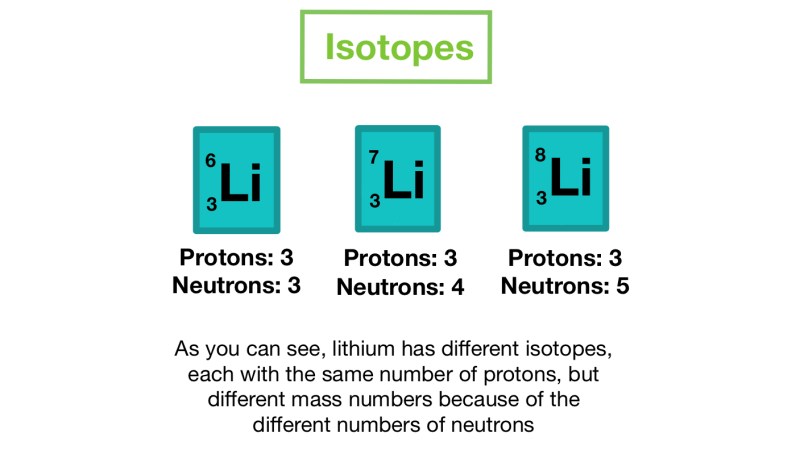
The isotope symbol is the standardized way to represent an atom’s nuclear configuration, combining the element’s chemical symbol with numerical indicators for its atomic and mass numbers. This notation, often written as AZX or ZXA, where X is the element’s symbol, A is the mass number (protons + neutrons), and Z is the atomic number (protons), serves as a shorthand for identifying isotopes—atoms of the same element with varying neutron counts. For example, uranium’s most common isotope is written as 238₉₂U, distinguishing it from 235₉₂U, which differs only in its neutron count but has profound implications for nuclear reactions.Beyond basic identification, the isotope symbol encodes critical information about an atom’s stability, natural abundance, and behavior in chemical reactions. The mass number (A) reflects the total nucleons (protons + neutrons), while the atomic number (Z) defines the element’s identity. Omissions or variations in this notation—such as omitting Z for neutral atoms or using + or − for ions—further refine the symbol’s meaning. This system is not arbitrary; it is a direct consequence of the periodic table’s structure, where each element’s Z is fixed, but A can vary, leading to isotopic diversity.
Historical Background and Evolution
The foundations of the isotope symbol were laid in the early 20th century, as scientists grappled with the discovery of atomic substructures. Ernest Rutherford’s 1911 model of the nucleus introduced the concept of protons, while James Chadwick’s 1932 discovery of neutrons revealed the variable nature of atomic mass. These breakthroughs necessitated a notation system to differentiate atoms with identical Z but differing A. The modern isotope symbol emerged from this need, formalized in the 1920s as chemists and physicists sought a universal way to denote isotopes in research papers and data tables.The evolution of notation reflects broader scientific progress. Early symbols often omitted Z, relying on the element’s position in the periodic table for context. However, as nuclear physics advanced—particularly with the advent of artificial isotopes in the 1930s—clarity became paramount. The inclusion of Z as a subscript (e.g., 6C14) became standard, though it is frequently omitted in practice for neutral atoms where Z is redundant. This shift mirrors the growing complexity of nuclear science, where precision in notation directly impacts experimental outcomes, from reactor design to radiometric dating.
Core Mechanisms: How It Works
At its heart, the isotope symbol functions as a binary code for nuclear identity. The atomic number (Z) is invariant for an element—carbon will always have Z = 6—but the mass number (A) can range widely due to neutron variability. For instance, hydrogen has three stable isotopes: 1₁H (protium), 2₁H (deuterium), and 3₁H (tritium), each with increasing neutron counts. This variability arises from the strong nuclear force’s ability to bind differing numbers of neutrons to a fixed proton count, a balance that determines an isotope’s stability and decay properties.Table of Contents
- The Complete Overview of the Isotope Symbol
- Historical Background and Evolution
- Core Mechanisms: How It Works
- Key Benefits and Crucial Impact
- Major Advantages
- Comparative Analysis
- Future Trends and Innovations
- Conclusion
- Comprehensive FAQs
- Q: Why is the atomic number ( Z ) sometimes omitted in isotope symbols?
- Q: How do isotope symbols differ from chemical formulas?
- Q: Can isotope symbols be used for subatomic particles?
- Q: What does the "m" in 99m Tc mean?
- Q: Are there any elements with only one stable isotope?
- Q: How is the isotope symbol used in nuclear reactions?
- Q: Can isotope symbols be used to predict an isotope’s stability?
- Q: Are there any historical examples of incorrect isotope notation?
- Q: How do isotope symbols appear in digital formats?
The notation’s flexibility extends to ions and excited states. A superscript + or − indicates charge (e.g., 14₆C+), while asterisks () or other annotations may denote metastable or excited nuclear states. In nuclear medicine, 99mTc (technetium-99m) is written with m* to denote its metastable isomeric state, crucial for its use in diagnostic imaging. This layering of information within a single symbol underscores its role as a concise yet comprehensive descriptor of atomic behavior.
Key Benefits and Crucial Impact
The isotope symbol’s greatest strength lies in its ability to convey complex nuclear information at a glance. In fields like radiochemistry, environmental science, and medicine, this notation eliminates ambiguity, ensuring that researchers, clinicians, and engineers interpret atomic data consistently. For example, distinguishing between 12C and 14C is critical in carbon dating, where the ratio of these isotopes determines archaeological timelines. Similarly, in nuclear power, 235U and 238U must be meticulously separated for reactor fuel, a process reliant on precise isotopic notation.The symbol’s impact extends to safety and regulation. Radioactive isotopes, such as 131I used in thyroid treatments or 60Co in cancer therapy, are identified and tracked using this notation to ensure proper handling, dosage, and disposal. Misinterpretation could lead to catastrophic errors, from contaminated waste streams to incorrect medical diagnoses. Thus, the isotope symbol is not merely a tool but a safeguard, embedding scientific rigor into everyday practices.
"The isotope symbol is the alphabet of nuclear science—a few characters that unlock the door to understanding atomic behavior, from the birth of stars to the decay of radioactive materials." —Dr. Linda Jenkins, Nuclear Chemist, University of California
Major Advantages
- Precision in Identification: Differentiates isotopes of the same element, enabling targeted research in fields like isotopic tracing, geochemistry, and nuclear forensics.
- Standardization Across Disciplines: Provides a universal language for chemists, physicists, and medical professionals, reducing errors in cross-field collaborations.
- Compact Data Encoding: Conveys mass, charge, and stability in a single symbol, saving space in research papers, safety datasheets, and technical manuals.
- Foundation for Advanced Notation: Serves as the basis for more complex symbols, such as those used in nuclear reactions (e.g., 235₉₂U(n, f) 141₅₅Cs) or isotopic abundance ratios.
- Regulatory and Safety Compliance: Ensures accurate labeling of hazardous materials, supporting international standards for nuclear and radiological safety.

Comparative Analysis
| Aspect | Isotope Symbol (e.g., 14₆C) | Alternative Notations (e.g., 14C) |
|---|---|---|
| Completeness | Includes atomic number (Z), mass number (A), and element symbol (X). | Often omits Z for neutral atoms, relying on context (e.g., carbon is always Z = 6). |
| Use Case | Preferred in formal research, nuclear engineering, and safety documentation. | Common in general chemistry, where Z is implied and brevity is prioritized. |
| Ambiguity Risk | Minimal; explicit Z and A reduce misinterpretation. | Higher for elements with multiple isotopes (e.g., 12C vs. 13C). |
| Extended Notation | Supports ions (14₆C+), excited states (99mTc), and nuclear reactions. | Limited to basic isotopic identification; lacks flexibility for complex states. |
Future Trends and Innovations
As nuclear science advances, the isotope symbol is evolving to accommodate new discoveries and technologies. The rise of superheavy elements—those with Z > 104—has pushed notation to its limits, with temporary names like Uuq (Ununquadium) awaiting permanent symbols. Meanwhile, advances in quantum computing may enable simulations of exotic isotopes, requiring notation extensions to describe hypothetical or short-lived species. Additionally, the growing intersection of nuclear physics and medicine could lead to hybrid symbols incorporating biological markers, such as 18F-labeled glucose in PET scans.The future may also see standardized digital representations of isotope symbols, integrating with databases and AI-driven research tools. Imagine a system where clicking on 238₉₂U in a paper automatically pulls up its decay chain, safety data, and applications—all derived from the symbol’s encoded information. Such innovations would democratize access to nuclear data, reducing barriers for educators and industries alike.
Conclusion
The isotope symbol is a testament to the power of concise scientific notation, distilling the complexity of atomic nuclei into a few characters that speak volumes. From its roots in early 20th-century physics to its modern applications in medicine and energy, this notation system has remained adaptable, precise, and indispensable. Its ability to convey mass, charge, and stability in a single format underscores its role as a cornerstone of nuclear science—a language that transcends borders and disciplines.As research pushes into uncharted territories—whether synthesizing new elements or harnessing isotopes for sustainable energy—the isotope symbol will continue to evolve. Yet, its core purpose remains unchanged: to bridge the gap between abstract theory and tangible reality, ensuring that every scientist, engineer, and student can "read" the atomic world with clarity and confidence.
Comprehensive FAQs
Q: Why is the atomic number (Z) sometimes omitted in isotope symbols?
A: The atomic number (Z) is often omitted for neutral atoms because it is redundant—the element’s symbol (X) inherently defines Z. For example, C always implies Z = 6, so 14C is sufficient. However, Z is included when ambiguity exists (e.g., ions like 14₆C+) or in contexts requiring explicit nuclear identification, such as nuclear reactions.
Q: How do isotope symbols differ from chemical formulas?
A: Chemical formulas represent molecules (e.g., H2O), while isotope symbols denote individual atoms (e.g., 2₁H). Formulas show composition and bonding; isotope symbols highlight nuclear variations within an element. For instance, H2O could involve 1H, 2H, or 3H, each requiring distinct notation if isotopic specificity is needed.
Q: Can isotope symbols be used for subatomic particles?
A: No. Isotope symbols apply only to atoms or ions. Subatomic particles (e.g., protons 1₁p or neutrons 1₀n) use different notation, often with particle-specific symbols and no Z or X. The isotope symbol’s structure assumes a nucleus with protons and neutrons, which particles lack.
Q: What does the "m" in 99mTc mean?
A: The m stands for "metastable," indicating that 99mTc is in an excited nuclear state with excess energy. This isotope decays to 99Tc by emitting gamma rays, a property exploited in medical imaging. The notation distinguishes it from ground-state 99Tc, which is stable.
Q: Are there any elements with only one stable isotope?
A: Yes. Elements like fluorine (Z = 9) and aluminum (Z = 13) have only one stable isotope (19₉F and 27₁₃Al, respectively). Others, like chlorine, have two stable isotopes (35₁₇Cl and 37₁₇Cl), while many heavy elements (e.g., uranium) have no stable isotopes at all, existing only as radioactive species.
Q: How is the isotope symbol used in nuclear reactions?
A: In nuclear reactions, symbols are extended to show reactants and products. For example, the fission of 235₉₂U by a neutron is written as 235₉₂U + 1₀n → 141₅₅Cs + 92₃₇Rb + 31₀n. Here, the isotope symbols track mass and charge conservation, with superscripts and subscripts ensuring the reaction’s balance.
Q: Can isotope symbols be used to predict an isotope’s stability?
A: Indirectly. While the symbol itself doesn’t predict stability, the A/Z ratio (mass number to atomic number) provides clues. Isotopes with A/Z ≈ 2 (for light elements) or higher ratios (for heavy elements) tend to be stable, though exceptions exist. For example, 60₂₈Ni (A/Z ≈ 2.14) is doubly magic and highly stable, whereas 238₉₂U (A/Z ≈ 2.48) is radioactive.
Q: Are there any historical examples of incorrect isotope notation?
A: Yes. Early 20th-century research sometimes used ambiguous notation, leading to misidentified isotopes. For instance, early work on radium’s isotopes confused 226₈₈Ra with 228₈₈Ra due to incomplete mass number reporting. Modern standards have since eliminated such errors by enforcing explicit A and Z usage where needed.
Q: How do isotope symbols appear in digital formats?
A: In digital texts, isotope symbols are typically rendered using Unicode characters (e.g., superscript and subscript formatting) or HTML/CSS for web content. For example, 235₉₂U is created with `23592U`. LaTeX (common in scientific papers) uses `\text{}^{235}_{92}U`. These methods ensure symbols display correctly across platforms, from PDFs to interactive databases.
Leave a Comment
Comments are moderated before appearing. The data you submit is processed according to the Privacy Policy of Viralcontentbee.