Unraveling the Mystery: What is an MD5 Checksum?
In the realm of digital security and data integrity, the MD5 checksum stands as a cornerstone technology. Short for "Message Digest algorithm 5," this cryptographic hash function has been instrumental in ensuring the authenticity and integrity of digital files. Whether you're a software developer, a cybersecurity professional, or simply someone who values data integrity, understanding what is an MD5 checksum and how it works is essential.
At its core, an MD5 checksum acts as a digital fingerprint for a file or piece of data. It transforms the input into a unique 128-bit hash value, which serves as a compact representation of the original data. This hash is computed through a complex series of mathematical operations, ensuring that even the slightest alteration to the original data will result in a drastically different checksum.
The widespread adoption of MD5 checksums has been driven by their versatility and reliability. They are used extensively for file verification, ensuring that downloaded files have not been tampered with. Additionally, MD5 checksums play a crucial role in digital signatures, version control systems, and data backup strategies. As we delve deeper into the topic, we'll explore the historical background, core mechanisms, and the significant impact of MD5 checksums.
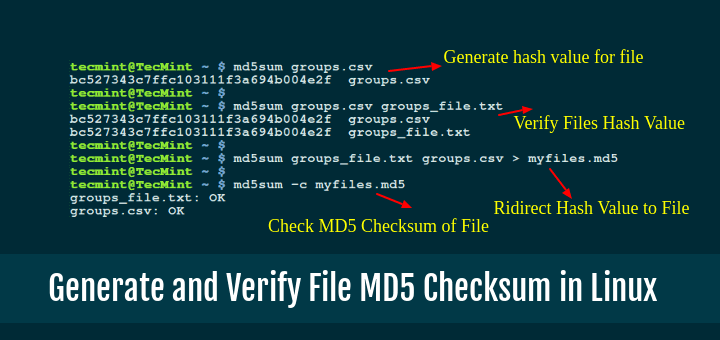
The Complete Overview of MD5 Checksum
The MD5 checksum is a cryptographic hash function developed by Ronald Rivest in 1991. It was designed to replace an earlier hash function, MD4, with improved security features. MD5 has since become one of the most widely used hash functions for a variety of applications, including data integrity checks, password storage, and digital signatures.
At its essence, an MD5 checksum is a 128-bit (16-byte) hash value, typically represented as a 32-character hexadecimal number. This compact representation allows for efficient storage and transmission of the hash value, making it practical for a wide range of use cases.
Historical Background and Evolution
The development of MD5 was motivated by the growing need for secure and efficient data integrity checks in the early 1990s. Its predecessor, MD4, was found to have certain vulnerabilities, prompting Rivest to create a more robust alternative. MD5 improved upon MD4 by incorporating additional processing steps and enhancing the diffusion of data throughout the hashing process.
Table of Contents
- The Complete Overview of MD5 Checksum
- Historical Background and Evolution
- Core Mechanisms: How It Works
- Key Benefits and Crucial Impact
- Major Advantages
- Comparative Analysis
- Future Trends and Innovations
- Conclusion
- Comprehensive FAQs
- Q: What is the primary purpose of an MD5 checksum?
- Q: How does the MD5 algorithm generate a hash value?
- Q: What are the main advantages of using MD5 checksums?
- Q: Why is MD5 considered vulnerable despite its widespread use?
- Q: In what scenarios is it still appropriate to use MD5 checksums?
Over time, as computational power increased and new cryptographic attacks were discovered, vulnerabilities in MD5 were identified. Notably, in 2004, a collision attack (where two different inputs produce the same hash value) was demonstrated, significantly undermining the security of MD5 for certain applications. Despite these vulnerabilities, MD5 remains widely used for non-security-critical applications, such as file integrity checks and version control.
Core Mechanisms: How It Works
The MD5 algorithm operates in four rounds, each consisting of 16 operations. The process starts by initializing four 32-bit registers with specific values. The input data is then divided into 512-bit blocks, which are processed sequentially. Each operation involves a combination of bitwise operations, modular arithmetic, and the substitution of data using lookup tables.
The algorithm employs a series of non-linear functions, designed to ensure the output is highly sensitive to even minor changes in the input data. This sensitivity is what makes MD5 effective for detecting data tampering. Once the final round is completed, the values in the registers are combined to form the final 128-bit hash value.
Key Benefits and Crucial Impact
The MD5 checksum has had a profound impact on various aspects of digital technology. Its key benefits include:
"MD5 has been an indispensable tool for maintaining data integrity and ensuring the authenticity of digital files. Its widespread adoption has significantly enhanced the security and reliability of online transactions and data transfers."
Major Advantages
- Efficiency: MD5 is computationally efficient, allowing for rapid hashing of large files.
- Compact Representation: The 128-bit hash value is compact and easy to store and transmit.
- Data Integrity: MD5 checksums provide a reliable method for detecting data corruption or tampering.
- Widespread Adoption: The algorithm is supported by numerous platforms and programming languages, ensuring interoperability.
- Versatility: MD5 is used in a variety of applications, from file verification to password storage.

Comparative Analysis
| Criteria | MD5 | SHA-256 |
|---|---|---|
| Hash Size | 128 bits | 256 bits |
| Computational Speed | Faster | Slower |
| Security | Vulnerable to collisions | Considered secure |
| Use Cases | File integrity, version control | Digital signatures, blockchain |
Future Trends and Innovations
As technology continues to evolve, the role of MD5 checksums is also undergoing changes. While MD5 remains a valuable tool for certain applications, newer and more secure hash functions, such as SHA-256 and SHA-3, are gradually replacing it in security-critical areas.
The future of MD5 lies in its continued use for non-security-critical applications, where its efficiency and widespread adoption make it a practical choice. Additionally, ongoing research in cryptographic hash functions may lead to further enhancements or alternatives that address the vulnerabilities of MD5.

Conclusion
The MD5 checksum has been a cornerstone of digital security and data integrity for decades. Its ability to provide a unique, compact representation of data has made it invaluable for file verification, version control, and other applications. Despite known vulnerabilities, MD5 remains a widely used and effective tool, particularly in scenarios where speed and efficiency are paramount.
As we look to the future, the ongoing development of more secure hash functions will likely reduce the reliance on MD5 for critical security applications. Nevertheless, understanding what is an MD5 checksum and its role in digital technology is essential for anyone working in the fields of cybersecurity, software development, and data management.
Comprehensive FAQs
Q: What is the primary purpose of an MD5 checksum?
A: The primary purpose of an MD5 checksum is to ensure the integrity and authenticity of digital data. It acts as a unique fingerprint for a file or piece of data, allowing users to detect any tampering or corruption.
Q: How does the MD5 algorithm generate a hash value?
A: The MD5 algorithm processes the input data in 512-bit blocks, performing a series of bitwise operations, modular arithmetic, and substitutions. This multi-round process results in a 128-bit hash value that serves as a compact representation of the original data.
Q: What are the main advantages of using MD5 checksums?
A: MD5 checksums offer several advantages, including computational efficiency, compact representation, reliable data integrity checks, widespread adoption, and versatility in various applications such as file verification and password storage.
Q: Why is MD5 considered vulnerable despite its widespread use?
A: MD5 has been found to have vulnerabilities, particularly in the form of collision attacks, where two different inputs can produce the same hash value. This undermines its security for certain applications, leading to the development of more robust hash functions like SHA-256.
Q: In what scenarios is it still appropriate to use MD5 checksums?
A: MD5 remains appropriate for non-security-critical applications where speed and efficiency are important, such as file integrity checks, version control, and certain data backup strategies. However, for security-sensitive applications, more robust hash functions are recommended.
Leave a Comment
Comments are moderated before appearing. The data you submit is processed according to the Privacy Policy of Viralcontentbee.