What Are Radians? The Hidden Unit of Measurement Shaping Math, Science, and Engineering
Radians are the most fundamental way to measure angles in pure mathematics, yet they remain obscure to many outside technical fields. While degrees—divided into 360 equal parts—are familiar from clocks and GPS, radians offer a precision that degrees cannot match. They are the natural unit for calculus, physics, and engineering, where angles must flow seamlessly into functions like sine and cosine. Understanding what are radians isn’t just about memorizing a definition; it’s about grasping why they simplify complex calculations and why they appear everywhere from orbital mechanics to signal processing.
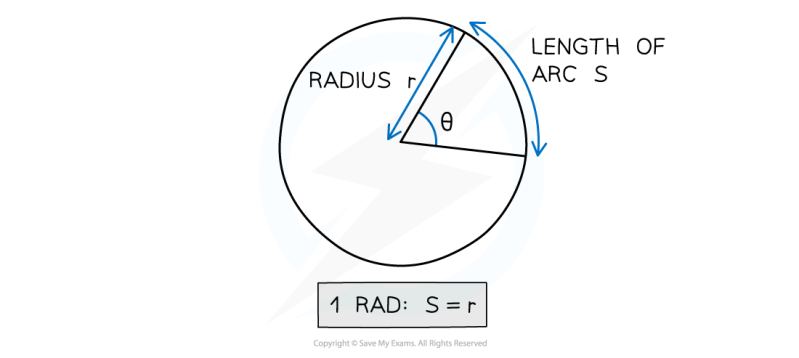
The confusion often starts with degrees. A full circle is 360°, a number tied to ancient Babylonian astronomy, where 360 was convenient because it had many divisors. But radians, derived from the radius of a circle, provide a direct relationship between angle and arc length. One radian is the angle where the arc length equals the radius—a definition that makes calculus operations cleaner. This elegance isn’t accidental; it’s a product of centuries of mathematical refinement.
Radians aren’t just a theoretical curiosity. They’re the default in fields where angles must interact with continuous variables—like in the equations governing pendulums, waves, or even the curvature of spacetime. Engineers designing bridges or physicists modeling particle collisions rely on radians to avoid approximations. The question what are radians thus becomes a gateway to understanding how modern science describes the world.

The Complete Overview of Radians
Radians are a unit of angular measurement defined by the ratio of an arc’s length to its radius in a circle. Unlike degrees, which divide a circle into 360 equal parts, radians use the circle’s geometry itself: a full rotation is exactly 2π radians (approximately 6.283). This relationship stems from the circumference of a circle being 2πr, where r is the radius. When an angle subtends an arc equal to the radius, that angle is 1 radian—a definition that eliminates arbitrary divisions and ties angles directly to the circle’s fundamental properties.The power of radians lies in their compatibility with calculus. Derivatives and integrals of trigonometric functions like sine and cosine yield results only when angles are in radians. For example, the derivative of sin(x) is cos(x) only if x is in radians. This isn’t a coincidence but a consequence of the Taylor series expansions of these functions, where coefficients align perfectly with radian-based angles. In practical terms, this means radians are indispensable in modeling dynamic systems—whether predicting the motion of a satellite or analyzing alternating current in electrical circuits.
Historical Background and Evolution
The concept of radians emerged gradually from the 17th and 18th centuries as mathematicians sought to unify geometry and calculus. Early attempts to formalize angle measurement relied on degrees, but the need for a more natural unit became clear when Isaac Newton and Gottfried Wilhelm Leibniz developed calculus. They recognized that angles expressed as ratios of arc length to radius would simplify differentiation and integration. By the early 19th century, mathematicians like Leonhard Euler and Joseph-Louis Lagrange had adopted radians as the standard in advanced mathematics, though degrees persisted in practical applications like navigation.The transition to radians was solidified in the 19th century as calculus became the language of physics and engineering. James Clerk Maxwell’s equations of electromagnetism, for instance, rely on radians to describe wave phenomena. The International System of Units (SI) later codified radians as a derived unit in 1960, though degrees remain acceptable in specific contexts. Today, the question what are radians is less about historical curiosity and more about recognizing their role as the "native language" of continuous mathematics.
Core Mechanisms: How It Works
At its core, a radian is defined by the arc length it subtends. Imagine a circle with radius r. If you draw an arc of length r along the circumference, the central angle that intercepts this arc is 1 radian. Extending this, a full circle (360°) corresponds to 2π radians because the circumference is 2πr, and dividing by r gives 2π. This geometric definition ensures that trigonometric functions, which describe relationships between angles and sides in right triangles, extend naturally to circles.Table of Contents
- The Complete Overview of Radians
- Historical Background and Evolution
- Core Mechanisms: How It Works
- Key Benefits and Crucial Impact
- Major Advantages
- Comparative Analysis
- Future Trends and Innovations
- Conclusion
- Comprehensive FAQs
- Q: Why do mathematicians prefer radians over degrees?
- Q: How do I convert between radians and degrees?
- Q: Are radians used in real-world applications beyond pure math?
- Q: Why is a full circle 2π radians instead of just π?
- Q: Can I use degrees in calculus, or will it always be radians?
- Q: Are there any disadvantages to using radians?
- Q: How do radians relate to the unit circle?
The elegance of radians becomes apparent in calculus. Consider the unit circle: as an angle θ increases, the arc length s = rθ. For a unit circle (r = 1), s = θ, meaning the angle in radians is the arc length. This direct correspondence allows derivatives of trigonometric functions to be expressed without conversion factors. For example, the slope of the tangent line to the unit circle at any point is simply the reciprocal of the cosine of the angle—an identity that holds only in radians.
Key Benefits and Crucial Impact
Radians eliminate the arbitrary divisions inherent in degrees, offering a unit that aligns with the geometry of circles and the needs of calculus. Their adoption in scientific and engineering disciplines isn’t just a matter of convention; it’s a reflection of their functional superiority. From modeling planetary orbits to designing antennas, radians provide the precision required for calculations where approximations could lead to catastrophic errors. The shift from degrees to radians in advanced mathematics wasn’t just an evolution—it was a revolution in how angles are treated as continuous variables.The impact of radians extends beyond pure mathematics. In physics, they simplify the description of rotational motion, where angular velocity is naturally expressed in radians per second. In computer graphics, radians are often preferred for 3D rotations because they avoid the nonlinear scaling introduced by degrees. Even in everyday technology, like the algorithms behind GPS or smartphone compasses, radians are the hidden layer ensuring accuracy. As one mathematician once noted:
"Radians are the bridge between geometry and analysis, allowing us to move seamlessly between the static and the dynamic."
— David Hilbert, foundational mathematician
Major Advantages
- Natural Unit for Calculus: Derivatives and integrals of trigonometric functions are only valid in radians, avoiding conversion factors that introduce errors.
- Geometric Intuition: The definition ties angles directly to arc length and radius, making visualizations in physics and engineering more intuitive.
- Precision in Dynamic Systems: Radians enable exact modeling of oscillatory motion (e.g., springs, pendulums) without discrete approximations.
- Compatibility with Complex Numbers: Euler’s formula (e^(iθ) = cos(θ) + i sin(θ)) requires θ to be in radians for consistency.
- Standard in SI Units: Officially recognized by the International System of Units, ensuring consistency in scientific communication.

Comparative Analysis
While degrees are intuitive for everyday use, radians dominate in technical fields. The table below contrasts their key attributes:| Radians | Degrees |
|---|---|
| Defined as arc length/radius; full circle = 2π (~6.283). | Arbitrary division of a circle into 360 parts; full circle = 360°. |
| Preferred in calculus, physics, and engineering. | Used in navigation, surveying, and general-purpose applications. |
| Simplifies trigonometric derivatives (e.g., d/dx sin(x) = cos(x)). | Requires conversion factors (e.g., π/180) for calculus operations. |
| More precise for continuous systems (e.g., rotational dynamics). | Better for discrete or human-readable contexts (e.g., compass bearings). |
Future Trends and Innovations
As computational mathematics advances, radians are likely to become even more embedded in interdisciplinary fields. Machine learning models that simulate physical systems—such as fluid dynamics or quantum mechanics—rely on radian-based representations for accuracy. Similarly, the rise of quantum computing may further emphasize radians, as qubit operations often involve rotations described in radians. In education, there’s a growing push to introduce radians earlier in curricula, recognizing their foundational role in STEM disciplines.The future may also see radians integrated into consumer technology in unexpected ways. For instance, augmented reality systems could use radian-based angle calculations to render 3D environments with sub-millimeter precision. Meanwhile, advances in robotics will continue to demand radian-based kinematics for smooth, error-free motion. The question what are radians will thus evolve from a theoretical inquiry to a practical consideration in everyday innovation.
Conclusion
Radians are more than a unit of measurement; they are a cornerstone of modern science, enabling calculations that would otherwise be cumbersome or impossible. Their adoption reflects a broader principle: the most effective tools in mathematics and engineering are those that align with the natural structure of the problems they solve. While degrees remain useful in specific contexts, radians are the default for any scenario where angles must interact with continuous change.Understanding what are radians is therefore essential for anyone studying mathematics, physics, or engineering. It’s not just about memorizing that π radians = 180°; it’s about recognizing that radians provide a language for describing the world’s dynamic systems with unparalleled clarity. As technology grows more precise, so too will the importance of radians—solidifying their place as the universal standard for angular measurement.
Comprehensive FAQs
Q: Why do mathematicians prefer radians over degrees?
Mathematicians prefer radians because they eliminate the need for conversion factors in calculus. Trigonometric functions like sine and cosine have derivatives that are only valid when angles are expressed in radians. For example, the derivative of sin(x) is cos(x) only if x is in radians. Degrees introduce a scaling factor (π/180), which complicates differentiation and integration.
Q: How do I convert between radians and degrees?
Use these formulas:
- Degrees to radians: Multiply by (π/180). Example: 180° × (π/180) = π radians.
- Radians to degrees: Multiply by (180/π). Example: π radians × (180/π) = 180°.
Q: Are radians used in real-world applications beyond pure math?
Yes. Radians are critical in:
- Physics: Describing angular velocity (e.g., rotational motion of planets or engines).
- Engineering: Designing mechanical systems (e.g., robotics, aerospace).
- Computer Graphics: 3D rotations in games and simulations.
- Signal Processing: Modeling waves and oscillations.
Q: Why is a full circle 2π radians instead of just π?
A full circle is 2π radians because the circumference of a circle is 2πr (where r is the radius). When you divide the full arc length (2πr) by the radius (r), you get 2π. This means that as you "walk" around the circle, the angle in radians increases proportionally to the distance traveled, with 2π radians completing one full rotation.
Q: Can I use degrees in calculus, or will it always be radians?
You can use degrees in calculus, but you must include a conversion factor (π/180) in derivatives and integrals. For example, the derivative of sin(x) when x is in degrees is (π/180)cos(x). However, this introduces unnecessary complexity, which is why radians are the standard. Most mathematical software and calculators default to radians for trigonometric functions.
Q: Are there any disadvantages to using radians?
The primary disadvantage is that radians are less intuitive for everyday applications. For instance:
- Humans struggle to visualize 2π radians as a full circle compared to 360°.
- Degrees are more practical in navigation (e.g., compass bearings) and surveying.
- Some older technical documents or non-scientific fields may still use degrees, requiring conversions.
Q: How do radians relate to the unit circle?
In the unit circle (radius = 1), the angle in radians is the length of the arc it subtends. For example:
- An angle of 1 radian corresponds to an arc length of 1 unit.
- π/2 radians (90°) corresponds to a quarter-circle arc of length π/2 ≈ 1.5708.
- This direct relationship allows trigonometric functions (sin, cos) to be defined as coordinates on the unit circle.
Leave a Comment
Comments are moderated before appearing. The data you submit is processed according to the Privacy Policy of Viralcontentbee.