Cracking the Code: How to Solve Logarithmic Functions Like a Pro
Logarithms are the silent architects of exponential growth—whether in finance, physics, or computer science. Yet, for many students and professionals, how to solve logarithmic functions remains a puzzle wrapped in an enigma. The confusion often stems from their inverse relationship with exponentials, a duality that can feel abstract without the right framework. But logarithms aren’t just theoretical constructs; they’re tools that decode complex patterns, from the decay of radioactive isotopes to the efficiency of algorithms. Understanding them isn’t about memorization—it’s about recognizing their structural logic.
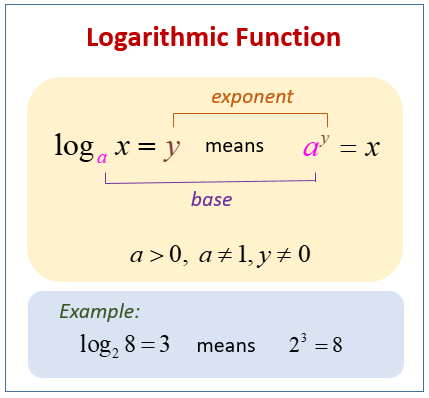
The first hurdle is the notation itself. A logarithmic expression like logb(x) = y translates to by = x, a direct conversion that many overlook. This simple rewrite is the key to unlocking problems that seem impenetrable at first glance. But where most guides stop, this exploration dives deeper: into the why behind the rules, the pitfalls of common mistakes, and the strategic approaches that turn logarithmic equations into solvable puzzles.
Consider this: logarithms are the mathematical equivalent of asking, "How many times must I multiply 2 by itself to reach 8?" The answer—3—isn’t just a number; it’s a relationship. This relationship is what makes logarithms indispensable in fields like acoustics (decibels), astronomy (stellar magnitudes), and even biology (pH scales). Yet, despite their ubiquity, the step-by-step process of solving logarithmic equations is often taught in isolation, devoid of context. Here, we bridge that gap by integrating theory with practical, actionable methods.
The Complete Overview of How to Solve Logarithmic Functions
The foundation of solving logarithmic functions lies in three core principles: the definition of logarithms, their properties, and their interplay with exponentials. At its heart, a logarithm answers a fundamental question: "To what power must the base be raised to obtain the argument?" For example, log3(9) = 2 because 32 = 9. This inverse relationship is the cornerstone of all logarithmic manipulations. Beyond this, the properties—such as the product, quotient, and power rules—serve as algebraic shortcuts, transforming complex expressions into simpler forms. Mastery of these properties isn’t just about recalling formulas; it’s about recognizing when and how to apply them to streamline problems.
Yet, the true art of solving logarithmic equations emerges when these principles are combined with strategic problem-solving. Take the equation log5(x + 1) = 2. Converting it to its exponential form yields 52 = x + 1, leading to x = 24. The process seems straightforward, but the real challenge arises with multi-step equations, such as log2(3x - 1) + log2(x) = 4. Here, the product rule merges the logarithms, and the resulting quadratic equation demands careful algebraic manipulation. The difference between a solution and a dead end often hinges on recognizing these opportunities to simplify.
Historical Background and Evolution
The concept of logarithms traces back to the 17th century, when Scottish mathematician John Napier sought to simplify complex calculations. His invention, published in 1614, was a table of logarithms designed to convert multiplication into addition—a revolutionary tool for astronomers and navigators. Napier’s work was later refined by Henry Briggs, who introduced base-10 logarithms, the standard we still use today. This historical context is crucial because logarithms weren’t just mathematical curiosities; they were practical solutions to real-world problems, like calculating planetary orbits or determining interest rates. The evolution of logarithmic functions mirrors the broader story of mathematics as a problem-solving discipline, where abstract ideas find tangible applications.
Table of Contents
- The Complete Overview of How to Solve Logarithmic Functions
- Historical Background and Evolution
- Core Mechanisms: How It Works
- Key Benefits and Crucial Impact
- Major Advantages
- Comparative Analysis
- Future Trends and Innovations
- Conclusion
- Comprehensive FAQs
- Q: What is the first step in solving a logarithmic equation like log 4 (x) = 3 ?
- Q: How do I handle equations with logarithms on both sides, such as log 2 (x) = log 2 (x + 5) - 1 ?
- Q: Why can’t I take the logarithm of a negative number?
- Q: What’s the difference between log b (x) and ln(x) ?
- Q: How do I solve equations where the variable is in the base, like log x (8) = 3 ?
- Q: Can I use logarithmic properties to simplify expressions like log 3 (27) + log 3 (9) ?
- Q: What’s the most common mistake when solving logarithmic equations?
- Q: How do logarithms relate to exponential growth models?
- Q: Are there any shortcuts or mnemonics to remember logarithmic properties?
By the 19th century, logarithms had become a staple in engineering and physics, particularly with the advent of slide rules—devices that relied on logarithmic scales to perform rapid calculations. The digital age further cemented their importance, as logarithms underpin algorithms in computer science, from sorting networks to cryptography. Today, solving logarithmic functions isn’t just an academic exercise; it’s a skill with direct implications in data analysis, machine learning, and even medical diagnostics. Understanding their history provides perspective: logarithms are more than equations—they’re a legacy of human ingenuity.
Core Mechanisms: How It Works
The mechanics of solving logarithmic equations revolve around two fundamental operations: conversion and simplification. The first step is always converting the logarithmic equation to its exponential form, which neutralizes the logarithm’s complexity. For instance, loga(b) = c becomes ac = b, a form that’s easier to manipulate algebraically. This conversion is non-negotiable; without it, the equation remains trapped in logarithmic notation, resistant to further progress. The second operation involves applying logarithmic properties to combine or split terms, depending on the equation’s structure. For example, the product rule logb(MN) = logb(M) + logb(N) can merge two logarithms into one, simplifying the equation.
However, the true complexity arises when dealing with equations that mix logarithmic and non-logarithmic terms. Consider 2 log3(x) - 5 = 7. Here, isolating the logarithmic term requires algebraic steps—adding 5 to both sides, then dividing by 2—before converting to exponential form. The process is methodical but demands attention to detail, as errors in isolation can lead to incorrect solutions. Moreover, some equations, like logx(16) = 2, require solving for the base itself, introducing variables into the exponent. This scenario tests deeper understanding, as it blurs the line between logarithmic and exponential functions, requiring a flexible approach to solving logarithmic functions.
Key Benefits and Crucial Impact
Logarithms are the unsung heroes of quantitative fields, offering precision where linear models fall short. Their ability to compress vast ranges of values into manageable scales—such as the Richter scale for earthquakes or the pH scale for acidity—makes them indispensable in scientific and engineering disciplines. In finance, logarithmic growth models accurately predict compound interest, while in biology, they quantify bacterial growth rates. The impact of solving logarithmic functions extends beyond academia; it’s a skill that empowers professionals to model real-world phenomena with accuracy. Without logarithms, fields like seismology, acoustics, and information theory would lack the tools to interpret data on a logarithmic scale.
The practical benefits are equally compelling. For students, mastering logarithms builds a foundation for calculus, statistics, and advanced physics. For professionals, it enhances problem-solving capabilities, particularly in data-driven industries. Logarithms aren’t just mathematical abstractions; they’re a language for understanding exponential change—a language that, once learned, opens doors to complex systems and innovative solutions. The ability to solve logarithmic equations is, therefore, more than an academic achievement; it’s a practical asset with far-reaching implications.
"Logarithms are the exponents that whisper the secrets of growth and decay. To ignore them is to miss the rhythm of the universe itself."
— Adapted from historical mathematical texts
Major Advantages
- Scalability: Logarithms simplify the representation of exponential data, making it easier to analyze trends over large ranges (e.g., population growth, stock markets).
- Precision in Measurement: They enable accurate comparisons of quantities that span orders of magnitude, such as sound intensity (decibels) or stellar brightness.
- Algebraic Flexibility: Logarithmic properties allow for the transformation of complex products and quotients into additive or subtractive forms, simplifying equations.
- Interdisciplinary Utility: From chemistry (pH calculations) to computer science (algorithm efficiency), logarithms provide a universal framework for modeling.
- Problem-Solving Efficiency: Mastery of solving logarithmic functions accelerates the resolution of equations involving exponential relationships, reducing computational complexity.

Comparative Analysis
| Logarithmic Functions | Exponential Functions |
|---|---|
Definition: Answers the question, "To what power must the base be raised?" (logb(x) = y → by = x). |
Definition: Describes growth/decay via repeated multiplication (f(x) = bx). |
Key Property: Product Rule (logb(MN) = logb(M) + logb(N)). |
Key Property: Growth Rate (f(x + h) = bx bh). |
| Applications: Scales (pH, decibels), solving for exponents, data compression. | Applications: Population growth, radioactive decay, interest calculations. |
| Challenge in Solving: Requires conversion to exponential form; properties can complicate multi-step equations. | Challenge in Solving: Direct solutions may involve logarithms; iterative methods needed for complex models. |
Future Trends and Innovations
The future of logarithmic functions lies in their integration with emerging technologies. As data science and machine learning expand, logarithms are increasingly used in feature scaling, loss functions, and probabilistic models. For instance, logarithmic transformations are critical in regularizing data for neural networks, preventing vanishing gradients. Additionally, quantum computing may redefine logarithmic algorithms, offering exponential speedups for problems like factorization—a domain where logarithms already play a key role in cryptography. The trend is clear: logarithms are evolving from static mathematical tools to dynamic components of computational systems, where solving logarithmic functions becomes a gateway to innovation.
In education, the focus is shifting toward contextual learning, where logarithms are taught alongside real-world applications, such as climate modeling or epidemiological data. Interactive tools, like logarithmic graphing calculators and simulation software, are making abstract concepts tangible. Meanwhile, interdisciplinary research—combining mathematics, biology, and computer science—is uncovering new logarithmic patterns in nature, from fractal growth to neural network training. The next decade may well see logarithms as the backbone of algorithms that power everything from autonomous systems to personalized medicine.

Conclusion
The journey to mastering solving logarithmic functions is more than a mathematical exercise; it’s an exploration of patterns that govern the natural and artificial worlds. By understanding their properties, historical significance, and practical applications, one gains not just problem-solving skills but a deeper appreciation for the elegance of mathematical relationships. The key lies in balancing theory with application—recognizing that every logarithmic equation is a puzzle waiting to be decoded, and every solution a step toward unlocking broader insights.
As fields like data science and computational theory advance, the relevance of logarithms will only grow. The ability to solve logarithmic equations efficiently will distinguish analysts, engineers, and scientists in an era where data-driven decisions reign supreme. Whether you’re a student grappling with algebra or a professional refining models, logarithms remain a constant—an enduring toolkit for those who seek to quantify, analyze, and innovate.
Comprehensive FAQs
Q: What is the first step in solving a logarithmic equation like log4(x) = 3?
A: The first step is to convert the logarithmic equation to its exponential form using the definition logb(x) = y → by = x. For log4(x) = 3, this becomes 43 = x, yielding x = 64. Always ensure the base and argument are correctly interpreted.
Q: How do I handle equations with logarithms on both sides, such as log2(x) = log2(x + 5) - 1?
A: Start by isolating one logarithm. Here, add 1 to both sides to get log2(x) + 1 = log2(x + 5). Rewrite 1 as log2(2) (since 21 = 2) and apply the product rule: log2(2x) = log2(x + 5). Since the logarithms are equal and have the same base, their arguments must be equal: 2x = x + 5, leading to x = 5. Always verify the solution by plugging it back into the original equation.
Q: Why can’t I take the logarithm of a negative number?
A: The logarithm of a negative number is undefined in the real number system because no real exponent exists that satisfies by = x when x < 0 and b > 0. For example, log10(-1) would require 10y = -1, which has no real solution. Complex numbers introduce imaginary logarithms, but these are beyond standard real-valued applications of solving logarithmic functions.
Q: What’s the difference between logb(x) and ln(x)?
A: The notation ln(x) is shorthand for loge(x), where e ≈ 2.71828 is Euler’s number. While logb(x) can have any positive base b ≠ 1, ln(x) specifically uses base e. The choice of base depends on context: natural logarithms (ln) are common in calculus and physics, while base-10 logarithms (log) are often used in engineering and computer science. Both follow the same properties and rules for solving logarithmic functions.
Q: How do I solve equations where the variable is in the base, like logx(8) = 3?
A: Rewrite the equation in exponential form: x3 = 8. Take the cube root of both sides to solve for x: x = 8^(1/3) = 2. However, note that the base x must satisfy x > 0 and x ≠ 1 for the logarithm to be defined. Always check these conditions when solving logarithmic functions with variables in the base.
Q: Can I use logarithmic properties to simplify expressions like log3(27) + log3(9)?
A: Yes. First, evaluate each logarithm individually: log3(27) = 3 because 33 = 27, and log3(9) = 2 because 32 = 9. Adding them gives 3 + 2 = 5. Alternatively, you could apply the product rule first: log3(27 9) = log3(243). Since 35 = 243, the result is again 5. Both methods are valid, but simplification often depends on the context of the problem.
Q: What’s the most common mistake when solving logarithmic equations?
A: The most frequent error is neglecting to check the domain of the logarithmic function. For example, in log2(x - 1) = 4, converting to exponential form gives x - 1 = 16, leading to x = 17. However, the original equation requires x - 1 > 0 (i.e., x > 1), which is satisfied. Skipping this step could lead to extraneous solutions in more complex equations, where the argument might become negative or zero after manipulation. Always verify the solution’s validity within the original equation’s domain.
Q: How do logarithms relate to exponential growth models?
A: Logarithms and exponentials are inverse functions, meaning they "undo" each other. In exponential growth models like P(t) = P0 ert, logarithms are used to solve for time (t) or the growth rate (r). For instance, to find the doubling time of an investment, you’d solve 2 = ert by taking the natural logarithm of both sides: ln(2) = rt, then t = ln(2)/r. This relationship is foundational in fields like finance, biology, and epidemiology, where solving logarithmic functions translates exponential models into actionable insights.
Q: Are there any shortcuts or mnemonics to remember logarithmic properties?
A: While there’s no universal mnemonic, visualizing the properties as "rules of thumb" can help. For example:
- Product Rule: "Multiply inside the log? Add the logs." (
logb(MN) = logb(M) + logb(N)) - Quotient Rule: "Divide inside? Subtract the logs." (
logb(M/N) = logb(M) - logb(N)) - Power Rule: "Exponent outside? Bring it down." (
logb(Mp) = p logb(M))
Leave a Comment
Comments are moderated before appearing. The data you submit is processed according to the Privacy Policy of Viralcontentbee.