How a Java Code Tester Transforms Software Quality Control
A Java code tester is not just a tool—it’s the silent guardian of software integrity, catching bugs before they escalate into system failures. Whether you’re debugging a legacy banking application or optimizing a high-frequency trading platform, the right Java code tester can mean the difference between a seamless user experience and a catastrophic outage. The stakes are higher than ever: with Java powering everything from Android apps to enterprise backends, even minor vulnerabilities can lead to data breaches or financial losses.
Yet, many developers treat testing as an afterthought, rushing through unit tests or relying on manual reviews that miss edge cases. This approach is costly. According to the Standish Group, fixing defects post-deployment costs up to 100 times more than addressing them early. A Java code tester automates this critical phase, enforcing consistency and catching issues at scale—whether it’s a null pointer exception in a microservice or a race condition in a concurrent application.
The challenge lies in selecting the right Java code tester for the job. Not all tools are created equal. Some specialize in static analysis, others in dynamic execution, and a few integrate seamlessly with CI/CD pipelines. The wrong choice can lead to false positives, missed vulnerabilities, or integration headaches. This guide cuts through the noise, examining how these tools evolve, their core mechanics, and why they’re indispensable in modern software engineering.

The Complete Overview of Java Code Testing
A Java code tester encompasses a suite of tools and methodologies designed to validate Java applications for correctness, performance, and security. At its core, it bridges the gap between development and quality assurance (QA), ensuring that code adheres to standards before deployment. Unlike traditional manual testing, which is time-consuming and prone to human error, automated Java code testers execute predefined scenarios—unit tests, integration tests, and static checks—repeatedly and consistently.
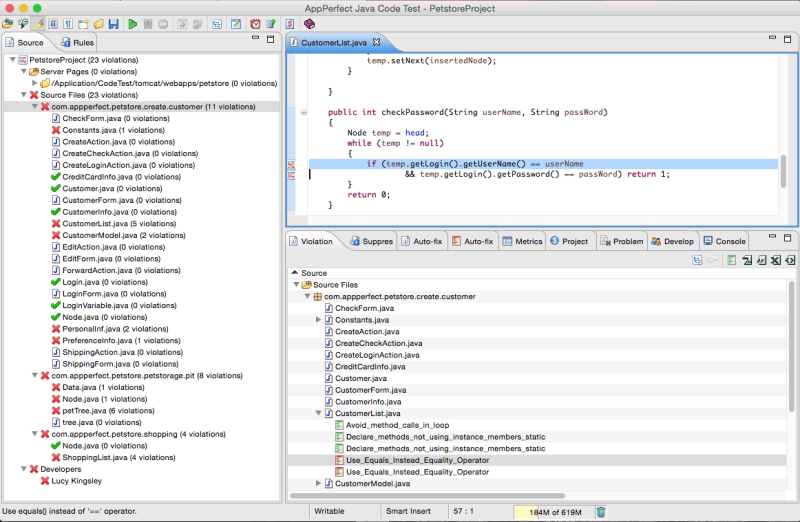
The ecosystem has expanded beyond basic unit testing frameworks like JUnit. Today, a Java code tester might include static analyzers (e.g., SonarQube, Checkstyle), dynamic analyzers (e.g., JaCoCo, TestNG), and even AI-driven tools that predict failure-prone code. These tools don’t just find bugs; they provide actionable insights, such as code coverage metrics or security hotspots, directly in the IDE. For teams adopting DevOps, integration with platforms like Jenkins or GitHub Actions turns testing into a continuous process, not a one-time gatekeeper.
Historical Background and Evolution
The origins of Java code testing trace back to the early 1990s, when Java’s "write once, run anywhere" promise demanded robust validation. The first JUnit release in 1997 by Erich Gamma and Kent Beck marked a turning point, introducing the xUnit paradigm to Java. Before this, developers relied on print statements and ad-hoc scripts—a far cry from today’s automated suites. By the 2000s, static analysis tools like PMD and FindBugs emerged, shifting focus from runtime errors to proactive code quality checks.
Table of Contents
- The Complete Overview of Java Code Testing
- Historical Background and Evolution
- Core Mechanisms: How It Works
- Key Benefits and Crucial Impact
- Major Advantages
- Comparative Analysis
- Future Trends and Innovations
- Conclusion
- Comprehensive FAQs
- Q: What’s the difference between a unit test and an integration test in Java?
- Q: Can a Java code tester detect security vulnerabilities like SQL injection?
- Q: How do I integrate a Java code tester into a CI/CD pipeline?
- Q: What’s the best Java code tester for a small team with limited resources?
- Q: How can I improve test coverage without writing more tests?
The real inflection point came with the rise of Agile and CI/CD. Tools like SonarQube (2008) transformed Java code testers into enterprise-grade platforms, offering dashboards for team-wide metrics. Meanwhile, the open-source community contributed frameworks like TestNG (2004) and Mockito (2010), which added mocking and dependency injection support. Today, cloud-native testing (e.g., AWS Device Farm for mobile apps) and AI-assisted tools (e.g., DeepCode) are redefining what a Java code tester can achieve, blending speed with precision.
Core Mechanisms: How It Works
The functionality of a Java code tester hinges on two primary approaches: static and dynamic analysis. Static analysis scans code without execution, using abstract syntax trees (ASTs) to detect issues like unused variables, security flaws (e.g., SQL injection), or violations of coding standards (e.g., naming conventions). Tools like Checkstyle or SpotBugs leverage this method to catch problems early, often before a single line of code is deployed to a server.
Dynamic analysis, on the other hand, requires running the code under test. Unit testing frameworks like JUnit verify individual components (e.g., methods) in isolation, while integration tests (e.g., Spring Boot Test) ensure interactions between modules work as expected. Coverage tools like JaCoCo measure how much of the codebase is exercised during tests, highlighting untested paths. Advanced Java code testers even simulate edge cases—such as high memory loads or network latency—to stress-test resilience. The synergy between these methods ensures comprehensive validation.
Key Benefits and Crucial Impact
The adoption of a Java code tester isn’t just about catching bugs—it’s about reshaping the entire software lifecycle. Teams using automated testing report up to 30% faster release cycles, as manual regression testing is eliminated. For financial institutions, this translates to reduced downtime; for SaaS providers, it means fewer customer support tickets. The impact extends to security: a 2023 Veracode report found that organizations using static analysis tools reduced vulnerabilities by 40% compared to those relying on manual reviews.
Beyond efficiency, a Java code tester fosters a culture of quality. When developers see real-time feedback—such as a failing test in their IDE—they’re more likely to adopt best practices. This shift reduces technical debt and aligns with industry standards like ISO 25010 for software quality. For startups, the cost savings are immediate; for enterprises, the ROI lies in scalability and compliance.
"Testing is not a phase—it’s a mindset. The best Java code testers don’t just find bugs; they prevent them by embedding quality into the development process."
—Martin Fowler, Chief Scientist at ThoughtWorks
Major Advantages
- Early Bug Detection: Static analyzers catch issues like null pointer exceptions or resource leaks before they reach production, saving debugging time.
- Automation and Speed: CI/CD pipelines integrate Java code testers to run tests on every commit, enabling rapid feedback loops.
- Improved Code Maintainability: Tools like SonarQube enforce coding standards (e.g., complexity limits), making codebases easier to refactor.
- Security Hardening: Specialized Java code testers (e.g., OWASP Dependency-Check) scan for known vulnerabilities in libraries.
- Data-Driven Decisions: Metrics like test coverage and defect density help prioritize technical investments.
Comparative Analysis
| Tool/Category | Key Features |
|---|---|
| Static Analysis (e.g., SonarQube, Checkstyle) | Rules-based scanning, code smell detection, IDE plugins for real-time feedback. |
| Unit Testing (e.g., JUnit 5, TestNG) | Annotations for test cases, assertion libraries, parameterized tests. |
| Dynamic Analysis (e.g., JaCoCo, Emma) | Code coverage metrics, branch analysis, HTML/PDF reports. |
| Integration Testing (e.g., Spring Boot Test, Mockito) | Mocking dependencies, embedded servers, transaction rollback. |
Future Trends and Innovations
The next generation of Java code testers will blur the line between automation and intelligence. AI-driven tools are already analyzing code patterns to predict failures before they occur, using machine learning models trained on millions of codebases. For example, GitHub’s Copilot Assist suggests test cases based on existing code, while tools like DeepCode analyze commit histories to flag risky changes. These advancements will reduce false positives—a persistent pain point in static analysis—by contextualizing warnings with project history.
Another frontier is testing for "invisible" bugs in distributed systems. As Java applications migrate to serverless architectures (e.g., AWS Lambda) or edge computing, traditional Java code testers must evolve to handle cold starts, latency spikes, and multi-cloud dependencies. Tools like Gremlin’s chaos engineering platform are already simulating failures in production-like environments, but the future lies in self-healing systems where tests automatically trigger remediation. For enterprises, this means resilience by design—not an afterthought.

Conclusion
A Java code tester is no longer optional; it’s a necessity for any team serious about software quality. The tools have matured from simple unit test runners to sophisticated ecosystems that integrate security, performance, and compliance into the development workflow. The key to leveraging them effectively lies in alignment with project goals: a startup might prioritize speed with lightweight frameworks like JUnit, while a financial institution needs enterprise-grade static analysis for audit trails.
The landscape will continue to evolve, but the core principle remains unchanged: proactive testing saves time, money, and reputation. As Java’s dominance in backend systems shows no signs of waning, the Java code tester will remain its unsung hero—silently ensuring that every line of code meets the standards of tomorrow.
Comprehensive FAQs
Q: What’s the difference between a unit test and an integration test in Java?
A: Unit tests (e.g., JUnit) isolate individual methods or classes, while integration tests (e.g., Spring Boot Test) verify interactions between components—such as a service layer calling a database. Unit tests are faster but may miss dependency issues; integration tests catch those but require more setup.
Q: Can a Java code tester detect security vulnerabilities like SQL injection?
A: Yes. Tools like OWASP Dependency-Check or SonarQube’s security rules scan for known vulnerabilities in libraries and hardcoded secrets. Static analyzers can also flag unsafe practices (e.g., direct JDBC queries without parameterization), but dynamic analysis (e.g., penetration testing) is often needed for comprehensive security validation.
Q: How do I integrate a Java code tester into a CI/CD pipeline?
A: Most tools offer plugins for Jenkins, GitHub Actions, or GitLab CI. For example, SonarQube can be triggered via a Maven/Gradle build phase, while JaCoCo generates coverage reports that fail the pipeline if thresholds aren’t met. Configuration typically involves adding a step to execute tests and enforce quality gates.
Q: What’s the best Java code tester for a small team with limited resources?
A: Start with open-source options: JUnit 5 for unit tests, Checkstyle for static analysis, and JaCoCo for coverage. These integrate seamlessly with Maven/Gradle and require minimal setup. For security, add OWASP Dependency-Check as a post-build step. Commercial tools like SonarQube offer more features but may be overkill for early-stage projects.
Q: How can I improve test coverage without writing more tests?
A: Use mutation testing tools like Pitest to identify weak tests—it injects faults into your code to see if tests catch them. Refactor tests to cover edge cases (e.g., empty collections, null inputs) and leverage parameterized tests (e.g., `@ParameterizedTest` in JUnit 5) to reduce redundancy. Tools like JaCoCo can also highlight untested branches in your IDE.
Leave a Comment
Comments are moderated before appearing. The data you submit is processed according to the Privacy Policy of Viralcontentbee.