How Java Priority Queue Transforms Real-Time Data Handling
Java’s PriorityQueue isn’t just another abstract data structure—it’s a high-performance toolkit for scenarios where order matters more than raw insertion speed. Whether you’re optimizing scheduling algorithms, processing events in real-time systems, or implementing Dijkstra’s pathfinding, the way elements are prioritized can make the difference between a solution that scales and one that collapses under load. The structure’s elegance lies in its simplicity: a heap-based container that guarantees O(log n) insertion and extraction while maintaining elements in a strict priority order. But beneath that surface efficiency hides nuanced trade-offs—memory overhead, thread-safety considerations, and the choice between min-heaps and max-heaps—that developers often overlook until performance bottlenecks emerge.
The Java PriorityQueue’s design reflects decades of refinement in computational theory, blending theoretical optimality with practical engineering. Unlike its FIFO counterparts, which treat all elements equally, this data structure enforces a hierarchy where the most critical item always surfaces first. This isn’t just about sorting lists; it’s about dynamic prioritization where the "most important" element is redefined at every operation. The implications ripple across domains: from load balancers dispatching tasks to AI agents evaluating action sequences, the PriorityQueue’s role is quietly foundational.
Yet for all its power, the Java PriorityQueue remains one of those tools that’s easy to misuse if you don’t understand its constraints. A poorly configured comparator can turn O(log n) operations into O(n log n) nightmares. Thread contention in concurrent scenarios demands careful synchronization. And while the default implementation favors speed, memory-conscious applications might need alternatives. These challenges aren’t flaws—they’re design choices that force developers to think critically about their use cases.
The Complete Overview of Java Priority Queue
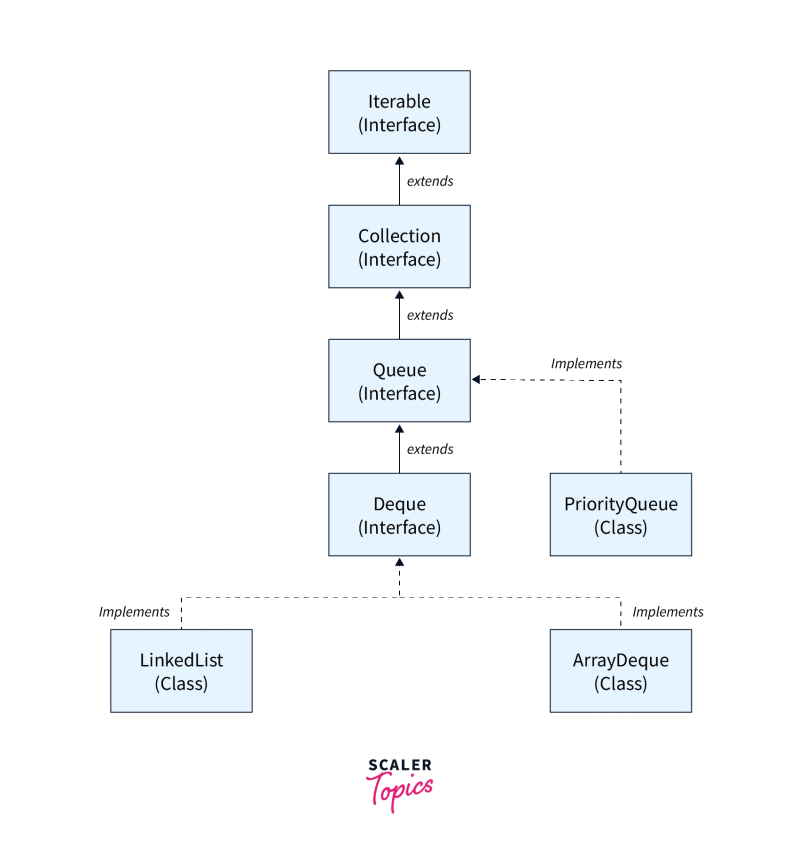
At its core, the Java PriorityQueue is a resizable array-based heap that implements the `Queue` interface while prioritizing elements according to a specified ordering. Unlike standard queues where elements follow a first-in-first-out (FIFO) discipline, the PriorityQueue enforces a priority-based ordering where the element with the highest (or lowest, depending on configuration) priority is always at the head. This behavior is governed by the `Comparator` interface, allowing developers to define custom ordering logic—whether numerical, lexicographical, or domain-specific. The structure’s efficiency stems from its heap property: each parent node is always greater (or less) than its children, ensuring that the highest-priority element can be accessed in constant time while insertions and deletions maintain the heap invariant in logarithmic time.What sets the Java PriorityQueue apart is its seamless integration with the Java Collections Framework. It extends `AbstractQueue` and implements `Serializable`, making it compatible with streams, parallel processing, and legacy systems. The absence of duplicate elements (unless explicitly allowed) and the ability to peek without removal further distinguish it from other priority-based structures. However, this simplicity masks critical implementation details: the underlying array dynamically resizes when capacity thresholds are breached, and the lack of direct indexing means random access is prohibited. These trade-offs are deliberate—they prioritize performance for priority-sensitive operations over general-purpose flexibility.
Historical Background and Evolution
The concept of priority queues traces back to the 1960s, when computer scientists sought efficient ways to manage job scheduling in early operating systems. Robert Floyd’s 1964 paper on heaps introduced the binary heap structure, which became the gold standard for priority queues due to its O(log n) insertion and extraction guarantees. Java’s adoption of this model in its Collections Framework (introduced in Java 2, 1998) aligned with the language’s emphasis on high-performance utilities. The PriorityQueue class was designed to be a lightweight, thread-unsafe alternative to `PriorityBlockingQueue`, catering to single-threaded scenarios where synchronization overhead was unnecessary.The evolution of the Java PriorityQueue reflects broader trends in software engineering. Early versions of Java’s collections lacked generic types, forcing developers to use type-safe wrappers like `PriorityQueue
Table of Contents
- The Complete Overview of Java Priority Queue
- Historical Background and Evolution
- Core Mechanisms: How It Works
- Key Benefits and Crucial Impact
- Major Advantages
- Comparative Analysis
- Future Trends and Innovations
- Conclusion
- Comprehensive FAQs
- Q: Can the Java PriorityQueue contain duplicate elements?
- Q: How does the PriorityQueue handle `null` elements?
- Q: What’s the difference between `peek()` and `poll()` in a PriorityQueue?
- Q: Why is the Java PriorityQueue not thread-safe?
- Q: How can I implement a max-heap instead of a min-heap?
- Q: What happens if I modify the elements of a PriorityQueue after insertion?
- Q: Can I iterate over a PriorityQueue in priority order?
- Q: What’s the maximum capacity of a PriorityQueue?
Under the hood, the PriorityQueue uses a `Comparator` to determine element ordering. If no comparator is provided, elements are compared using their natural ordering (via `Comparable`). This flexibility is powerful but requires careful handling: passing `null` as a comparator defaults to natural ordering, while an invalid comparator can lead to `ClassCastException`. The structure’s thread-unsafety means concurrent modifications risk `ConcurrentModificationException`, though `PriorityBlockingQueue` offers a synchronized alternative for multi-threaded environments. The trade-off between simplicity and safety is a recurring theme in Java’s design philosophy.
Key Benefits and Crucial Impact
The Java PriorityQueue’s true value lies in its ability to transform abstract problems into efficient, scalable solutions. In algorithm design, it’s the backbone of Dijkstra’s shortest-path algorithm, where nodes are processed in order of increasing distance from the source. In real-time systems, it enables event-driven architectures to prioritize critical tasks, such as handling user input before background processes. Even in seemingly unrelated domains like genetic algorithms, the PriorityQueue’s ability to maintain a population of solutions ranked by fitness is indispensable. These applications aren’t just theoretical—they’re deployed in everything from financial trading platforms to autonomous vehicle navigation.The impact extends beyond technical performance. By abstracting away the complexity of manual heap management, the PriorityQueue allows developers to focus on problem-solving rather than low-level implementation. This aligns with Java’s "write once, run anywhere" ethos: a well-designed PriorityQueue in one application can be reused across projects with minimal adaptation. The structure’s integration with Java’s functional programming features—such as streams and lambdas—further amplifies its utility, enabling concise, expressive code for priority-based operations.
"Priority queues are to algorithms what wheels are to transportation: they’re the invisible infrastructure that enables progress." — Donald Knuth, The Art of Computer Programming
Major Advantages
- Logarithmic Time Complexity: Insertion (`offer()`) and extraction (`poll()`) operations run in O(log n) time, making it ideal for dynamic priority management where elements are frequently added or removed.
- Memory Efficiency: The underlying array-based heap avoids the overhead of linked-list structures, reducing memory fragmentation and improving cache locality.
- Flexible Ordering: Custom `Comparator` implementations allow for domain-specific prioritization, from numerical values to complex object attributes.
- Integration with Java Ecosystem: Seamless compatibility with streams, parallel processing, and legacy collections ensures broad applicability without reinventing the wheel.
- Thread-Safe Alternatives Available: While the standard `PriorityQueue` is not thread-safe, `PriorityBlockingQueue` provides synchronized access for concurrent scenarios.
Comparative Analysis
| Java PriorityQueue | Alternatives |
|---|---|
|
|
| Best for: Single-threaded priority-sensitive operations where simplicity and speed are prioritized. | Best for: Multi-threaded environments (PriorityBlockingQueue) or scenarios requiring sorted iteration (TreeSet). |
Future Trends and Innovations
As Java continues to evolve, the PriorityQueue’s role in modern systems is likely to expand, particularly in areas like distributed computing and machine learning. The rise of reactive programming frameworks (e.g., Project Reactor) may see PriorityQueue-like structures integrated into event-driven pipelines, where prioritization of asynchronous tasks becomes critical. Meanwhile, advancements in garbage collection and memory management could reduce the overhead of dynamic resizing, making the PriorityQueue even more efficient for large-scale datasets.Innovations in hardware—such as specialized accelerators for heap operations—could further optimize PriorityQueue performance, blurring the line between software and hardware implementations. For developers, this means staying attuned to Java’s evolution: features like virtual threads (Project Loom) may introduce new synchronization models that influence how PriorityQueue is used in concurrent contexts. The future of the PriorityQueue isn’t just about faster operations—it’s about deeper integration into the fabric of Java’s concurrency and functional programming paradigms.

Conclusion
The Java PriorityQueue is more than a data structure—it’s a testament to the power of theoretical computer science applied to practical problems. Its ability to prioritize elements efficiently, combined with Java’s robust ecosystem, makes it a cornerstone of modern software development. Whether you’re optimizing a scheduling algorithm, designing a real-time system, or implementing a search algorithm, understanding the nuances of the PriorityQueue can elevate your solutions from functional to exceptional.Yet its true value lies in the questions it forces developers to ask: What defines priority in my domain? How will my data change over time? Is thread safety a concern? These aren’t just technical considerations—they’re invitations to think critically about the problem at hand. As Java and its libraries continue to evolve, the PriorityQueue will remain a vital tool, but its effectiveness depends on the developer’s ability to wield it thoughtfully.
Comprehensive FAQs
Q: Can the Java PriorityQueue contain duplicate elements?
A: By default, the Java PriorityQueue does not allow duplicate elements when using natural ordering or a custom `Comparator`. However, if the comparator defines equality differently (e.g., `compareTo` returns 0 for distinct objects), duplicates may be permitted. For guaranteed uniqueness, consider wrapping elements in a `Map` or using a `TreeSet` alongside the queue.
Q: How does the PriorityQueue handle `null` elements?
A: The Java PriorityQueue does not permit `null` elements. Attempting to add a `null` will throw a `NullPointerException`. If your use case requires `null` values, consider using `PriorityBlockingQueue` or implementing a custom wrapper.
Q: What’s the difference between `peek()` and `poll()` in a PriorityQueue?
A: The `peek()` method retrieves the highest-priority element without removing it, returning `null` if the queue is empty. The `poll()` method removes and returns the highest-priority element, returning `null` if the queue is empty. Both operations run in O(1) time.
Q: Why is the Java PriorityQueue not thread-safe?
A: The standard `PriorityQueue` is designed for single-threaded environments to maximize performance. Thread-safety would introduce synchronization overhead, which is unnecessary in many use cases. For multi-threaded scenarios, use `PriorityBlockingQueue` or external synchronization mechanisms.
Q: How can I implement a max-heap instead of a min-heap?
A: By default, the PriorityQueue behaves as a min-heap (smallest element first). To create a max-heap, pass a custom `Comparator` that reverses the natural order. For example, `PriorityQueue
Q: What happens if I modify the elements of a PriorityQueue after insertion?
A: Modifying elements (e.g., changing their priority) after insertion can break the heap invariant, leading to incorrect ordering. To update priorities, remove the old element and reinsert the updated version. For dynamic priority changes, consider a `PriorityBlockingQueue` or a custom heap implementation with decrease-key support.
Q: Can I iterate over a PriorityQueue in priority order?
A: Yes, but only if you repeatedly call `poll()` in a loop, as iteration methods (e.g., `for-each`) do not guarantee priority order. For sorted iteration, consider using a `TreeSet` or copying elements to a sorted list.
Q: What’s the maximum capacity of a PriorityQueue?
A: The PriorityQueue has no fixed maximum capacity—it dynamically resizes as elements are added. However, resizing operations (which occur when the array is full) have O(n) time complexity, so excessive resizing can degrade performance. For bounded scenarios, use `PriorityBlockingQueue` with a fixed capacity.
Leave a Comment
Comments are moderated before appearing. The data you submit is processed according to the Privacy Policy of Viralcontentbee.