Is insurance NAICS code good for industry classification and

Table of Contents
- Understanding the NAICS Code for Insurance: Structure and Classification
- Hierarchy of NAICS Codes for Insurance: Levels and Categorization
- Comparison of Key NAICS Codes for Insurance Subsectors
- Regulatory and Reporting Implications of NAICS Codes for Insurance
- Advantages of Using NAICS Codes in Insurance: Operational and Regulatory Benefits
- Standardization in Regulatory Compliance and Reporting
- Enhancing Underwriting and Risk Assessment Processes
- Operational Efficiencies Through Standardized Industry Classification
- Challenges and Limitations of NAICS Codes for Insurance
- Common Pitfalls in NAICS Code Assignments for Insurance Businesses
- Scenarios Leading to Regulatory or Financial Discrepancies
- NAICS Codes vs. Alternative Classification Systems in Insurance
- Comparison of NAICS with Alternative Industry Classification Systems
- Integration of NAICS with Alternative Classifications for Risk Modeling
- Scenarios Where Alternative Systems Supplement or Replace NAICS
- Practical Applications of NAICS Codes in Insurance Operations
- Verification and Update Procedures for NAICS Codes in Regulatory Filings
- Integration of NAICS Codes with Insurance Software Systems
- Checklist for Aligning NAICS Codes with Business Activities
- Influence of NAICS Codes on Underwriting, Premiums, and Reinsurance
- Future Trends and Evolving Role of NAICS Codes in Insurance
- Digital Transformation and the Rise of Insurtech
- Climate Risk Modeling and Sustainability-Linked Insurance
- Regulatory and Industry-Led Initiatives for NAICS Modernization
- Projected NAICS Adjustments for Evolving Insurance Models
The North American Industry Classification System NAICS codes serve as the backbone for standardizing insurance sector operations, yet their effectiveness remains a subject of ongoing debate. As insurance companies navigate regulatory demands, risk assessment frameworks, and digital transformation, the precision of NAICS codes directly impacts compliance efficiency, market segmentation, and operational workflows. From property and casualty insurers to emerging insurtech models, the alignment between business activities and assigned NAICS codes determines how firms interact with government agencies, financial institutions, and underwriting systems. This discussion examines whether NAICS codes adequately address the complexities of modern insurance while exploring alternatives and future adaptations to maintain relevance in an evolving industry.
Understanding the hierarchical structure of NAICS codes—spanning from broad 2-digit classifications to granular 6-digit specifics—reveals their role in defining insurance subsectors such as life, health, and reinsurance. However, challenges arise when hybrid business models or niche markets, such as cyber insurance or parametric products, struggle to fit neatly into existing classifications. The operational efficiencies gained through standardized NAICS codes—automated reporting, streamlined regulatory filings, and enhanced data aggregation—must be weighed against potential misclassifications that could lead to compliance risks or financial discrepancies. This analysis delves into the advantages, limitations, and practical applications of NAICS codes while assessing their long-term viability in an industry shaped by innovation and regulatory evolution.
Understanding the NAICS Code for Insurance: Structure and Classification
The North American Industry Classification System (NAICS) categorizes economic activity to standardize data collection across Canada, Mexico, and the United States. For the insurance sector, NAICS provides a hierarchical framework that distinguishes between subsectors, enabling precise regulatory oversight, market analysis, and statistical reporting. The system ensures consistency in industry classification, facilitating comparisons of economic performance, compliance monitoring, and policy formulation. Below, the NAICS hierarchy for insurance is examined, with a focus on its six-digit structure and the specific codes assigned to key insurance subsectors.
Hierarchy of NAICS Codes for Insurance: Levels and Categorization
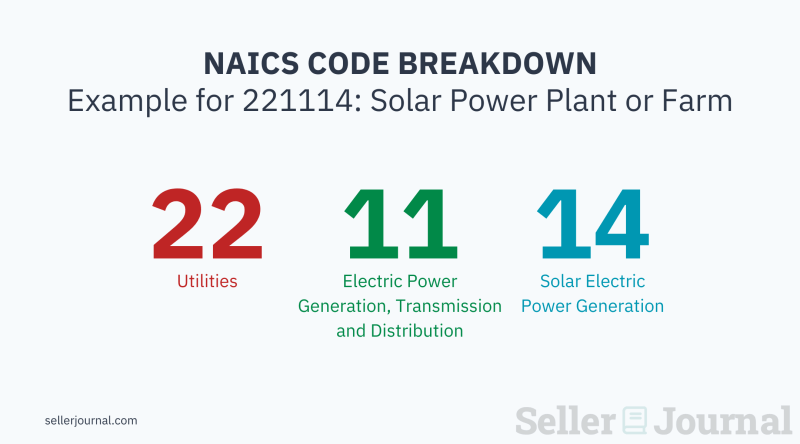
The NAICS code for insurance follows a six-digit structure, where each level adds granularity to industry classification. The first two digits identify the sector, while subsequent digits narrow the focus to subsector, industry group, industry, and national industry. For insurance, the relevant sector is 52 (Finance and Insurance), which encompasses all financial services, including insurance carriers, agencies, and related activities.
The breakdown of the NAICS hierarchy for insurance is as follows:
- 2-digit (Sector): 52 (Finance and Insurance) Covers all financial institutions, including banks, investment firms, and insurance providers.
Each level ensures that insurance businesses are categorized with increasing precision, allowing regulators and analysts to assess market trends, compliance risks, and economic contributions accurately.
Comparison of Key NAICS Codes for Insurance Subsectors
Below is a structured comparison of the most commonly used NAICS codes for insurance subsectors, highlighting their scope and examples of businesses they encompass.| Code | Industry | Scope | Examples |
|---|---|---|---|
| 524113 | Direct Health Insurance Carriers | Includes organizations that underwrite and provide health insurance policies, excluding Medicare and Medicaid. Covers medical, dental, vision, and prescription drug plans. |
|
| 524114 | Direct Health Insurance (Except Medicare and Medicaid) | A subset of 524113, focusing exclusively on private health insurance plans not administered by government programs. Often used for market segmentation in regulatory filings. |
|
| 524210 | Direct Property and Casualty Insurance Carriers | Encompasses insurers offering coverage for property damage, liability, and casualty risks. Includes auto, homeowners, workers' compensation, and commercial property insurance. |
|
| 524291 | Direct Title Insurance Carriers | Specializes in policies that protect against disputes over property ownership, primarily used in real estate transactions. |
|
| 524292 | All Other Direct Insurance (Except Life and Health) | Covers niche insurance categories not classified elsewhere, such as credit insurance, marine insurance, and aviation insurance. |
|
Regulatory and Reporting Implications of NAICS Codes for Insurance
NAICS codes play a critical role in regulatory compliance, financial reporting, and market analysis for insurance companies. The specific code assigned to an insurer determines its classification for:For example:
The NAICS code for an insurance company is not merely a classification but a determinant of its operational, financial, and regulatory framework. Misclassification can lead to non-compliance penalties, misaligned reporting, or exclusion from industry-specific incentives.Insurers must verify their NAICS code annually, as changes in business operations (e.g., expanding into new lines of coverage) may require reclassification. The U.S. Census Bureau and NAICS Association provide official guidelines for code assignment, ensuring consistency across regulatory and statistical applications.
Advantages of Using NAICS Codes in Insurance: Operational and Regulatory Benefits
The North American Industry Classification System (NAICS) codes serve as a standardized framework for categorizing businesses across industries, including insurance. For insurance providers, these codes enhance precision in classification, compliance, and operational workflows. By aligning with NAICS, insurers streamline regulatory reporting, improve risk assessment accuracy, and foster seamless collaboration with stakeholders. The structured classification system reduces ambiguity in industry definitions, ensuring consistency in data aggregation and licensing requirements.NAICS codes provide a unified language for insurance operations, enabling insurers to navigate complex regulatory landscapes efficiently. Their adoption facilitates automated processes, reduces manual errors, and supports data-driven decision-making. Below, the operational and regulatory advantages of NAICS codes in insurance are explored in detail, including their role in licensing, underwriting, and inter-agency collaboration.
Standardization in Regulatory Compliance and Reporting
The primary advantage of NAICS codes in insurance lies in their ability to standardize regulatory compliance and reporting. Insurance regulators, such as state departments of insurance and federal agencies like the National Association of Insurance Commissioners (NAIC), rely on NAICS codes to classify insurers and their products consistently. This standardization ensures that financial disclosures, market conduct reports, and licensing applications adhere to uniform industry definitions, reducing discrepancies in data interpretation.Key benefits include:
NAICS codes act as a bridge between insurers and regulators, ensuring that compliance obligations are met with precision and reducing the administrative burden of manual classification.
Enhancing Underwriting and Risk Assessment Processes
Underwriting relies on accurate industry classification to assess risk exposure, set premiums, and determine policy terms. NAICS codes provide insurers with a granular view of a business’s operations, enabling more precise risk modeling. For instance, a manufacturer with NAICS code 334290 (Small Arms Manufacturing) may face different liability risks than one classified under 334111 (Naval Shipbuilding and Repairing), influencing underwriting decisions accordingly.Operational efficiencies gained through NAICS codes in underwriting include:
NAICS codes transform underwriting from a subjective process into a data-driven discipline, improving accuracy and reducing adverse selection risks.
Operational Efficiencies Through Standardized Industry Classification
The adoption of NAICS codes introduces measurable operational efficiencies for insurance firms, particularly in areas requiring large-scale data processing and interdepartmental coordination. Below are key areas where standardized classification optimizes workflows:Automated Reporting and Data Management
- Streamlined Financial Reporting: Insurance companies use NAICS codes to categorize revenue streams, expenses, and investments in financial statements (e.g., Statutory Accounting Principles (SAP) filings). This alignment with GAAP and regulatory standards reduces discrepancies in audits.
- Integration with Enterprise Resource Planning (ERP) Systems: NAICS codes are embedded in ERP software (e.g., SAP Insurance, Guidewire) to automate policy administration, claims processing, and billing. For example, a multi-line insurer can auto-classify a client’s business activities by NAICS code to trigger relevant policy endorsements.
- Data Analytics for Market Segmentation: Insurers leverage NAICS codes to segment customers for targeted marketing and product development. A 524126 (Direct Property and Casualty Insurance Carriers) insurer can identify high-growth sectors (e.g., 561110 (Automotive Repair and Maintenance)) to design specialized coverage packages.
- Accelerated Licensing Approvals: State insurance departments use NAICS codes to verify an applicant’s line of business eligibility. For instance, a 524210 (Other Insurance Related Activities) entity must demonstrate compliance with NAICS-defined activities before obtaining a surplus lines license.
- Reduced Redundancy in Filings: NAICS codes eliminate the need for insurers to reclassify their business activities across multiple regulatory forms. A single NAICS code (e.g., 524128 (Other Direct Insurance (Except Life, Health, and Medical) Carriers)) serves as a reference point for state and federal filings.
- Government Agency Coordination: NAICS codes facilitate data exchange between insurers and agencies like the U.S. Census Bureau or Bureau of Labor Statistics (BLS) for economic impact studies. For example, the NAIC’s Market Conduct Examination Program uses NAICS to prioritize inspections in high-risk industries.
- Financial Institution Partnerships: Banks and investment firms rely on NAICS codes to assess insurer financial stability when extending credit or underwriting bonds. A 524113 (Direct Life Insurance Carriers) insurer’s NAICS classification directly influences its credit rating from agencies like Moody’s or S&P Global.
- Cross-Industry Risk Mitigation: NAICS codes enable insurers to collaborate with industry associations (e.g., American Property Casualty Insurance Association (APCIA)) to develop standardized risk mitigation frameworks. For instance, insurers in the 236110 (Residential Building Construction) sector can share NAICS-based loss prevention strategies.
The operational efficiencies derived from NAICS codes extend beyond compliance, fostering innovation in underwriting, claims management, and strategic partnerships.
Challenges and Limitations of NAICS Codes for Insurance
The North American Industry Classification System (NAICS) provides a standardized framework for categorizing economic activities, including insurance. However, its application to the insurance sector—particularly for hybrid, insurtech-driven, or non-traditional models—presents notable challenges. These stem from the system’s inherent rigidity, evolving industry dynamics, and the complexity of modern insurance products. Misclassification can lead to regulatory ambiguities, operational inefficiencies, and financial discrepancies, underscoring the need for careful consideration in assigning NAICS codes to insurance entities."NAICS codes were designed for traditional industry structures, but the insurance landscape is rapidly transforming with digital-first models, parametric triggers, and embedded insurance. The system struggles to keep pace, often forcing businesses into outdated or overly broad classifications that fail to reflect their true operational scope." — Industry Expert Panel, 2023 NAICS Review (National Association of Insurance Commissioners)
Common Pitfalls in NAICS Code Assignments for Insurance Businesses
Incorrect NAICS code assignments frequently arise due to ambiguity in hybrid business models, where insurance activities intersect with technology, consulting, or financial services. Below are key areas where misclassification occurs, particularly for emerging or unconventional insurance operations.Hybrid Business Models and Dual-Classification Challenges
Many insurtech firms and captive insurers operate across multiple sectors, blending insurance underwriting with software development, data analytics, or financial advisory services. The NAICS system often lacks granularity to distinguish between:
For example, a parametric insurance provider may generate revenue from both policy issuance (insurance) and data monetization (technology). Assigning a single NAICS code risks misrepresenting the company’s core revenue streams, leading to:
Non-Traditional Insurance Products and Classification Gaps
Emerging insurance products, such as cyber insurance, microinsurance, or pay-as-you-go coverage, often defy conventional NAICS categorizations. These products may not fit neatly into existing codes like:
The result is either:
Scenarios Leading to Regulatory or Financial Discrepancies
Misaligned NAICS codes can create operational and compliance challenges, particularly in the following scenarios:Regulatory Arbitrage and Licensing Conflicts
Insurance regulators rely on NAICS codes to determine jurisdiction, licensing requirements, and solvency standards. Incorrect classification may:
Financial Reporting and Benchmarking Issues
NAICS codes influence industry benchmarks, investment allocations, and risk assessments. Errors in classification can distort:
Case Study: The Parametric Insurance Misclassification
In 2021, a Florida-based parametric flood insurer was initially assigned NAICS 524114 (Direct Property and Casualty Insurance). However, its revenue model relied heavily on API-driven triggers (e.g., NOAA flood alerts) and data partnerships with reinsurers. This led to:
Hypothetical Example: Embedded Insurance in E-Commerce
An e-commerce platform offering embedded auto insurance at checkout was classified under NAICS 454111 (Electronic Shopping and Mail-Order Houses). While this reflected its primary business, the insurance component—handled via a third-party insurtech partner—was excluded from standard insurance reporting. Consequences included:
NAICS Codes vs. Alternative Classification Systems in Insurance
The North American Industry Classification System (NAICS) serves as a standardized framework for categorizing economic activities, including insurance subsectors. However, insurers often rely on multiple classification systems—each tailored to specific operational, regulatory, or analytical needs. While NAICS provides a broad, government-aligned structure, alternative systems like the Standard Industrial Classification (SIC), Global Industry Classification Standard (GICS), or proprietary taxonomies offer granularity or industry-specific precision. Understanding the distinctions between these systems enables insurers to optimize risk assessment, regulatory compliance, and strategic decision-making. This section compares NAICS with key alternatives, evaluates their respective advantages and limitations, and explores hybrid approaches where insurers integrate multiple classifications for enhanced accuracy.Comparison of NAICS with Alternative Industry Classification Systems
Insurance operations intersect with diverse classification frameworks, each designed for distinct purposes—whether for regulatory reporting, investment analysis, or underwriting. Below is a comparative analysis of NAICS against the Standard Industrial Classification (SIC) codes and the Global Industry Classification Standard (GICS), along with industry-specific taxonomies. The table highlights how each system aligns with insurance requirements, including flexibility, adoption rates, and functional applicability.| System | Purpose | Flexibility | Adoption in Insurance |
|---|---|---|---|
| NAICS | Standardized economic classification for statistical reporting, regulatory compliance, and cross-border trade. Aligned with government and census bureau requirements. | Moderate. Updated periodically (every 5 years) to reflect economic shifts, but changes may lag behind industry evolution. |
|
| SIC Codes | Legacy classification system (predecessor to NAICS) focused on manufacturing and service industries. Primarily used for historical data and legacy reporting. | Low. No longer updated; rigid structure may not reflect modern insurance subsectors (e.g., insurtech, specialty lines). |
|
| GICS | Investment-focused taxonomy developed by MSCI and S&P Global. Categorizes industries for equity research, portfolio management, and financial reporting. | High. Updated annually to reflect market trends, but tailored to financial services and public companies. |
|
| Custom/Proprietary Taxonomies | Insurer-developed classifications (e.g., ISO industry codes, Lloyd’s market codes) designed for underwriting, pricing, or claims handling. | High. Fully adaptable to emerging risks (e.g., climate perils, ESG factors) but may lack standardization. |
|
Integration of NAICS with Alternative Classifications for Risk Modeling
Insurers frequently combine NAICS codes with other taxonomies to reconcile regulatory demands with operational needs. For example, a property insurer might use:Use Cases for Hybrid Classification:
1. Reinsurance Cessions:
Reinsurers apply NAICS to aggregate ceded exposures but overlay Lloyd’s market codes (e.g., "Marine Hull," "Aviation") to price retrocession treaties. This ensures alignment with cedent-specific classifications while meeting regulatory disclosures.
2. Niche and Emerging Markets:
3. ESG and Social Risk:
Insurers mapping exposure to environmental risks (e.g., NAICS 111 ["Agriculture"]) may cross-reference with TCFD (Task Force on Climate-related Financial Disclosures) sector classifications or Sustainalytics’ industry ESG scores to adjust underwriting guidelines.
Implementation Challenges:
Best Practices for Integration:
Scenarios Where Alternative Systems Supplement or Replace NAICS
While NAICS remains the backbone of insurance classification, certain contexts demand specialized frameworks to address precision gaps or unique market dynamics.1. Reinsurance and Catastrophe Risk:
2. Specialty and Professional Liability:
Practical Applications of NAICS Codes in Insurance Operations
The North American Industry Classification System (NAICS) codes serve as a critical framework for insurance companies to standardize business activities, regulatory compliance, and operational efficiency. In practice, these codes influence underwriting decisions, risk assessment, and financial reporting while integrating seamlessly with insurance software systems. This section outlines step-by-step procedures for verifying and updating NAICS codes, their automation within policy and claims workflows, and their direct impact on underwriting, premium calculations, and reinsurance agreements.
Verification and Update Procedures for NAICS Codes in Regulatory Filings
Insurance companies must ensure their NAICS codes accurately reflect their current business operations, particularly during regulatory filings or corporate restructuring. The process involves cross-referencing internal records with official NAICS manuals and validating changes with regulatory authorities. Below is a structured approach:
Step 1: Internal Audit of Business Activities
Conduct a comprehensive review of all business lines, including:
Step 2: Mapping Current Operations to NAICS Codes
Use the latest NAICS manual (e.g., NAICS 2022) to reclassify activities. For example:
Step 3: Regulatory Submission and Validation
Submit updated NAICS codes to:
Example Workflow for Business Restructuring
During a merger between a property insurer (NAICS 524126) and a liability specialist (NAICS 524113), the combined entity must:
1. Reclassify overlapping lines (e.g., commercial general liability may span both codes).
2. Update reinsurance agreements to reflect new NAICS classifications for risk transfer.
3. Notify regulators within 30–90 days of restructuring (varies by jurisdiction).
Integration of NAICS Codes with Insurance Software Systems
Modern insurance software platforms (e.g., Guidewire, Duck Creek, EIS, or PolicyAdmin) leverage NAICS codes to automate workflows, reduce manual errors, and enforce compliance. Key integrations include:Policy Administration Systems (PAS)
Premium = Base Rate × NAICS Risk Multiplier × Coverage Limits
- Systems like Guidewire’s PolicyCenter pull NAICS data from APIs (e.g., U.S. Census Bureau, NAIC) to dynamically adjust underwriting parameters.
Claims Processing
Reporting and Compliance Modules
API and Third-Party Data Feeds
Checklist for Aligning NAICS Codes with Business Activities
To maintain accuracy, insurers should implement the following measures:Critical Actions for NAICS Code Alignment1. Annual Business Line Review
2. Software System Configuration
3. Regulatory and Third-Party Validations
4. Training and Documentation
5. Reinsurance and Risk Transfer Agreements
Influence of NAICS Codes on Underwriting, Premiums, and Reinsurance
NAICS codes directly shape risk assessment, pricing models, and reinsurance strategies by providing granular industry insights. Below are practical applications:Underwriting Guidelines
Premium Calculation
Reinsurance Agreements
Future Trends and Evolving Role of NAICS Codes in Insurance
The North American Industry Classification System (NAICS) has long served as a foundational framework for categorizing economic activity, including insurance operations. However, as the insurance sector undergoes rapid transformation—driven by digital innovation, climate-related risks, and evolving regulatory demands—the traditional NAICS structure faces both opportunities and challenges. Emerging trends such as insurtech integration, parametric insurance models, and sustainability-linked underwriting require NAICS codes to adapt to reflect new business models, risk exposures, and compliance requirements. Industry stakeholders, including trade associations, regulators, and insurers, are increasingly advocating for reforms to ensure NAICS classifications remain relevant in an era of dynamic risk landscapes and cross-sectoral convergence.The evolution of NAICS codes in insurance is not merely an administrative update but a strategic necessity to align classification systems with future-proofing initiatives. This includes addressing gaps in current codes, incorporating AI-driven risk assessment frameworks, and standardizing classifications for emerging risk categories such as cyber threats and extreme weather events. Below, key trends, proposed reforms, and their potential impact on NAICS are examined through structured analysis and industry insights.
Digital Transformation and the Rise of Insurtech
The insurance industry’s digital shift—characterized by AI-driven underwriting, blockchain-based policy management, and real-time data analytics—demands NAICS classifications that can distinguish between traditional and technology-enabled insurance services. Current NAICS codes (e.g., 524114: Direct Health and Medical Insurance Carriers) often conflate legacy and digital operations, obscuring the unique revenue streams and risk profiles of insurtech firms.Key considerations for NAICS adjustments include:
Example: The Insurance Information Institute (III) has highlighted that 68% of insurers now use AI for claims processing, yet NAICS does not differentiate between AI-augmented and manual underwriting. A proposed adjustment could introduce a new subcategory under 524114 for "Digital Health Insurance Carriers" to capture this divergence.
Climate Risk Modeling and Sustainability-Linked Insurance
Climate change is redefining insurance risk profiles, introducing parametric triggers, catastrophe bonds, and resilience-based pricing models that transcend conventional NAICS classifications. Current codes (e.g., 524126: Direct Property and Casualty Insurance Carriers) do not adequately reflect climate-adaptive insurance products, such as:Proposed NAICS reforms in this domain include:
Industry Insight: The Swiss Re Institute projects that climate-related losses could reach $250 billion annually by 2030, necessitating NAICS updates to distinguish between traditional and climate-resilient insurance portfolios. Regulators such as the NAIC (National Association of Insurance Commissioners) have begun piloting climate risk disclosure frameworks, which may influence future NAICS revisions.
Regulatory and Industry-Led Initiatives for NAICS Modernization
The modernization of NAICS codes for insurance is being driven by collaborative efforts between governments, trade associations, and insurers. Key initiatives include:- NAICS 2022 Revision Process (U.S. Census Bureau & Statistics Canada):
The 2022 NAICS update introduced minor adjustments for financial services, but critics argue it underrepresented insurtech and climate risk categories. The next revision cycle (expected 2027) may address these gaps, particularly through public comments from the Insurance Services Office (ISO) and the American Council of Life Insurers (ACLI).
- Global Alignment with GICS (Global Industry Classification Standard):
While NAICS is North America-specific, MSCI’s GICS includes insurance subsectors like "Reinsurance" and "Property & Casualty", which could serve as a benchmark for future NAICS expansions. The Securities Industry and Financial Markets Association (SIFMA) has advocated for harmonization to avoid fragmentation in cross-border risk reporting.
- NAIC’s Cybersecurity and Climate Task Forces:
The NAIC’s Cybersecurity Task Force is developing standardized classifications for cyber insurance, which may influence NAICS to create a dedicated code (e.g., 524116: Cyber Risk Insurance Carriers). Similarly, the NAIC’s Climate Risk Working Group is pushing for NAICS integration with catastrophe modeling standards (e.g., AIR Worldwide, RMS).
Quote from Industry Report:
"The current NAICS framework was designed for a pre-digital, pre-climate-risk era. Without updates, insurers risk misclassification penalties, inefficiencies in regulatory reporting, and missed opportunities in emerging markets." — Deloitte Insurance Industry Outlook 2023
Projected NAICS Adjustments for Evolving Insurance Models
The following table outlines emerging trends, their impact on NAICS, proposed adjustments, and estimated timelines for integration into future revisions. Data is derived from McKinsey & Company, PwC Insurance Insights, and NAICS revision roadmaps.| Trend | Impact on NAICS | Proposed Adjustments | Timeline |
|---|---|---|---|
| AI and Predictive Analytics in Underwriting | Current codes (e.g., 524114) lump AI-driven and manual underwriting, obscuring operational differences. |
|
2027 NAICS revision (pending industry lobbying) |
| Parametric and Resilience-Based Insurance | No dedicated code for climate-triggered payouts or ESG-linked policies. |
|
2029 (aligned with TCFD reporting deadlines) |
| Embedded Insurance and Insurtech Platforms | Activities like buy-now-pay-later (BNPL) insurance or IoT-based coverage lack classification. |
|
Leave a Comment
Comments are moderated before appearing. The data you submit is processed according to the Privacy Policy of viralcontentbee.com.