The Rise of Interactive CYOA: How Choice-Driven Storytelling Is Redefining Digital Engagement
The first time a reader’s choices dictated the plot wasn’t in a video game or a virtual reality headset—it was in a 1970s paperback, tucked between the pages of a book where the story paused, demanding a decision. That moment marked the birth of interactive CYOA, a format that has since evolved from a niche experiment into a cornerstone of modern digital storytelling. Today, it’s not just about flipping pages or clicking buttons; it’s about algorithms anticipating emotional responses, adaptive narratives that learn from player behavior, and experiences that blur the line between fiction and reality. The medium has grown beyond its textual roots, infiltrating gaming, education, and even corporate training, proving that the most compelling stories are those we help shape.
What makes interactive CYOA uniquely powerful is its ability to turn passive consumption into active participation. Unlike linear narratives that dictate a single path, these systems thrive on ambiguity, rewarding curiosity with infinite possibilities. The technology behind them—once confined to rudimentary text-based choices—has expanded to incorporate voice recognition, AI-driven world-building, and even physical interactions. Yet, despite its advancements, the core principle remains unchanged: the reader is no longer a spectator but the architect of their own journey. This shift has redefined engagement, forcing creators to prioritize player agency over preordained outcomes.
The paradox of interactive CYOA lies in its simplicity and depth. On the surface, it’s a series of decisions—left or right, fight or flee—but beneath that lies a complex web of psychological triggers, narrative logic, and emergent storytelling. Developers must balance structure with chaos, ensuring that every choice feels meaningful while avoiding the pitfalls of artificial randomness. The result? A medium that feels both familiar and revolutionary, one that adapts to the audience rather than the other way around.
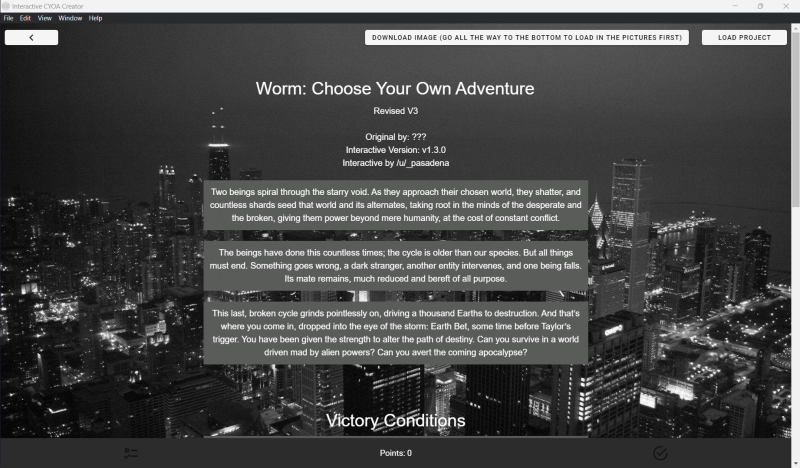
The Complete Overview of Interactive CYOA
The term interactive CYOA (Choose Your Own Adventure) encompasses a broad spectrum of digital and analog experiences where user choices directly influence the progression of a story. At its essence, it’s a narrative framework that prioritizes player agency, allowing individuals to navigate through branching paths, alternate endings, and dynamic environments. What began as a literary experiment has now become a versatile tool across industries—from edutainment platforms to corporate simulations—each leveraging the format’s core strength: its ability to create personalized, immersive experiences.
Unlike traditional storytelling, which confines audiences to a single perspective, interactive CYOA thrives on multiplicity. The format’s adaptability makes it ideal for scenarios requiring customization, such as language learning apps, therapeutic interventions, or even marketing campaigns where user engagement is critical. The key innovation lies in its dynamic feedback loop: the system responds to choices in real time, adjusting the narrative’s tone, pacing, and content based on the user’s decisions. This interactivity isn’t just a gimmick; it’s a fundamental redesign of how stories are consumed.
Historical Background and Evolution
The origins of interactive CYOA trace back to the early 1970s, when American author Edward Packard published Choose Your Own Adventure, a series of paperback books that let readers influence the plot by selecting numbered options. The concept was revolutionary—readers weren’t just following a story; they were co-authors. This analog experiment laid the groundwork for what would later become a digital phenomenon. By the 1980s, as personal computers gained traction, text-based interactive CYOA games emerged, with titles like The Oregon Trail and Zork introducing players to choice-driven narratives in a digital space.
Table of Contents
- The Complete Overview of Interactive CYOA
- Historical Background and Evolution
- Core Mechanics: How It Works
- Key Benefits and Crucial Impact
- Major Advantages
- Comparative Analysis
- Future Trends and Innovations
- Conclusion
- Comprehensive FAQs
- Q: What is the difference between traditional CYOA books and digital interactive CYOA?
- Q: Can interactive CYOA be used for professional training?
- Q: How do developers ensure that choices in interactive CYOA feel meaningful?
- Q: Are there any notable examples of interactive CYOA in mainstream media?
- Q: What technical skills are needed to create interactive CYOA?
- Q: How does interactive CYOA handle accessibility for users with disabilities?
- Q: Can interactive CYOA be used for therapeutic purposes?
The real transformation occurred in the 2000s with the rise of web-based platforms and mobile apps. Companies like Choice of Games (formerly Pixelberry) democratized interactive CYOA, offering thousands of titles across genres—romance, horror, fantasy—each with hundreds of potential endings. Simultaneously, advancements in AI and natural language processing enabled more sophisticated interactions, such as voice-activated choices or stories that adapt based on player personality traits. Today, the format has expanded into virtual reality, where users can physically step into a branching narrative, or augmented reality, where digital choices alter real-world environments. The evolution reflects a broader cultural shift: audiences no longer want to be led by the hand; they want to drive the experience.
Core Mechanics: How It Works
The foundation of any interactive CYOA system is its branching structure, where each decision point splits the narrative into multiple paths. These paths can be pre-written (static branching) or dynamically generated (procedural branching), with the latter using algorithms to create unique scenarios on the fly. For example, a static system might offer three choices at a crossroads, each leading to a distinct outcome, while a procedural system might generate entirely new dialogue or obstacles based on the player’s past decisions. The mechanics also include state tracking—remembering player preferences, inventory, or relationships—to ensure consistency across sessions.
Behind the scenes, interactive CYOA relies on a combination of narrative design and technical infrastructure. Developers use tools like Twine (for text-based stories), Unity (for 3D environments), or custom engines to build the framework. Key components include:
- Choice Points: The decision nodes where players select options.
- Path Tracking: Systems that log choices to influence future outcomes.
- Adaptive Content: Dynamic text, images, or even AI-generated responses.
- User Profiles: Data that personalizes the experience (e.g., difficulty level, preferred genres).
- Feedback Loops: Immediate reactions to choices (e.g., consequences, rewards, or narrative twists).
The magic happens when these elements combine seamlessly, making the player feel like their choices matter—not just mechanically, but emotionally. A poorly designed interactive CYOA can feel like a series of disconnected vignettes, while a well-crafted one becomes a living, breathing world that responds to the user’s agency.
Key Benefits and Crucial Impact
The appeal of interactive CYOA extends far beyond entertainment. In education, it’s used to teach critical thinking by presenting students with ethical dilemmas or historical scenarios where they must weigh consequences. In marketing, brands leverage it to create immersive campaigns that feel personal, increasing engagement and conversion rates. Even in therapy, interactive CYOA has been employed to help patients navigate emotional challenges in a safe, controlled environment. The format’s versatility stems from its core benefit: it turns passive observers into active participants, fostering deeper engagement and retention.
For creators, the impact is equally transformative. Traditional storytelling requires a single, cohesive vision, but interactive CYOA demands collaboration between writers, designers, and technologists to build a system that feels organic yet structured. This interdisciplinary approach has led to innovations in narrative design, such as "emergent storytelling," where unexpected player choices create unplanned but compelling outcomes. The result is a medium that rewards creativity and adaptability, making it a favorite among indie developers and AAA studios alike.
"The most powerful stories aren’t the ones we read—they’re the ones we help create. Interactive CYOA doesn’t just tell a story; it invites us to live it."
Major Advantages
The advantages of interactive CYOA are both practical and psychological. Here’s why it stands out:
- Personalization: Players experience content tailored to their preferences, increasing satisfaction and time spent.
- Replayability: Unlike linear stories, interactive CYOA offers multiple endings and hidden paths, encouraging repeat engagement.
- Educational Value: Ideal for teaching complex concepts by allowing users to explore consequences in a risk-free environment.
- Accessibility: Can be adapted for different literacy levels, languages, or disabilities (e.g., text-to-speech, simplified choices).
- Data Insights: Tracks player behavior, providing valuable analytics for marketers, educators, and game developers.

Comparative Analysis
While interactive CYOA shares similarities with other narrative formats, its core mechanics set it apart. Below is a comparison with related mediums:
| Feature | Interactive CYOA | Video Games (Branching) | Choose-Your-Own-Adventure Books | AI Chatbots |
|---|---|---|---|---|
| Primary Medium | Digital (web, mobile, VR/AR) | Games (console, PC, mobile) | Print (physical books) | Text-based (apps, websites) |
| Player Agency | High (choices drive narrative) | Moderate (choices affect gameplay) | Low (limited to book’s structure) | Variable (depends on AI depth) |
| Technical Complexity | High (requires branching logic, AI) | High (game engines, physics) | Low (static text) | Moderate (NLP, machine learning) |
| Best Use Case | Storytelling, education, marketing | Entertainment, simulation | Nostalgia, lightweight engagement | Customer service, conversational AI |
Future Trends and Innovations
The next frontier for interactive CYOA lies in blending physical and digital experiences. Imagine a story where your choices in a mobile app alter the layout of a museum exhibit, or a VR narrative where your real-world movements influence the plot. Advances in haptics, biometric feedback (like heart rate sensors), and neural interfaces could make these experiences even more immersive, syncing emotional responses with the story’s progression. Additionally, AI is poised to revolutionize interactive CYOA by enabling dynamic world-building—stories that evolve not just based on player choices, but on their personality, mood, or even subconscious preferences.
Another emerging trend is the fusion of interactive CYOA with blockchain technology, creating "play-to-own" narratives where players own their story paths as NFTs. This could open new monetization models and community-driven storytelling, where users collaborate to expand the narrative. As the line between creator and consumer blurs, interactive CYOA may become the default mode of storytelling, not just an alternative. The challenge for developers will be balancing innovation with accessibility, ensuring that the magic of choice remains intact as the technology evolves.

Conclusion
Interactive CYOA is more than a storytelling tool—it’s a paradigm shift in how we experience narratives. By placing the user at the center of the story, it transforms passive consumption into active creation, fostering deeper connections with content. The format’s adaptability ensures its relevance across industries, from entertainment to education, while its technical evolution promises even more immersive possibilities. Yet, its greatest strength remains its simplicity: at its core, it’s about choice, consequence, and the joy of discovery. As technology advances, the principles of interactive CYOA will only grow more sophisticated, but the essence—the thrill of shaping your own story—will endure.
For creators, the message is clear: the future of storytelling isn’t about controlling the narrative, but about designing the tools that let others tell theirs. For audiences, it’s an invitation to stop watching and start participating. In a world saturated with content, interactive CYOA offers something rare: a story that belongs to you.
Comprehensive FAQs
Q: What is the difference between traditional CYOA books and digital interactive CYOA?
A: Traditional CYOA books rely on static text and physical page-turning, offering limited branching paths (often 2-3 choices per page). Digital interactive CYOA leverages algorithms, AI, and dynamic content to create hundreds or thousands of possible outcomes, with real-time feedback, adaptive difficulty, and multimedia elements like images, sound, and even VR environments.
Q: Can interactive CYOA be used for professional training?
A: Absolutely. Many corporate training programs use interactive CYOA to simulate real-world scenarios—such as leadership dilemmas, crisis management, or sales negotiations—where employees make choices and see immediate consequences. This method improves retention and decision-making skills far more effectively than passive lectures.
Q: How do developers ensure that choices in interactive CYOA feel meaningful?
A: Meaningful choices require careful narrative design, including:
- Logical consequences (e.g., a choice to help a character should have long-term effects).
- Player feedback (e.g., showing how prior decisions altered the world).
- Avoiding "illusion of choice" (where options seem distinct but lead to the same outcome).
- Dynamic difficulty adjustment (e.g., harder choices for experienced players).
Tools like Twine or Ink allow developers to prototype and test branching paths before finalizing the structure.
Q: Are there any notable examples of interactive CYOA in mainstream media?
A: Yes. While not always labeled as interactive CYOA, many modern works incorporate its principles:
- Life is Strange (video game series) – Heavy branching narratives with moral consequences.
- Bandersnatch (Netflix) – A fully interactive film where choices alter the plot.
- Choice of Games’ titles (e.g., Pentiment, Don’t Take Your Love to Town) – Text-based adventures with hundreds of endings.
- The Stanley Parable – A meta-example where player choices challenge the concept of free will.
Q: What technical skills are needed to create interactive CYOA?
A: The skills vary by platform:
- Text-Based: Familiarity with tools like Twine, Ink, or Ren’Py (for visual novels).
- 3D/VR: Unity, Unreal Engine, or C#/Python scripting.
- AI-Driven: Knowledge of natural language processing (NLP) and machine learning frameworks like TensorFlow.
- Mobile/Web: JavaScript (React, Vue), HTML5, or game engines like Godot.
Collaboration between writers, designers, and programmers is essential for polished results.
Q: How does interactive CYOA handle accessibility for users with disabilities?
A: Modern interactive CYOA platforms incorporate accessibility features such as:
- Text-to-speech and speech-to-text for visually impaired or non-readers.
- Adjustable font sizes, high-contrast modes, and colorblind-friendly palettes.
- Simplified choice menus for cognitive disabilities.
- Controller/keyboard navigation for users who can’t use touchscreens.
- Subtitles and audio descriptions for multimedia elements.
Developers often conduct usability testing with diverse audiences to refine these features.
Q: Can interactive CYOA be used for therapeutic purposes?
A: Yes. Interactive CYOA has been used in mental health applications to:
- Help patients explore anxiety or depression through controlled scenarios.
- Teach coping strategies via interactive role-playing.
- Simulate social situations for individuals with autism or social phobias.
- Provide exposure therapy in a safe, virtual environment.
Researchers at institutions like Stanford and MIT have studied its efficacy in cognitive behavioral therapy (CBT).
Leave a Comment
Comments are moderated before appearing. The data you submit is processed according to the Privacy Policy of Viralcontentbee.