How Pretty Good Privacy Encryption Secures Your Data in 2024
The first time Pretty Good Privacy (PGP) encryption emerged in 1991, it wasn’t just another cryptographic tool—it was a cultural rebellion. Phil Zimmermann, its creator, released the software freely, defying U.S. export restrictions on encryption. Governments and intelligence agencies panicked; activists and journalists celebrated. Today, PGP remains a cornerstone of secure communication, its principles embedded in modern protocols like Signal and OpenPGP. Yet despite its longevity, misunderstandings persist: Is it truly "pretty good," or has it been eclipsed by newer alternatives? The answer lies in its unmatched balance of accessibility and robustness—a fusion of military-grade algorithms and user-friendly design that still holds up in an era of quantum threats and AI-driven attacks.
What makes PGP encryption distinct isn’t just its cryptographic backbone (RSA for key exchange, CAST5 or AES for symmetric encryption) but its philosophy. Unlike centralized systems where trust hinges on a single entity, PGP empowers individuals to control their own security. Your private key never leaves your device; your messages are encrypted before they even hit the server. This decentralized trust model isn’t just theoretical—it’s battle-tested. From Edward Snowden’s leaks to journalists protecting sources, PGP has been the silent guardian of privacy when other methods fail. But its strength also creates friction: managing keys, verifying identities, and avoiding common pitfalls like key leakage can turn even seasoned users into hesitant beginners.
The irony of PGP’s enduring relevance is that it was designed for an analog world—one where email was the primary threat vector. Yet its core mechanisms adapt seamlessly to modern challenges. While end-to-end encryption (E2EE) dominates headlines today, PGP’s hybrid approach (asymmetric for keys, symmetric for bulk data) remains a gold standard. The question isn’t whether PGP encryption is obsolete; it’s how its principles can be refined to meet tomorrow’s threats—without sacrificing the simplicity that made it revolutionary in the first place.

The Complete Overview of Pretty Good Privacy Encryption
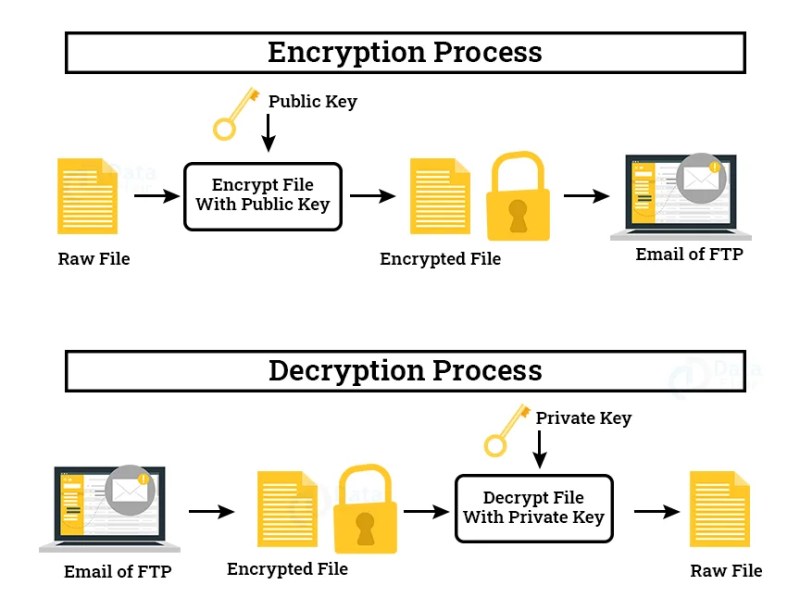
Pretty Good Privacy encryption operates on a deceptively simple premise: secure communication should be accessible to everyone, not just governments or corporations. At its heart, PGP combines three cryptographic techniques—public-key cryptography, symmetric-key cryptography, and hash functions—into a workflow that feels intuitive yet defies reverse-engineering. When you encrypt a message with PGP, your data is first compressed (to save bandwidth) and then hashed (to ensure integrity). A one-time symmetric session key is generated, encrypted with the recipient’s public key, and appended to the message. The recipient uses their private key to decrypt the session key, then applies it to the ciphertext—all while the original message remains unreadable to eavesdroppers. This layered approach isn’t just theoretical; it’s been stress-tested by the NSA’s own cryptanalysts, who once labeled it "the best you can get."The genius of PGP lies in its web-of-trust model, a decentralized alternative to certificate authorities (CAs). Instead of relying on a single entity to vouch for identities, PGP users sign each other’s keys, creating a network of trust that grows organically. This system thrives in communities where centralization is distrusted—whether among journalists, activists, or whistleblowers. However, its strength is also its Achilles’ heel: without proper key management, the entire framework collapses. A lost private key or a compromised passphrase can render years of encrypted communication vulnerable. Modern implementations, like OpenPGP, have mitigated some risks with features like key revocation certificates and subkeys, but the burden of security still falls squarely on the user—a trade-off that reflects PGP’s original ethos: privacy as a personal responsibility.
Historical Background and Evolution
PGP’s origins trace back to the late 1970s, when Whitfield Diffie and Martin Hellman published their seminal paper on public-key cryptography. Their work inspired RSA, the algorithm that would later underpin PGP’s key exchange. Yet it wasn’t until 1991 that Zimmermann’s free, cross-platform implementation democratized encryption. His decision to distribute PGP via anonymous remailers and floppy disks turned it into a symbol of digital liberation. The U.S. government responded with lawsuits, arguing that PGP violated export controls—only to lose when courts ruled that publishing source code didn’t constitute "export." This legal battle cemented PGP’s status as a tool for the people, not the powerful.Over the decades, PGP evolved from a niche utility to a de facto standard for secure email. The OpenPGP specification (RFC 4880) standardized Zimmermann’s original design, ensuring interoperability across platforms. Meanwhile, commercial versions like PGP Corporation’s products added features like smart card support and enterprise integration, bridging the gap between idealism and practicality. Yet as newer protocols like Signal’s Double Ratchet gained traction, PGP faced criticism for its complexity. The debate raged: Was PGP’s rigidity a flaw, or was it a necessary safeguard against the very real risks of over-simplification? The answer lies in its adaptability—modern tools like GnuPG (GPG) and Kleopatra have streamlined key management, while research into post-quantum PGP ensures its relevance in an era where quantum computers threaten classical encryption.
Core Mechanisms: How It Works
At the protocol level, PGP encryption follows a hybrid cryptosystem that leverages the strengths of both asymmetric and symmetric encryption. When you encrypt a message:1. Compression reduces file size to optimize performance.
2. Hashing (using SHA-256 or SHA-512) creates a fingerprint to detect tampering.
3. A symmetric session key (e.g., AES-256) is generated to encrypt the bulk of the data.
4. This session key is then encrypted with the recipient’s public key (using RSA or ElGamal).
5. The encrypted session key and ciphertext are combined into a single package, which the recipient decrypts using their private key.
Table of Contents
- The Complete Overview of Pretty Good Privacy Encryption
- Historical Background and Evolution
- Core Mechanisms: How It Works
- Key Benefits and Crucial Impact
- Major Advantages
- Comparative Analysis
- Future Trends and Innovations
- Conclusion
- Comprehensive FAQs
- Q: Is Pretty Good Privacy encryption still secure in 2024?
- Q: How does PGP encryption compare to Signal’s end-to-end encryption?
- Q: Can I use Pretty Good Privacy encryption for messaging apps like WhatsApp?
- Q: What are the most common mistakes users make with PGP encryption?
- Q: How can organizations deploy PGP encryption at scale?
- Q: Are there any legal risks to using Pretty Good Privacy encryption?
This dual-layered approach ensures efficiency (symmetric encryption is faster) and security (asymmetric encryption secures the session key). The web-of-trust adds another layer: users sign each other’s keys, creating a decentralized identity system. While modern PGP tools like GPG automate much of this process, understanding the underlying mechanics is crucial—especially when configuring subkeys (for offline storage) or key revocation (to mitigate breaches).
The protocol’s resilience stems from its modular design. Need stronger hashing? Swap SHA-256 for SHA-3. Concerned about RSA’s longevity? Transition to Elliptic Curve Cryptography (ECC). PGP’s flexibility has allowed it to weather cryptographic advances, though its text-based format (ASCII-armored messages) can be cumbersome compared to binary protocols like Signal’s. Yet this very format ensures compatibility across devices and operating systems—a testament to Zimmermann’s original vision: security without exclusion.
Key Benefits and Crucial Impact
Pretty Good Privacy encryption isn’t just another tool in the cryptographer’s toolkit; it’s a philosophical framework that redefines trust in digital communication. Its most compelling advantage is decentralization—unlike systems reliant on a single server or authority, PGP puts control in the hands of the user. This matters in contexts where surveillance is rampant or censorship is a tool of oppression. Journalists, for instance, use PGP to protect sources; human rights activists rely on it to secure communications in hostile regimes. Even in corporate settings, PGP’s end-to-end encryption ensures that sensitive emails remain confidential, even if servers are compromised.The protocol’s versatility is equally critical. PGP isn’t limited to email—it secures files, disk partitions, and even entire operating systems (via TrueCrypt’s legacy support). Its open-source implementations (like GnuPG) foster transparency, allowing security researchers to audit the code for vulnerabilities. And unlike proprietary solutions, PGP’s standards are public, meaning no backdoors can hide in closed-source software. These attributes have earned it a place in military, diplomatic, and legal circles, where trust is non-negotiable.
> "PGP was the first time encryption was made accessible to the masses—not as a luxury, but as a necessity." — Bruce Schneier, Security Technologist
Major Advantages
- Decentralized Trust Model: Eliminates reliance on certificate authorities, reducing single points of failure. Users verify identities through a web-of-trust, making it ideal for communities where centralization is distrusted.
- End-to-End Encryption: Data is encrypted on the sender’s device and only decrypted by the intended recipient, ensuring confidentiality even if intermediaries (like email providers) are compromised.
- Multi-Algorithm Support: PGP allows users to choose from multiple hash functions (SHA-2, SHA-3), symmetric ciphers (AES, Camellia), and asymmetric algorithms (RSA, ECC), enabling customization based on threat models.
- Forward Secrecy (via Subkeys): By generating ephemeral subkeys, PGP can limit the damage of a compromised private key, ensuring past communications remain secure even if future keys are exposed.
- Interoperability and Longevity: The OpenPGP standard (RFC 4880) ensures compatibility across platforms, and its text-based format (ASCII-armored) allows it to work on nearly any device, from smartphones to mainframes.
Comparative Analysis
While PGP encryption remains a gold standard, newer protocols have emerged to address its perceived complexities. Below is a side-by-side comparison of PGP with Signal Protocol and S/MIME, two of its most direct competitors:| Feature | Pretty Good Privacy (PGP/OpenPGP) | Signal Protocol |
|---|---|---|
| Trust Model | Decentralized web-of-trust; users manually verify keys. | Centralized key servers (though keys are ephemeral). |
| Key Management | Complex; requires manual key exchange and revocation. | Automated; keys are generated and discarded per session. |
| Forward Secrecy | Possible via subkeys, but requires user configuration. | Built-in via Double Ratchet algorithm. |
| Use Cases | Email, file encryption, disk encryption, offline use. | Real-time messaging (Signal, WhatsApp); not designed for email. |
Future Trends and Innovations
The biggest threat to PGP encryption today isn’t poor implementation—it’s quantum computing. Shor’s algorithm could break RSA and ECC in days, rendering classical PGP obsolete. In response, researchers are integrating post-quantum cryptography (PQC) into OpenPGP, with algorithms like NTRU and Kyber already in testing. The Open Quantum Safe project aims to standardize these upgrades, ensuring PGP’s survival in a quantum era. Yet transitioning to PQC won’t be seamless; larger key sizes and slower performance may deter casual users, forcing a balance between security and usability.Another evolution is automated key management. Tools like Keybase and Session have simplified PGP’s workflow by handling key exchange behind the scenes, but they introduce new trade-offs—centralization for convenience. The future may lie in hybrid systems, combining PGP’s decentralized trust with Signal’s automation. Meanwhile, AI-driven cryptanalysis poses both a risk and an opportunity: while machine learning could discover new vulnerabilities, it may also help detect them. The challenge for PGP’s next chapter is to preserve its core principles while adapting to an increasingly complex threat landscape.

Conclusion
Pretty Good Privacy encryption wasn’t just a technological breakthrough—it was a cultural statement. By making strong cryptography accessible, Zimmermann didn’t just secure data; he redefined what privacy could look like in the digital age. Today, PGP’s influence is everywhere, from the Signal Protocol’s adoption of its principles to the global push for E2EE. Yet its legacy is a reminder that true security requires trade-offs: decentralization over convenience, complexity over simplicity.The protocol’s future hinges on its ability to evolve without losing sight of its roots. As quantum threats loom and AI reshapes cryptography, PGP’s adaptability will determine whether it remains the gold standard for secure communication or fades into obscurity. One thing is certain: the principles it championed—user control, transparency, and resilience—will continue to shape the next generation of encryption. Whether through post-quantum upgrades or smarter key management, PGP’s story isn’t over. It’s merely entering its most critical chapter yet.
Comprehensive FAQs
Q: Is Pretty Good Privacy encryption still secure in 2024?
A: Yes, but with caveats. Classical PGP (using RSA/ECC) is secure against current computational threats, but quantum computing poses a long-term risk. The OpenPGP community is actively integrating post-quantum algorithms (like NTRU or Kyber) to future-proof the protocol. For now, using AES-256 for symmetric encryption, SHA-256/512 for hashing, and 4096-bit RSA or ECC keys provides robust protection. However, users must also follow best practices like key revocation and subkey management to mitigate risks.
Q: How does PGP encryption compare to Signal’s end-to-end encryption?
A: While both use end-to-end encryption, they differ in trust model and use case. PGP relies on a decentralized web-of-trust, requiring users to manually verify keys—a process that’s secure but cumbersome. Signal, by contrast, automates key exchange via centralized key servers (though keys are ephemeral for forward secrecy). PGP is better for email, file storage, and offline scenarios, while Signal excels in real-time messaging. Some modern tools (like Session) blend the two, offering PGP’s security with Signal-like ease.
Q: Can I use Pretty Good Privacy encryption for messaging apps like WhatsApp?
A: Not natively, but workarounds exist. WhatsApp uses its own Signal Protocol-based E2EE, which isn’t compatible with PGP. However, you can:
- Encrypt messages before sending via PGP (e.g., using GnuPG on your device) and share the ciphertext.
- Use Session or Element (Matrix), which support Olm/Megolm (a PGP-inspired protocol) alongside Signal.
- Combine PGP with metadata protection tools (like Threema) to minimize surveillance risks.
Q: What are the most common mistakes users make with PGP encryption?
A: The top pitfalls include:
- Weak Passphrases: Using short or dictionary-based passphrases makes brute-force attacks feasible. Aim for 20+ characters with randomness (e.g., diceware phrases).
- Key Leakage: Storing private keys on cloud services or unencrypted devices. Use hardware tokens (YubiKey) or encrypted storage.
- Unverified Keys: Accepting keys without checking fingerprints. Always compare fingerprints in person or via secure channels.
- No Key Revocation: Failing to revoke keys after compromise. Generate revocation certificates upfront and store them securely.
- Outdated Software: Using old PGP versions with known vulnerabilities. Upgrade to GnuPG 2.x+ and enable modern ciphers (e.g., AES-256, SHA-512).
Q: How can organizations deploy PGP encryption at scale?
A: Large-scale PGP adoption requires balancing security and usability. Strategies include:
- Directory Services: Use LDAP or Active Directory to distribute public keys, reducing manual key exchange.
- Automated Key Management: Tools like PGP Universal Server or Venafi automate key issuance and revocation.
- Hybrid Encryption: Combine PGP with S/MIME for enterprise email, using PGP for high-security cases and S/MIME for compliance.
- Training and Policies: Enforce strong passphrase policies, key rotation schedules, and incident response plans for breaches.
- Integration with MFA: Pair PGP with multi-factor authentication (e.g., YubiKey + passphrase) to prevent unauthorized decryption.
Q: Are there any legal risks to using Pretty Good Privacy encryption?
A: The legality of PGP varies by jurisdiction. Key considerations:
- Export Controls: Historically, strong encryption was restricted in the U.S. (e.g., 1990s export bans), but OpenPGP is now unrestricted under EAR regulations.
- Data Retention Laws: Some countries (e.g., EU’s GDPR, Russia’s "Yarovaya Law) require backdoors or decryption assistance, which conflicts with PGP’s design. Avoid using PGP in jurisdictions with mandatory decryption laws unless you’re prepared for legal challenges.
- Whistleblower Protections: In the U.S., 18 U.S. Code § 2702 prohibits ISPs from disclosing encrypted content, but PGP’s offline nature can still implicate users in legal cases (e.g., source protection for journalists).
- Criminal Investigations: Law enforcement may argue that failed decryption attempts (due to lost passphrases) constitute obstruction. Document key management practices to avoid misinterpretation.
Leave a Comment
Comments are moderated before appearing. The data you submit is processed according to the Privacy Policy of Viralcontentbee.