Business Training Program Design And Implementation Guide

Table of Contents
- Core Components of a Business Training Program
- Structured Breakdown of Essential Training Modules
- Integration of Industry-Specific Case Studies
- Flowchart: Logical Progression of a Business Training Program
- Methods for Delivering Business Training Programs
- Comparative Analysis of Training Delivery Methods
- Leveraging Microlearning for Enhanced Engagement
- Measuring Effectiveness of Business Training Programs
- Framework for Tracking Key Performance Indicators (KPIs)
- Pre- and Post-Training Assessments for Skill Gap Analysis
- Collecting and Analyzing Qualitative Feedback
- Innovative Tools and Technologies in Business Training
- Emerging Technologies Transforming Business Training
- Integration of AI Tools in Business Training Programs
- Customizing Business Training for Diverse Learner Needs
- Adapting Training Content to Learning Styles
- Addressing Language Barriers in Global Business Training
In today’s rapidly evolving business landscape, the development of a high-impact business training program is no longer optional but a strategic imperative. Organizations must equip employees with the skills, knowledge, and adaptability required to thrive amid digital transformation, global competition, and shifting industry demands. This guide explores the foundational elements, delivery methodologies, and innovative technologies that define effective business training programs, ensuring alignment with both organizational goals and individual growth trajectories.
The success of any training initiative hinges on a structured approach that balances theoretical rigor with practical application. From identifying core modules tailored to leadership, technical, and soft skills to integrating industry-specific case studies, the design phase sets the stage for measurable outcomes. Equally critical is the selection of delivery methods—whether traditional in-person workshops, scalable virtual platforms, or hybrid models—that optimize engagement while adhering to budgetary constraints. Advanced tools such as AI-driven personalization, immersive VR simulations, and gamification further elevate training efficacy, addressing diverse learner needs and fostering continuous improvement.
Core Components of a Business Training Program
Business training programs are designed to equip professionals with the skills, knowledge, and competencies required to drive organizational success. A well-structured program integrates foundational and advanced modules, ensuring alignment with industry demands, role-specific requirements, and measurable performance outcomes. The following framework outlines essential components, their integration with industry-specific case studies, and a logical progression model for skill development.Structured Breakdown of Essential Training Modules
A comprehensive business training program typically includes modules addressing leadership, technical expertise, soft skills, and domain-specific competencies. The table below categorizes these modules by their focus areas, key topics, recommended duration, and target audience. Duration is expressed in hours (h) or weeks (w) for in-person or blended learning formats.| Module Name | Key Topics Covered | Training Duration | Target Audience |
|---|---|---|---|
| Foundations of Business Acumen |
|
20–30h (2–3 weeks) | Entry-level employees, new managers, and professionals transitioning industries |
| Leadership and Management |
|
30–40h (3–4 weeks) | Mid-level managers, team leads, and aspiring executives |
| Technical and Industry-Specific Skills |
|
Varies (40–120h, scalable by complexity) | Specialists, engineers, IT professionals, and technical roles |
| Soft Skills and Emotional Intelligence |
|
20–30h (2–3 weeks) | All professionals, with emphasis on customer-facing and collaborative roles |
| Innovation and Strategic Thinking |
|
25–35h (3–4 weeks) | Strategic planners, R&D teams, and innovation leaders |
| Advanced Executive Development |
|
50–80h (6–8 weeks) | C-level executives, board members, and high-potential leaders |
Integration of Industry-Specific Case Studies
Case studies serve as bridges between theoretical knowledge and real-world application, reinforcing learning through contextualized challenges. Their integration into modules should follow a structured selection and implementation process to maximize relevance and impact.Criteria for Selecting Case Studies:
Case studies must meet the following criteria to ensure alignment with training objectives:
Step-by-Step Procedure for Integration:
1. Module Alignment:
Map case studies to specific learning objectives. For example, a leadership module might use a case on "Transformational Leadership at Patagonia" to illustrate values-driven management.
2. Case Study Framework:
Structure each case around the Problem-Solution-Impact (PSI) model:
3. Facilitation Methodology:
4. Technology-Enabled Learning:
Use platforms like Harvard Business Review Cases, McKinsey’s case study library, or Kaggle datasets for interactive analysis. For technical modules, incorporate simulation tools (e.g., Tableau for data visualization cases).
5. Assessment and Feedback:
Example Case Study Integration:
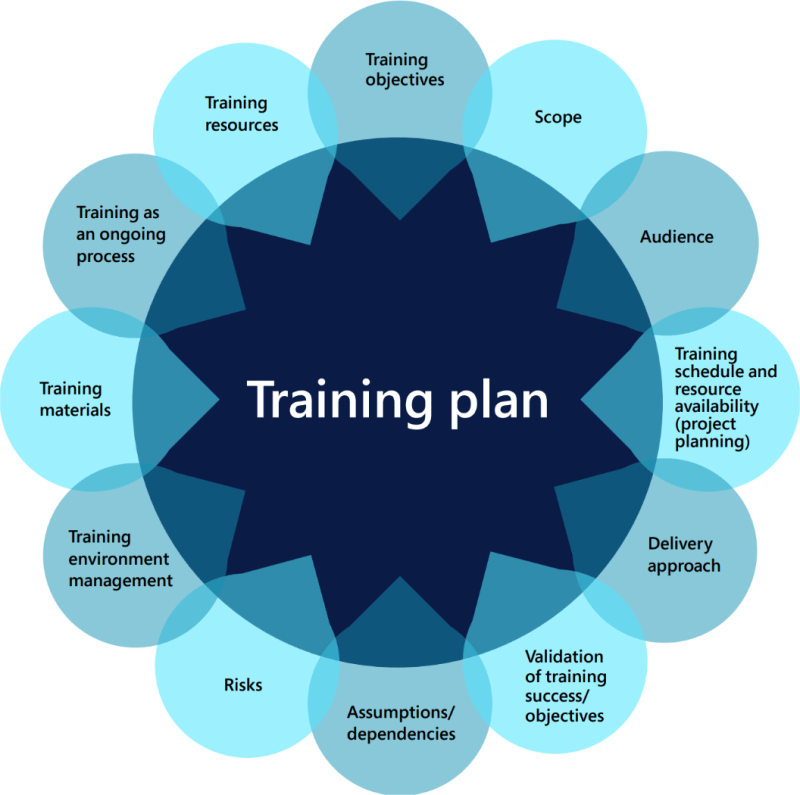
Flowchart: Logical Progression of a Business Training Program
The progression from foundational to advanced training follows a spiral learning model, where foundational skills are reinforced and expanded upon at each level. Decision points for skill assessment and progression are embedded to ensure participants advance based on competency rather than time spent.Key Phases and Decision Points:
1. Assessment Phase (Pre-Training):
2. Foundational Level (Modules 1–2):
Methods for Delivering Business Training Programs
Effective business training delivery methods determine participant engagement, knowledge retention, and program scalability. Organizations must evaluate traditional, virtual, and hybrid approaches based on learning objectives, budget, and workforce demographics. Comparative analysis of these methods—including their advantages, limitations, and ideal applications—enables informed decision-making for training program design.The selection of delivery methods impacts training effectiveness, particularly in dynamic business environments where agility and accessibility are critical. Below is a structured comparison of in-person training, virtual workshops, and hybrid models, followed by strategies to enhance engagement through microlearning and interactive simulations.
Comparative Analysis of Training Delivery Methods
The choice of training method influences participant interaction, cost efficiency, and adaptability to diverse learning styles. Below is a comparative table summarizing key attributes of three primary delivery approaches:| Method | Pros | Cons | Best Use Cases | Cost Efficiency |
|---|---|---|---|---|
| In-Person Training |
|
|
|
|
| Virtual Workshops |
|
|
|
|
| Hybrid Models |
|
|
|
|
Hybrid models are increasingly adopted by organizations like Unilever and Microsoft, which reported a 30–40% cost reduction in training while improving completion rates by 25% (ATD Research, 2022). Virtual workshops dominate in compliance and soft-skills training, whereas hybrid approaches excel in leadership and technical programs.
Leveraging Microlearning for Enhanced Engagement
Microlearning breaks complex training into bite-sized, actionable modules (3–5 minutes per unit), aligning with modern attention spans and busy professional schedules. Research from LinkedIn Learning (2021) indicates that microlearning improves knowledge retention by up to 60% compared to traditional methods. Below are strategies to integrate microlearning effectively:Core Principles of Microlearning:
Sample Daily Training Schedule for a 4-Week Microlearning Program
The following structure balances theory, practice, and reinforcement over 20 working days, with a focus on sales training as an example. Adjust durations based on complexity.
| Week | Day | Topic | Format | Duration | Activity |
|---|---|---|---|---|---|
| 1 | 1 | Introduction to Consultative Selling | Video (animated explainer) | 5 min | Quiz (5 questions) + Discussion Forum |
| KPI | Data Source | Measurement Tool | Success Threshold |
|---|---|---|---|
| Completion Rate | Learning Management System (LMS), HR records | Automated reports from LMS (e.g., Moodle, Cornerstone) | ≥85% for mandatory training; ≥70% for voluntary programs |
| Skill Application (On-the-Job Performance) | Manager feedback, performance reviews, project outcomes | 360-degree feedback surveys, competency matrices | ≥60% improvement in task efficiency or quality metrics post-training |
| Return on Investment (ROI) | Financial records, productivity data, cost-benefit analysis | ROI calculation formula: (Net Program Benefits / Program Cost) × 100 |
≥3:1 ROI ratio (e.g., $3 gained for every $1 invested) |
| Knowledge Retention | Post-training assessments, certification exams | Quizzes, scenario-based tests (e.g., via Kahoot!, TalentLMS) | ≥75% average score on post-training evaluations |
| Participant Satisfaction | Post-training surveys, focus groups | Likert-scale surveys (e.g., SurveyMonkey, Google Forms) | ≥4.0/5 average satisfaction score |
| Time-to-Competency | HR records, promotion data, skill certification timelines | Time-tracking analytics (e.g., Workday, BambooHR) | Reduction in time-to-competency by ≥20% compared to historical data |
Pre- and Post-Training Assessments for Skill Gap Analysis
Pre-training assessments identify existing skill gaps, while post-training evaluations measure knowledge acquisition and application. This dual approach ensures training addresses real needs and delivers measurable improvements.Purpose of Assessments:
Template for Pre-Training Survey
Use this structured survey to gauge current proficiency and expectations. Distribute via digital forms (e.g., Google Forms, Microsoft Forms) 1–2 weeks before training.
Pre-Training Survey TemplatePost-Training Evaluation Rubric
1. Demographics (Optional)
Role: [Dropdown: Manager, Team Lead, Individual Contributor, etc.] Years in Current Position: [Dropdown: <1, 1–3, 3–5, >5] 2. Skill Self-Assessment (Likert Scale: 1 = Not Confident, 5 = Highly Confident)
How confident are you in [Skill 1, e.g., "leading cross-functional projects"]? How confident are you in [Skill 2, e.g., "applying data-driven decision-making"]? 3. Training Expectations
What is your primary goal for this training? [Open-ended] Which topics do you expect to apply immediately after the program? [Checkboxes] 4. Barriers to Learning
What challenges might hinder your participation? [Open-ended] Do you have access to the required tools/resources for the training? [Yes/No] 5. Motivation Level
On a scale of 1–5, how motivated are you to complete this training? [1 = Not Motivated, 5 = Highly Motivated]
Design a rubric to assess skill application, confidence levels, and behavioral changes. Use a 5-point scale for objectivity.
Post-Training Evaluation RubricImplementation Steps:
Criteria 5 (Exceeds Expectations) 4 (Meets Expectations) 3 (Developing) 2 (Needs Improvement) 1 (Not Applied) Skill Application Consistently applies skills in real-world tasks; exceeds benchmarks. Applies skills correctly in most scenarios. Applies skills with occasional errors or hesitation. Limited or incorrect application. No observable application. Confidence Level Demonstrates mastery and advocates for peers. Confident in applying skills independently. Confident but requires occasional guidance. Unsure; seeks frequent reassurance. No change in confidence. Behavioral Change Adopts new behaviors consistently (e.g., leadership, collaboration). Shows improvement in targeted behaviors. Some behavioral shifts observed. Minimal or no behavioral change. No behavioral change. Knowledge Retention Retains 100% of key concepts; teaches others. Retains 80–90% of content. Retains 50–70% with review. Retains <50%; struggles to recall. Unable to recall core concepts.
1. Administer Pre-Survey: Collect baseline data 1–2 weeks before training.
2. Analyze Gaps: Identify common skill deficiencies to adjust training content or delivery.
3. Conduct Training: Ensure alignment with identified gaps.
4. Post-Training Evaluation: Distribute rubric 2–4 weeks after completion.
5. Compare Results: Use pre/post data to calculate improvement percentages (e.g., confidence scores, skill application).
6. Close the Loop: Share aggregated (anonymized) results with participants and stakeholders to reinforce learning.
Collecting and Analyzing Qualitative Feedback
Qualitative feedback provides context to quantitative data, uncovering participant experiences, trainer effectiveness, and unmet needs. Structured collection and thematic analysis ensure actionable insights for program refinement.Methods for Qualitative Data Collection:
Tools for Data Collection:
| Tool | Best For | Features |
|---|
Innovative Tools and Technologies in Business Training
Emerging technologies are reshaping business training by enhancing engagement, personalization, and scalability. AI-driven platforms, virtual reality (VR), augmented reality (AR), and gamification are now integral to modern learning ecosystems, enabling organizations to simulate real-world challenges, adapt content dynamically, and measure outcomes with precision. These innovations address traditional training limitations—such as high costs, lack of interactivity, and limited accessibility—while fostering skills like critical thinking, emotional intelligence, and technical proficiency.The adoption of these tools aligns with the evolving demands of the workforce, where 77% of employees report that learning new skills is critical to career growth (LinkedIn Workplace Learning Report, 2023). Below, key technologies are analyzed for their applications, challenges, and future potential, followed by practical integration strategies for AI and VR/AR in business training programs.
Emerging Technologies Transforming Business Training
The following table outlines innovative technologies disrupting traditional business training methodologies, their practical applications, implementation hurdles, and long-term impact.| Technology | Application in Training | Implementation Challenges | Future Potential |
|---|---|---|---|
| AI-Driven Personalized Learning |
|
|
|
| Virtual Reality (VR) and Augmented Reality (AR) |
|
|
|
| Gamification |
|
|
|
| Microlearning and Mobile Learning |
|
|
|
| Social Learning Platforms |
|
|
|
The most effective training programs combine multiple technologies to create hybrid learning experiences. For example, AI can personalize content delivery, while VR provides immersive practice, and gamification sustains motivation throughout the process.
Integration of AI Tools in Business Training Programs
AI tools streamline administrative tasks, enhance interactivity, and enable data-driven decision-making in training programs. Below are actionable steps to integrate AI, along with a sample script for an AI-powered chatbot designed to assist trainees.Steps to Integrate AI Tools:
1. Identify Pain Points
Conduct a training needs analysis to pinpoint areas
Customizing Business Training for Diverse Learner Needs
Business training programs must adapt to the unique cognitive, cultural, and linguistic preferences of participants to maximize engagement and knowledge retention. Diverse learner needs—ranging from varied learning styles (visual, auditory, kinesthetic) to language proficiency and cultural backgrounds—require structured customization strategies. This section outlines a systematic approach to tailoring training content, addressing language barriers in global programs, and implementing personalized training plans based on performance data.
Adapting Training Content to Learning Styles
Learning styles influence how individuals absorb and retain information, with research indicating that visual learners (65% of the population) benefit from diagrams and infographics, auditory learners (30%) thrive with verbal explanations and discussions, and kinesthetic learners (5%) require hands-on activities (Kolb’s Experiential Learning Theory, 1984). A structured mapping of learning styles to training methods ensures inclusivity and effectiveness.
Mapping Learning Styles to Training Methods
| Learning Style | Preferred Training Methods | Tools & Examples | Adaptation Strategies |
|---|---|---|---|
| Visual Learners | Graphs, charts, videos, mind maps, color-coding |
|
|
| Auditory Learners | Podcasts, discussions, role-playing, storytelling |
|
|
| Kinesthetic Learners | Simulations, role-playing, workshops, physical demonstrations |
|
|
| Multimodal Learners | Combination of visual, auditory, and kinesthetic elements |
|
|
To integrate these strategies, trainers should:
1. Assess Learner Preferences: Use pre-training surveys (e.g., VARK Questionnaire) or AI-driven tools (e.g., Corporate Coach Group’s Learning Style Indicator) to categorize participants.
2. Design Modular Content: Develop training materials in 3–5 formats (e.g., video + podcast + worksheet) to cater to all styles.
3. Leverage Technology: Adopt Learning Management Systems (LMS) with adaptive features (e.g., SAP Litmos or TalentLMS) to track engagement and suggest personalized content.
4. Monitor Feedback: Conduct post-training evaluations to refine methods (e.g., "Which format helped you most?").
Addressing Language Barriers in Global Business Training
Language proficiency and cultural nuances significantly impact training effectiveness in multinational teams. A structured approach ensures clarity, accessibility, and cultural relevance, reducing miscommunication and improving retention.Procedure for Overcoming Language Barriers
Key Principles:1. Translating Training Content
Accuracy: Prioritize professional translation with cultural adaptation. Real-Time Support: Provide interpretation for live sessions. Cultural Sensitivity: Train instructors on cross-cultural communication.
2. Real-Time Interpretation Services
3. Cultural Sensitivity Training for Instructors
Designing and implementing a business training program is a dynamic process that demands a blend of strategic foresight, pedagogical innovation, and data-driven refinement. By systematically addressing core components—from module structuring and case study integration to delivery methods and effectiveness metrics—organizations can cultivate a workforce that is not only skilled but also agile and resilient. The integration of emerging technologies and adaptive learning strategies ensures that training remains relevant, engaging, and aligned with evolving business challenges. Ultimately, a well-executed business training program transcends traditional development initiatives, serving as a catalyst for sustained organizational excellence and competitive advantage.
Leave a Comment
Comments are moderated before appearing. The data you submit is processed according to the Privacy Policy of viralcontentbee.com.