How If This Then That Reshapes Logic, Automation, and Daily Life
The first time a human uttered "if the sun sets, then light the fire," they didn’t know they were inventing a framework that would underpin every algorithm, rule engine, and smart device today. That simple conditional—if this then that—is the bedrock of decision-making, from ancient survival tactics to the self-driving cars parsing real-time sensor data. It’s not just a programming construct; it’s a cognitive shortcut hardwired into how we navigate uncertainty. The moment you automate a coffee maker to brew when your alarm goes off, you’re leveraging a logic older than electricity but sharper than ever.
What makes if this then that (IFTTT) so pervasive isn’t its novelty—it’s its universality. Whether you’re a developer writing a serverless function or a non-technical user stitching together apps via a drag-and-drop interface, the principle remains identical: trigger → condition → action. The difference now is scale. Where once a blacksmith might have relied on muscle memory to hammer a horseshoe only if the anvil was hot enough, today’s systems handle millions of such micro-decisions per second, from fraud detection to personalized ad delivery. The question isn’t whether this logic will dominate—it’s how deeply it will embed into systems we don’t even notice.
The irony? The more invisible if this then that becomes, the more it controls our world. A thermostat adjusting before you’re cold. A stock algorithm selling before a crash. A social media feed curating content based on your last click. These aren’t just conveniences; they’re manifestations of a logic that’s been quietly evolving for millennia—now amplified by data, speed, and connectivity. To understand its power, we must first trace its lineage from clay tablets to cloud servers.
The Complete Overview of If This Then That
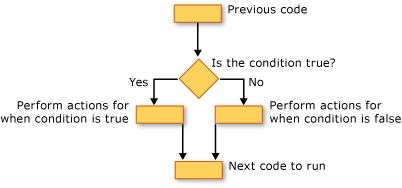
At its core, if this then that is the syntax of causality in action. It’s the difference between a static rulebook ("Do X if Y") and a dynamic system that adapts in real time. The beauty of the construct lies in its binary simplicity: two states (true/false, present/absent) and a single instruction. Yet when chained together—whether in a spreadsheet formula, a robot’s control loop, or a smart home’s event scheduler—it becomes the backbone of complex behavior. The modern iteration, popularized by the IFTTT platform in 2011, democratized this logic, turning power-users into "applet" designers who could automate everything from photo backups to workout tracking without writing a line of code.What separates today’s if this then that implementations from their predecessors isn’t just technology, but context. Ancient conditional logic was reactive—respond to a threat, harvest a crop, avoid a poisonous berry. Modern systems are predictive, using historical data to anticipate needs before they arise. A self-driving car doesn’t just brake if a pedestrian appears (the classic IFTTT); it adjusts speed curves based on predicted pedestrian paths derived from thousands of similar scenarios. The shift from reactive to proactive conditionals is what’s driving the next wave of automation, where the "then" doesn’t just follow the "if"—it preempts it.
Historical Background and Evolution
The origins of if this then that logic can be traced to the first decision trees carved into stone. The ancient Egyptians used conditional rules to determine flood levels from the Nile’s height, while Babylonian astronomers applied them to predict eclipses. Fast-forward to the 19th century, and Charles Babbage’s Analytical Engine—the precursor to modern computers—operated on a principle of conditional branching: if the input matches this pattern, execute that operation. The leap to digital systems came with Alan Turing’s 1936 paper on computable functions, where he formalized the idea that any problem solvable by a human following a set of rules could be automated via conditional logic.The real inflection point arrived in the 1970s with the rise of rule-based expert systems, like MYCIN (a medical diagnosis tool) and R1 (a Xerox repair advisor). These systems encoded human expertise into if-then-else structures, allowing computers to mimic judgment calls. By the 1990s, the internet introduced a new layer: distributed conditionals. Web servers began using `.htaccess` rules (if the URL contains "admin", then redirect to login), and later, scripting languages like JavaScript embedded if this then that into dynamic web pages. The 2000s brought the consumerization of automation with tools like Zapier (2011) and Microsoft Flow (2016), which turned conditional logic into a visual, no-code experience. Today, even voice assistants like Alexa rely on hidden if-then chains to interpret commands.
Core Mechanisms: How It Works
Under the hood, if this then that is a finite-state machine with two critical components: triggers and actions. A trigger is the condition that must be met—a sensor reading, a button press, a data change—while the action is the response. The magic happens in the evaluation loop: the system continuously polls for triggers (e.g., "Is the door unlocked?"), and when one fires, it executes the linked action (e.g., "Send a text to the owner"). The elegance lies in its asynchronicity; the trigger and action don’t need to occur in the same moment. A weather app might store your location if you open it, then later if the forecast changes, send you a push notification—all while you’re offline.Table of Contents
- The Complete Overview of If This Then That
- Historical Background and Evolution
- Core Mechanisms: How It Works
- Key Benefits and Crucial Impact
- Major Advantages
- Comparative Analysis
- Future Trends and Innovations
- Conclusion
- Comprehensive FAQs
- Q: Can "if this then that" logic be used in non-technical fields like law or medicine?
- Q: What’s the difference between IFTTT and Zapier?
- Q: Are there risks to over-automating with conditionals?
- Q: How do I design effective "if this then that" rules?
- Q: Can "if this then that" be used for creative tasks?
- Q: What’s the most complex "if this then that" system in existence?
The modern twist is compositionality. Tools like IFTTT allow users to stack conditionals (e.g., "If Twitter post contains #meeting AND it’s after 5 PM, then save to Evernote"), creating workflows that resemble nested Russian dolls. Behind the scenes, this is handled by event-driven architectures, where each conditional is a microservice listening for specific events. For example, a smart fridge might have three if-then rules:
1. If milk sensor detects low levels, then add "milk" to grocery list.
2. If grocery list is updated AND it’s past 8 PM, then send reminder to phone.
3. If phone reminder is ignored for 24 hours, then order milk via delivery service.
The result? A self-sustaining loop of automation that adapts without human intervention.
Key Benefits and Crucial Impact
The most profound impact of if this then that logic isn’t in its individual applications but in how it redefines attention. Before automation, humans spent cognitive energy on repetitive decisions—"Should I water the plants?", "Did I turn off the stove?", "Is this email spam?" Now, those questions are outsourced to systems that handle them silently. The net effect? A cognitive dividend. Studies show that offloading conditional tasks to automation frees up mental bandwidth for creative or strategic thinking, much like how calculators liberated mathematicians from arithmetic drudgery. Yet the trade-off is visibility: the more we automate, the less we see the underlying logic at work.This invisibility is both a strength and a risk. On one hand, if this then that systems reduce friction—your phone unlocks if your face matches, your lights dim if it’s sunset, your playlist switches if you’re running. On the other hand, opaque conditionals can create black boxes where the "why" behind an action is lost. A self-driving car that brakes if a child darts into the road is a marvel of if-then logic—but what if the system misinterprets a shadow as a child? The stakes rise when conditionals govern critical infrastructure, like power grids that if demand exceeds supply, then reroute energy, or hospitals where if a patient’s vitals spike, then alert the ICU.
> "Automation is the art of hiding complexity behind simplicity." — Edsger Dijkstra, computer science pioneer
The quote captures the duality of if this then that: it’s both a tool for empowerment and a source of potential blind spots. The key lies in transparency—designing systems where the conditionals are explainable, not just efficient.
Major Advantages
- Scalability: A single if-then rule can handle millions of instances. For example, an e-commerce site might use "If inventory < 5, then auto-reorder" across thousands of SKUs without manual checks.
- Error Reduction: Human fatigue or oversight is eliminated. A factory robot will if a part is misaligned, then halt the line—every time, without exception.
- Personalization: Conditionals enable hyper-targeted responses. A bank might if a transaction exceeds $10K, then require two-factor auth—tailored to risk, not a one-size-fits-all policy.
- Cost Efficiency: Automating repetitive conditionals (e.g., "If email contains 'urgent,' then flag for manager") cuts labor costs while improving response times.
- Adaptability: Dynamic if-then systems can learn and evolve. A chatbot might start with "If user says 'help,' then redirect to FAQ" but later refine to "If user frustration score > 7, then escalate to human agent."

Comparative Analysis
| Traditional Programming | Conditional Automation (IFTTT-Style) |
|---|---|
Requires coding knowledge (e.g., Python’s if x > 5: do_y()). |
No-code/drag-and-drop interfaces for non-developers. |
| Static rules; changes require redeployment. | Dynamic; rules can be updated in real time via dashboards. |
| Best for complex, multi-step logic (e.g., game AI). | Optimized for simple, repetitive tasks (e.g., file backups, notifications). |
| Performance overhead from interpreted code. | Near-zero latency for pre-configured triggers (e.g., hardware sensors). |
Future Trends and Innovations
The next frontier for if this then that lies in context-aware and predictive conditionals. Today’s systems react to known triggers, but tomorrow’s will anticipate needs based on patterns. Imagine a smart home that doesn’t just if it’s dark, then turn on lights, but if your calendar shows a 7 AM meeting AND your sleep tracker detects light sleep, then adjust the alarm to 6:30 AM and preheat coffee. The shift is from reactive to prescriptive automation—where the system doesn’t just follow rules but suggests optimal ones.Another evolution is collaborative conditionals, where multiple if-then systems negotiate outcomes. For example, a fleet of delivery drones might each have rules like "If battery < 20%, then return to hub," but collectively adjust routes to avoid traffic if a weather API predicts rain. Edge computing will also play a role, pushing conditionals closer to the data source. Instead of sending sensor data to a cloud server if a temperature threshold is crossed, the logic runs locally on a microchip, reducing latency. Finally, explainable AI will demand that even complex if-then chains (e.g., in medical diagnostics) provide clear rationale for their decisions—a move toward transparent automation.

Conclusion
If this then that is the invisible hand of the digital age, shaping how we interact with technology without us even noticing. Its power isn’t in replacing human judgment but in amplifying it—freeing us from the mundane so we can focus on what matters. Yet as we delegate more decisions to conditionals, we must ask: Who defines the rules? A poorly designed if-then system can create more problems than it solves, from biased algorithms to unintended consequences (e.g., a self-driving car’s "if pedestrian detected, then brake" failing to account for a child on a skateboard). The future of this logic hinges on two principles: precision (clear, well-tested conditions) and humility (acknowledging that not all decisions can—or should—be automated).The most exciting applications aren’t in replacing human roles but in augmenting them. A surgeon using an AI assistant that if a tumor’s margins are unclear, then suggest alternative imaging isn’t being replaced; they’re gaining a second pair of eyes. Similarly, a farmer whose irrigation system if soil moisture drops below 30%, then water isn’t losing control—they’re gaining data-driven resilience. The art of if this then that isn’t about building smarter machines; it’s about designing systems that understand when to intervene—and when to let humans take the wheel.
Comprehensive FAQs
Q: Can "if this then that" logic be used in non-technical fields like law or medicine?
A: Absolutely. In law, if-then frameworks underpin case management systems (if plaintiff files, then notify defendant). In medicine, if a patient’s blood pressure exceeds 180 mmHg, then trigger a code blue alert. These are essentially rule-based expert systems, where conditionals encode domain-specific knowledge. The key is ensuring the rules align with ethical and legal standards (e.g., avoiding bias in diagnostic algorithms).
Q: What’s the difference between IFTTT and Zapier?
A: Both platforms use if this then that logic, but their focus differs. IFTTT emphasizes personal automation (e.g., "If I tweet, then save to Dropbox") with a simpler, app-centric approach. Zapier targets business workflows (e.g., "If a new lead signs up, then add to Salesforce") and supports more complex multi-step "zaps" with error handling. IFTTT is consumer-friendly; Zapier is enterprise-grade.
Q: Are there risks to over-automating with conditionals?
A: Yes. Over-reliance on if-then systems can lead to:
Q: How do I design effective "if this then that" rules?
A: Follow these principles:
1. Specificity: Avoid vague triggers ("if user is active" → "if user scrolls past 3 articles in 10 mins").
2. Idempotency: Ensure repeating the action doesn’t cause errors (e.g., "if file exists, then delete" could fail if the file was already deleted).
3. Fallbacks: Define else clauses (e.g., "if payment fails, then notify customer AND refund partial amount").
4. Testing: Use sandbox environments to simulate edge cases (e.g., "if server timeouts, then retry 3 times").
Tools like IFTTT’s debugger or Zapier’s test mode help validate rules before deployment.
Q: Can "if this then that" be used for creative tasks?
A: Indirectly, yes. While conditionals excel at repetitive tasks, they can spark creativity by:
Q: What’s the most complex "if this then that" system in existence?
A: The Global Positioning System (GPS) is a prime example. It relies on a cascading network of if-then logic:
1. If a satellite’s atomic clock drifts >10 nanoseconds, then adjust signal.
2. If a ground station detects a 3-satellite overlap error, then recalculate triangulation.
3. If a user’s device receives signals from 4+ satellites, then compute position AND velocity.
Even simpler systems like air traffic control ("if two planes are within 5 miles, then reroute") or high-frequency trading ("if bid-ask spread > 0.1%, then execute arbitrage") operate on layered conditionals. The complexity isn’t in a single rule but in the orchestration of thousands of them.
Leave a Comment
Comments are moderated before appearing. The data you submit is processed according to the Privacy Policy of Viralcontentbee.