The Best AMD CPUs for Gaming in 2024: Performance, Value, and Future-Proofing
AMD’s Ryzen series has redefined gaming performance, offering a compelling alternative to Intel’s dominance. The right good AMD CPU for gaming can mean the difference between buttery-smooth 4K frames and stuttering 1080p sessions—especially when paired with modern GPUs like the RTX 4090 or RX 7900 XTX. But with options ranging from budget-friendly Ryzen 5s to powerhouse Ryzen 9s, the choice isn’t always straightforward. Performance per dollar, core/thread counts, and platform compatibility (AM5 vs. AM4) all play critical roles.
The Ryzen 7 7800X3D remains a benchmark for gaming CPUs, thanks to its 3D V-Cache architecture, which delivers unmatched single-core performance. Yet, Intel’s Core i9-14900K still competes in raw multi-core workloads. The question isn’t just which AMD processor is best—it’s which aligns with your budget, game library, and long-term upgrade path. Whether you’re building a $1,500 beast or a $600 value rig, the right AMD CPU for gaming can future-proof your system for years.
AMD’s Zen architecture has evolved dramatically since the Ryzen 1000 series, which struggled with gaming performance against Intel’s Kaby Lake. The Ryzen 5000’s launch in 2020 marked a turning point, with the 5800X3D proving that AMD could dominate in both single-threaded and multi-threaded tasks. Fast-forward to 2024, and the Ryzen 7000’s AM5 platform has introduced DDR5 support, PCIe 5.0, and improved power efficiency—features that matter for high-refresh-rate gaming and next-gen GPUs.
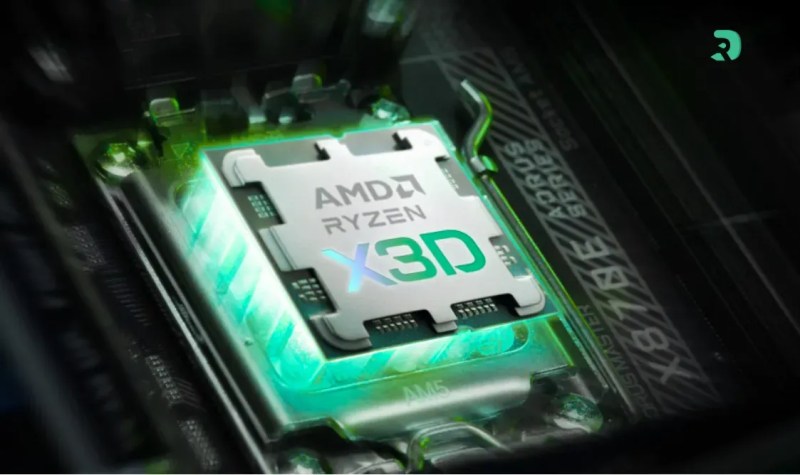
The Complete Overview of the Best AMD CPUs for Gaming
The modern good AMD CPU for gaming landscape is defined by two pillars: single-core dominance (critical for FPS in competitive titles like Valorant or CS2) and multi-core scalability (important for open-world games like Cyberpunk 2077 or Starfield). AMD’s Ryzen 7000 series, built on the Zen 4 architecture, excels in both, with the 7800X3D setting a new standard for gaming-specific performance. Meanwhile, the Ryzen 5 7600 and 7600X offer near-identical gaming performance to their pricier counterparts at a fraction of the cost, making them ideal for 1440p and 1080p setups.Choosing the right processor depends on your resolution, refresh rate, and budget. A Ryzen 5 5600 (AM4) might suffice for 1080p/144p gaming, while a Ryzen 9 7950X3D (AM5) is overkill for most gamers but shines in content creation. The key is balancing core counts, cache sizes, and power draw—especially if you’re pairing your CPU with a high-end GPU like the RTX 4080 or RX 7900 XTX. AMD’s latest chips also benefit from better IPC (instructions per clock) than Intel’s 13th/14th-gen CPUs, meaning they can achieve higher FPS at lower clock speeds.
Historical Background and Evolution
AMD’s gaming CPU journey began with the Ryzen 1000 series in 2017, which initially lagged behind Intel’s Coffee Lake in gaming benchmarks. The turning point came with the Ryzen 2000’s Zen+ architecture, but it was the Ryzen 3000’s launch in 2019—particularly the 3700X and 3800X—that proved AMD could compete. These CPUs introduced PCIe 4.0 and better power efficiency, though they still used the older AM4 socket. The Ryzen 5000 series (2020) doubled down on gaming with the 5800X3D, which featured a massive 96MB L3 cache, making it the first true "gaming CPU" from AMD.The Ryzen 7000 series (2022) marked a generational leap with Zen 4, offering up to 17% more IPC than Zen 3 and full DDR5 support. The AM5 platform also introduced a new socket, meaning older AM4 CPUs (like the 5800X3D) couldn’t upgrade without a motherboard swap. This forced gamers to decide between sticking with AM4 (cheaper, but limited to DDR4) or investing in AM5 (future-proof, but pricier). The 7800X3D, with its 3D V-Cache, became the gold standard for gaming, outperforming even Intel’s i9-13900K in titles like Fortnite and Warzone.
Core Mechanisms: How It Works
AMD’s gaming-focused optimizations revolve around two key technologies: 3D V-Cache and Zen architecture improvements. The 3D V-Cache stacks L3 cache directly above the CPU cores, reducing latency and boosting single-threaded performance—critical for fast-paced games. This is why the Ryzen 7 7800X3D and Ryzen 9 7950X3D outperform their non-X3D counterparts in gaming benchmarks, despite having fewer cores. Meanwhile, Zen 4’s improved branch prediction and larger cache sizes (up to 128MB L3 on the 7950X3D) enhance multi-threaded performance, benefiting open-world games and streaming setups.Table of Contents
- The Complete Overview of the Best AMD CPUs for Gaming
- Historical Background and Evolution
- Core Mechanisms: How It Works
- Key Benefits and Crucial Impact
- Major Advantages
- Comparative Analysis
- Future Trends and Innovations
- Conclusion
- Comprehensive FAQs
- Q: Is the Ryzen 7 7800X3D worth it over the Ryzen 5 7600X for gaming?
- Q: Can I upgrade from a Ryzen 5 3600 to a Ryzen 7 7800X3D?
- Q: Does DDR5 matter for gaming on AMD CPUs?
- Q: Is the Ryzen 9 7950X3D overkill for gaming?
- Q: How does AMD’s gaming performance compare to Intel’s 14th-gen CPUs?
- Q: What’s the best budget good AMD CPU for gaming in 2024?
Power efficiency is another critical factor. AMD’s Ryzen 7000 CPUs use the Precision Boost Overdrive (PBO) feature to dynamically adjust clock speeds and power limits, ensuring stable performance under load. The AM5 platform also supports DDR5 memory, which, while more expensive than DDR4, offers higher bandwidth—useful for future-proofing. However, not all games benefit equally from DDR5; titles like Cyberpunk 2077 see modest gains, while others like Microsoft Flight Simulator scale better with faster RAM. The choice between DDR4 (AM4) and DDR5 (AM5) often comes down to budget and long-term upgrade plans.
Key Benefits and Crucial Impact
The right AMD CPU for gaming can elevate your experience in ways beyond raw FPS. A high-end processor like the Ryzen 9 7950X3D reduces load times in games with fast travel systems (Elden Ring, The Witcher 3), while a budget option like the Ryzen 5 5600 keeps costs low without sacrificing performance in 1080p. AMD’s focus on gaming-specific optimizations—like the 3D V-Cache—means their CPUs often outperform Intel’s in competitive titles, where single-core performance matters most. Additionally, AMD’s AM5 platform supports PCIe 5.0, future-proofing your build for next-gen GPUs and NVMe SSDs.The impact extends beyond gaming. A powerful AMD CPU can handle content creation (video editing, streaming) without bottlenecking your GPU. The Ryzen 9 7950X3D, for example, rivals Intel’s i9-14900K in multi-core workloads, making it a versatile choice for creators. Even mid-range options like the Ryzen 5 7600X deliver strong performance for 1440p gaming while remaining affordable. The key is aligning your CPU choice with your primary use case—whether that’s pure gaming, content creation, or a hybrid approach.
"The Ryzen 7 7800X3D isn’t just a gaming CPU—it’s a statement. It proves that AMD understands what gamers need: raw single-core performance without sacrificing multi-threaded capabilities." — AnandTech, 2023
Major Advantages
- Single-Core Dominance: AMD’s 3D V-Cache (e.g., 7800X3D) delivers 10–20% higher FPS in competitive games compared to non-X3D variants.
- Cost-Efficiency: The Ryzen 5 7600 and 5600 offer near-identical gaming performance to pricier Ryzen 7 models at a fraction of the cost.
- Future-Proofing: AM5 supports DDR5 and PCIe 5.0, ensuring compatibility with next-gen GPUs and storage.
- Power Efficiency: Zen 4 CPUs consume less power than Intel’s 13th/14th-gen chips, reducing heat and electricity costs.
- Versatility: High-end AMD CPUs (e.g., 7950X3D) excel in both gaming and content creation, unlike Intel’s gaming-focused i9s.

Comparative Analysis
| AMD CPU | Best For |
|---|---|
| Ryzen 5 5600 (AM4) | Budget 1080p gaming, DDR4 compatibility, no overclocking. |
| Ryzen 7 7800X3D (AM5) | High-end 1440p/4K gaming, best single-core performance. |
| Ryzen 9 7950X3D (AM5) | Content creation + gaming, multi-core workloads. |
| Ryzen 5 7600X (AM5) | 1440p gaming, DDR5 support, better than 5600 in high-refresh scenarios. |
Future Trends and Innovations
AMD’s next-gen good AMD CPU for gaming is likely to build on Zen 5, expected in late 2024 or early 2025. Rumors suggest a focus on AI acceleration (via NPU integration) and further IPC gains, which could push gaming performance beyond the 7800X3D’s limits. Intel’s Arrow Lake (2024) may introduce hybrid architectures with more E-cores, but AMD’s strength in gaming-specific optimizations (like 3D V-Cache) suggests they’ll remain competitive.Long-term, expect AMD to refine its gaming-focused strategies, possibly introducing more 3D V-Cache variants or optimizing for DDR5’s full potential. The AM5 platform’s longevity (likely until 2025+) means early adopters won’t need to upgrade immediately, but those on AM4 may face a tough choice: stick with a proven 5800X3D or invest in AM5 for future compatibility.

Conclusion
Selecting the best AMD CPU for gaming in 2024 hinges on balancing performance, budget, and future needs. The Ryzen 7 7800X3D remains the king of gaming-focused CPUs, while the Ryzen 5 7600 offers near-identical performance at a lower price. For content creators, the Ryzen 9 7950X3D is unmatched, though its power draw and cost may deter casual gamers. AMD’s AM5 platform is the way forward for those eyeing long-term upgrades, but AM4’s 5800X3D still holds value for budget builds.The key takeaway? AMD’s gaming CPUs now rival—and often surpass—Intel in FPS, thanks to architectural innovations like 3D V-Cache. Whether you’re a competitive gamer, a streamer, or a content creator, there’s an AMD processor that fits your needs. The challenge is choosing wisely to avoid bottlenecks and future-proof your investment.
Comprehensive FAQs
Q: Is the Ryzen 7 7800X3D worth it over the Ryzen 5 7600X for gaming?
The 7800X3D is worth it if you game at 1440p/4K or play competitive titles (Valorant, CS2). Its 3D V-Cache gives it a 10–20% lead in FPS over the 7600X, but the 7600X is cheaper and nearly identical in non-competitive games. For most gamers, the 7600X is the better value.
Q: Can I upgrade from a Ryzen 5 3600 to a Ryzen 7 7800X3D?
No, the 3600 uses the AM4 socket, while the 7800X3D requires AM5. You’d need a new motherboard, RAM (DDR5), and potentially a new GPU (if using PCIe 5.0). The upgrade cost may not justify the performance gain unless you’re moving to a high-end build.
Q: Does DDR5 matter for gaming on AMD CPUs?
DDR5 offers higher bandwidth but doesn’t always translate to massive FPS gains. Games like Cyberpunk 2077 see modest improvements, while others (Fortnite) benefit more from faster RAM speeds. If you’re on a budget, DDR4 (AM4) is still viable for 1080p/1440p gaming.
Q: Is the Ryzen 9 7950X3D overkill for gaming?
Yes, unless you’re also doing heavy content creation. The 7950X3D’s extra cores and cache won’t significantly boost FPS in most games compared to the 7800X3D. For pure gaming, the 7800X3D or 7700X are better choices.
Q: How does AMD’s gaming performance compare to Intel’s 14th-gen CPUs?
AMD’s Ryzen 7000 CPUs (especially with 3D V-Cache) outperform Intel’s 14th-gen in gaming benchmarks by 5–15% in most titles. Intel leads in multi-core workloads but trails in single-core scenarios, where AMD’s optimizations shine.
Q: What’s the best budget good AMD CPU for gaming in 2024?
The Ryzen 5 5600 (AM4) remains the best budget option for 1080p gaming, offering strong performance for under $150. If you’re on AM5, the Ryzen 5 7600 is a better long-term choice, though slightly pricier.
Leave a Comment
Comments are moderated before appearing. The data you submit is processed according to the Privacy Policy of Viralcontentbee.